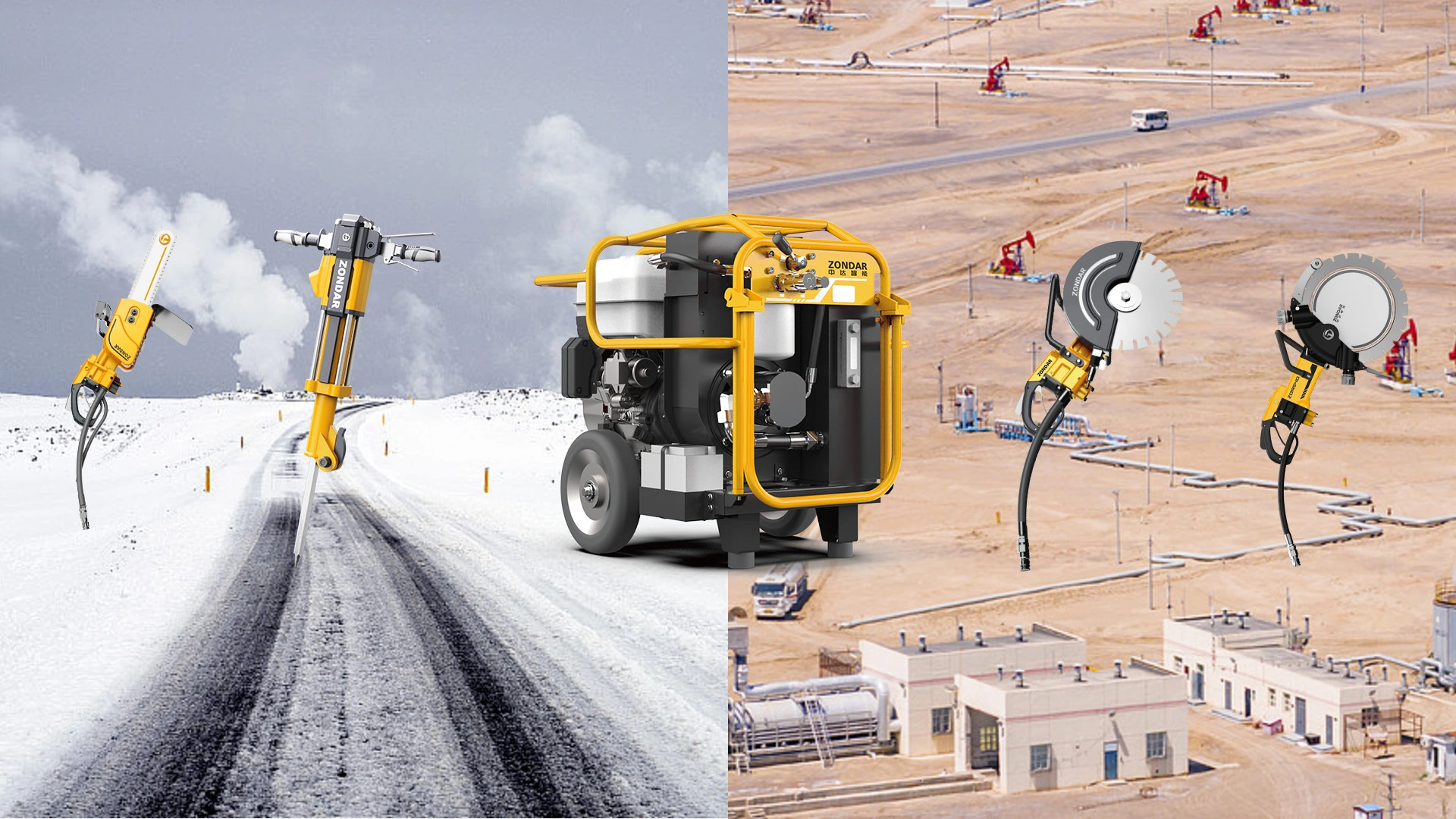
The Complete Guide for Skid Steers, Vacuum Trucks, Municipal Vehicles, and Third-Party Hydraulic Power Units
Looking for a printable version? Download(PDF)
In today’s construction, municipal maintenance, mining, and emergency response industries, equipment owners are under increasing pressure to maximize the return on existing assets. Many contractors, municipalities, and utility service providers already own hydraulic power sources such as skid steer loaders, vacuum trucks, excavators, service vehicles, or portable hydraulic power packs. The key question is no longer whether they need hydraulic tools—it is whether new hydraulic tools can work seamlessly with their existing hydraulic systems.
Common questions include:
Can my skid steer power a hydraulic breaker?
Can a vacuum truck operate a hydraulic slurry pump?
Will a hydraulic ring saw work with my existing power unit?
How do I know whether a hydraulic tool is compatible with my equipment?
Can one hydraulic power source run multiple tools?
This guide explains the principles of hydraulic tool compatibility, provides a practical selection framework, and explores real-world applications where open-compatible hydraulic equipment creates operational advantages.
Why Hydraulic Compatibility Matters
Many equipment operators make purchasing decisions based on tool performance alone. However, even the most powerful hydraulic tool can fail if it is connected to an incompatible hydraulic system.
Poor compatibility may result in:
- Reduced tool efficiency
- Hydraulic motor damage
- Seal failures
- Excessive oil temperature
- Increased maintenance costs
- Unexpected downtime
Choosing compatible hydraulic equipment allows contractors to expand capabilities without investing in entirely new power sources.
For many organizations, this can significantly reduce capital expenditure while increasing fleet flexibility.
Understanding the Four Key Compatibility Factors
Before connecting any hydraulic tool to an existing hydraulic system, four critical parameters must be verified.
1. Hydraulic Flow Rate
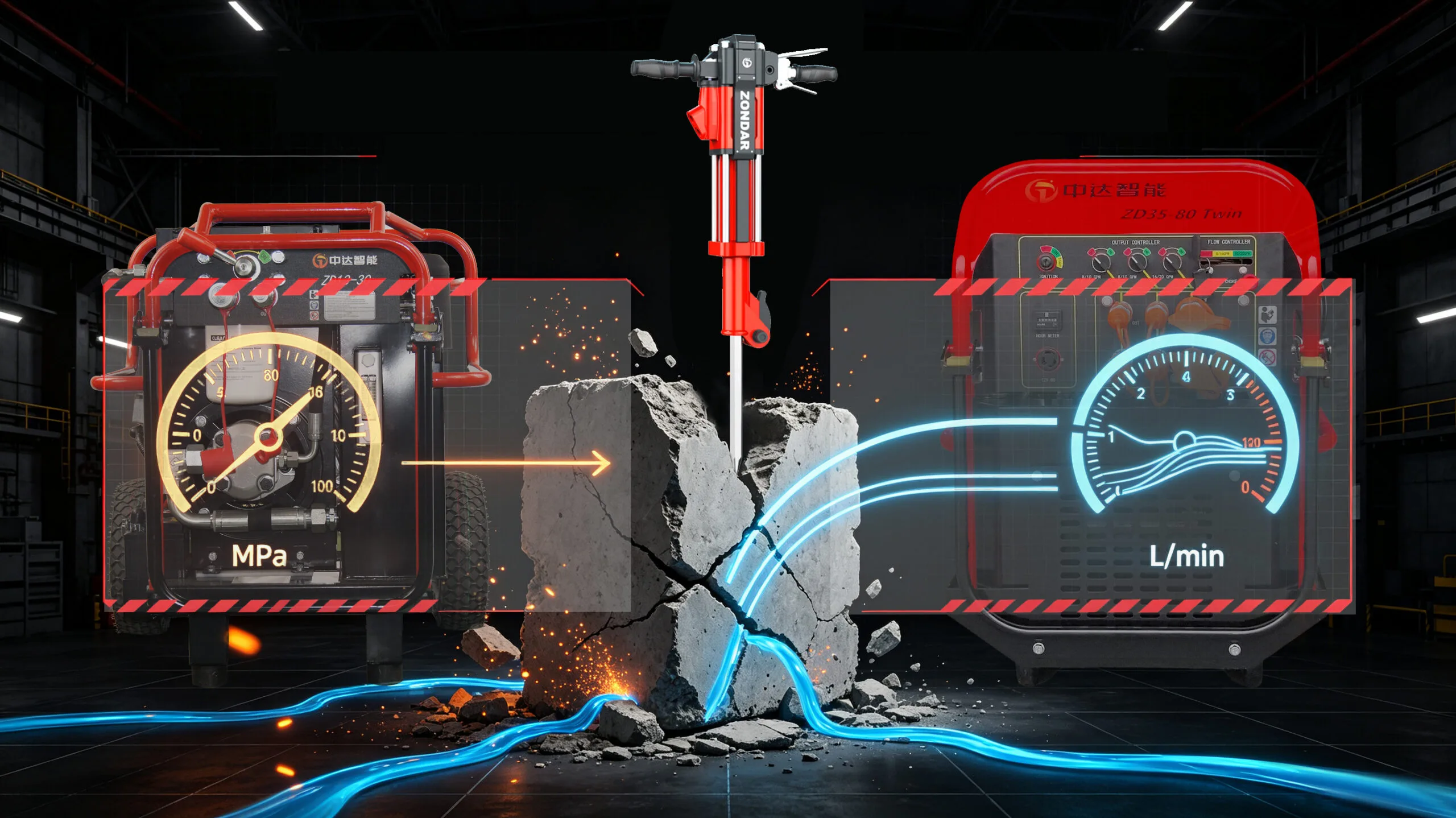
Flow rate determines the operating speed of a hydraulic tool.
Measured in liters per minute (L/min) or gallons per minute (GPM), flow directly affects:
- Breaker impact frequency
- Saw blade speed
- Drill rotation speed
- Pump capacity
Example:
A hydraulic breaker designed for 20–30 L/min may be damaged if connected directly to a high-flow skid steer delivering 120 L/min.
Always verify with manufacturer the recommended flow range.
2. Operating Pressure
Pressure determines the force generated by the tool.
Common industrial hydraulic systems operate between:
100–160 Bar
170–220 Bar
220–250 Bar
Examples:
- Hydraulic breakers require impact force.
- Hydraulic rock drills require rotational torque.
- Hydraulic slurry pumps require pumping power.
A mismatch in pressure can result in poor performance or shortened equipment life.
3. Return Line Back Pressure
Back pressure is often overlooked but is one of the most common causes of hydraulic tool failures.
Excessive return pressure can:
- Damage shaft seals
- Cause overheating
- Reduce hydraulic motor efficiency
This is particularly important for:
- Hydraulic ring saws
- Hydraulic chain saws
- Hydraulic submersible pumps
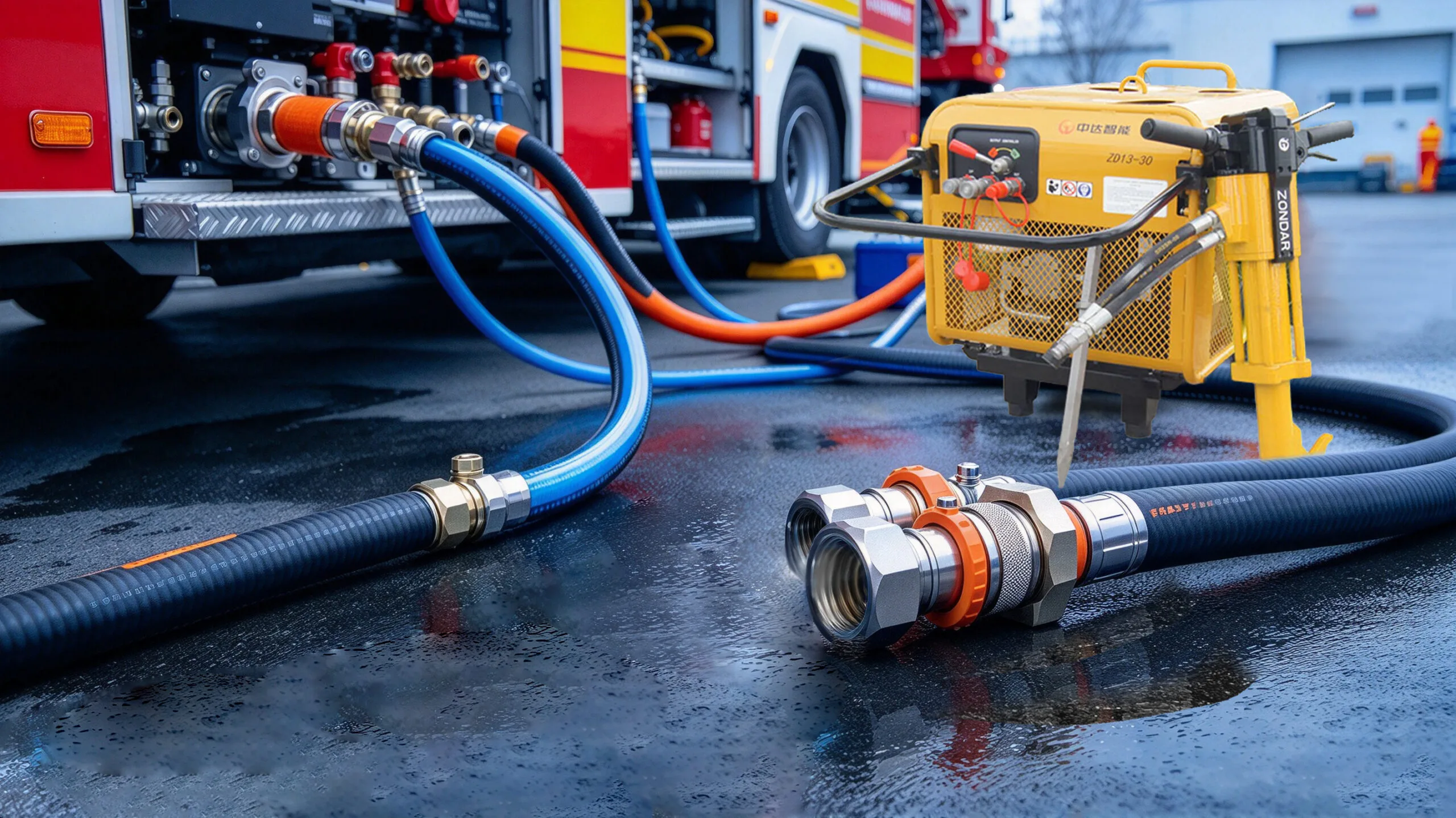
For skid steers, vacuum trucks, municipal maintenance vehicles, and other hydraulic carriers, compatibility involves more than simply matching flow and pressure specifications. Proper connection of pressure lines, return lines, and auxiliary hydraulic circuits is equally important. Since many of these machines are equipped with multi-valve hydraulic systems, incorrect connections may cause overheating, excessive back pressure, reduced efficiency, or damage to hydraulic components. To ensure safe operation, ZONDAR can provide connection diagrams and technical guidance based on your specific equipment model.
4. Hydraulic Coupler Compatibility
Physical connection compatibility is equally important.
Most modern systems use:
- Flat-face couplers
- BSP threaded fittings
- NPT threaded fittings
Flat-face couplers provide several advantages:
- Reduced contamination
- Faster tool replacement
- Lower oil loss
- Easier cleaning in harsh environments
Standardizing couplers across a fleet can dramatically improve operational efficiency.
A Practical 4-Step Compatibility Check Before Purchasing
Before investing in any hydraulic attachment, use the following checklist.
Step 1 – Verify Available Flow
Check the auxiliary hydraulic output of your carrier equipment.
Step 2 – Verify Operating Pressure
Ensure pressure requirements overlap with tool specifications.
Step 3 – Check Return Line Capacity
Confirm acceptable back-pressure levels.
Step 4 – Confirm Coupler Type
Verify hose size, fitting standards, and quick coupler specifications.
Completing these four steps can prevent the majority of compatibility-related failures.
Common Hydraulic Power Sources and Compatible Applications
Skid Steers
Modern skid steer loaders serve as highly versatile hydraulic power sources.
Typical Output:
170–210 Bar
Compatible Tools:
- Hydraulic breakers
- Hydraulic rock drills
- Hydraulic ring saws
- Hydraulic trenchers
- Hydraulic post drivers
By utilizing existing auxiliary hydraulics, contractors eliminate the need for separate diesel-powered equipment on many job sites.
High-Flow Skid Steers
Typical Output:
200–240 Bar
Ideal Applications:
Large hydraulic slurry pumps
Heavy-duty rock saws
High-capacity cutting systems
When operating low-flow tools from high-flow machines, a flow divider valve is recommended to prevent over-speeding.
Vacuum Trucks
Vacuum trucks equipped with PTO-driven hydraulic systems provide a highly effective power source for pumping operations.
Typical Output:
140–180 Bar
Compatible Equipment:
- Hydraulic slurry pumps
- Hydraulic submersible pumps
- Hydraulic drainage systems
This configuration is increasingly used for sewer cleaning, flood response, and sludge removal projects.
Portable Hydraulic Power Units
Portable hydraulic power packs remain one of the most flexible solutions for field operations. Choosing the right power source is essential for achieving optimal tool performance. Learn more in our guide: How to Select a Hydraulic Power Unit for Handheld Tools, where we explain flow requirements, pressure matching, cooling systems, and the advantages of portable hydraulic power units.
Typical Output:
20–80 L/min
120–180 Bar
Compatible Equipment:
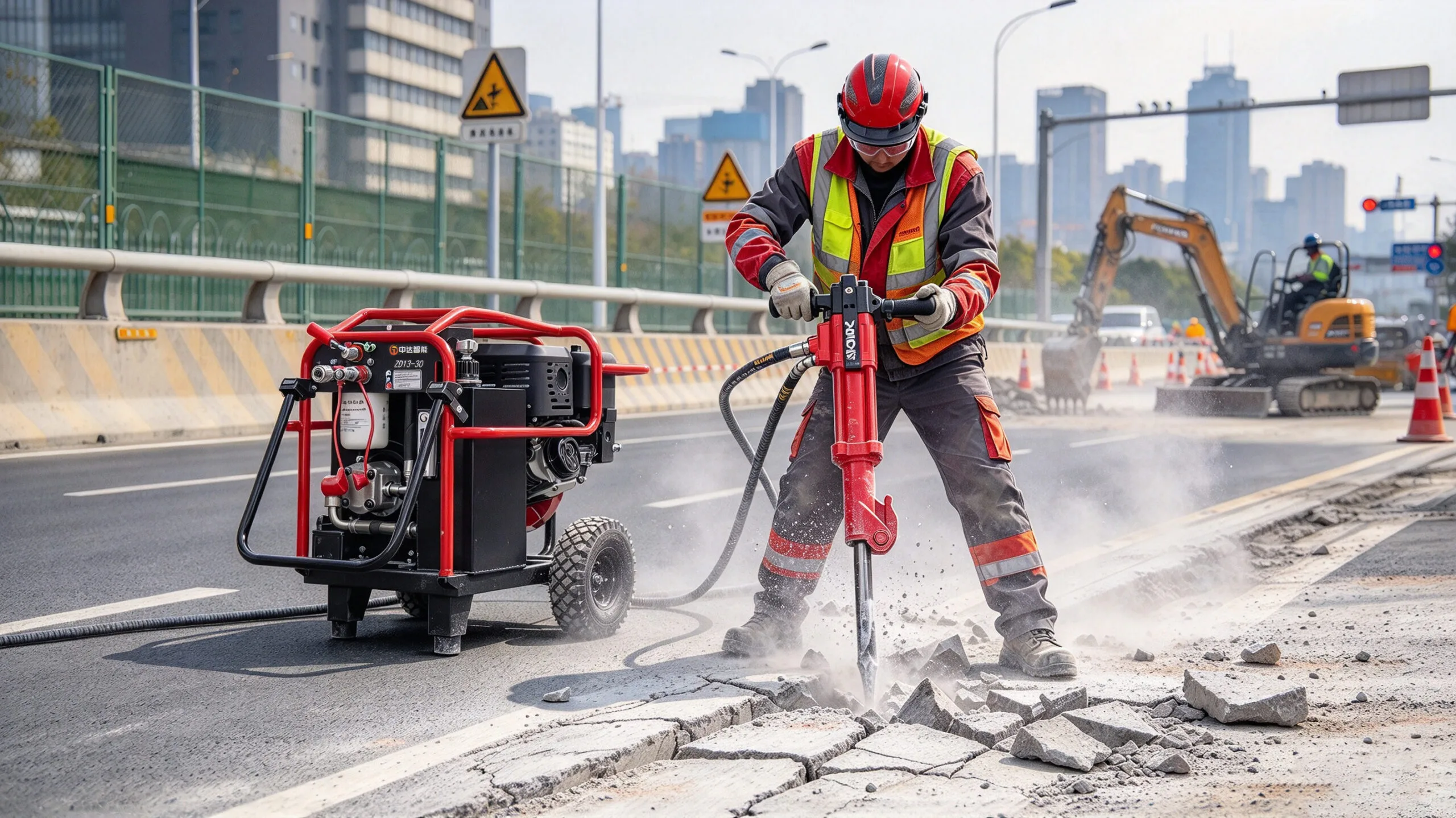
Handheld breakers
Hydraulic drills
Ring saws
Rescue tools
They are particularly suitable for remote locations where carrier equipment cannot access the work area.
Compatible ZONDAR Hydraulic Tool Solutions
ZONDAR hydraulic equipment is designed around open compatibility principles, allowing integration with a wide range of hydraulic power sources.
Applications include:
Hydraulic Breakers
For road maintenance, demolition, and utility construction.
Hydraulic Rock Drills
For mining, quarrying, anchoring, and infrastructure projects.
Hydraulic Ring Saws
For precision cutting of reinforced concrete and masonry.
Hydraulic Slurry Pumps
For dredging, sludge transfer, and municipal maintenance.
Hydraulic Submersible Pumps
For flood drainage and emergency response operations.
Hydraulic Drainage Robots
For urban flood control and large-scale emergency pumping operations.
Real-World Application Scenarios
Scenario 1: Municipal Road Repair with Skid Steers
Contractors can use existing skid steer auxiliary hydraulics to power breakers and cutting tools, reducing transportation requirements and improving job-site efficiency.
Scenario 2: Flood Emergency Drainage Using Vacuum Trucks
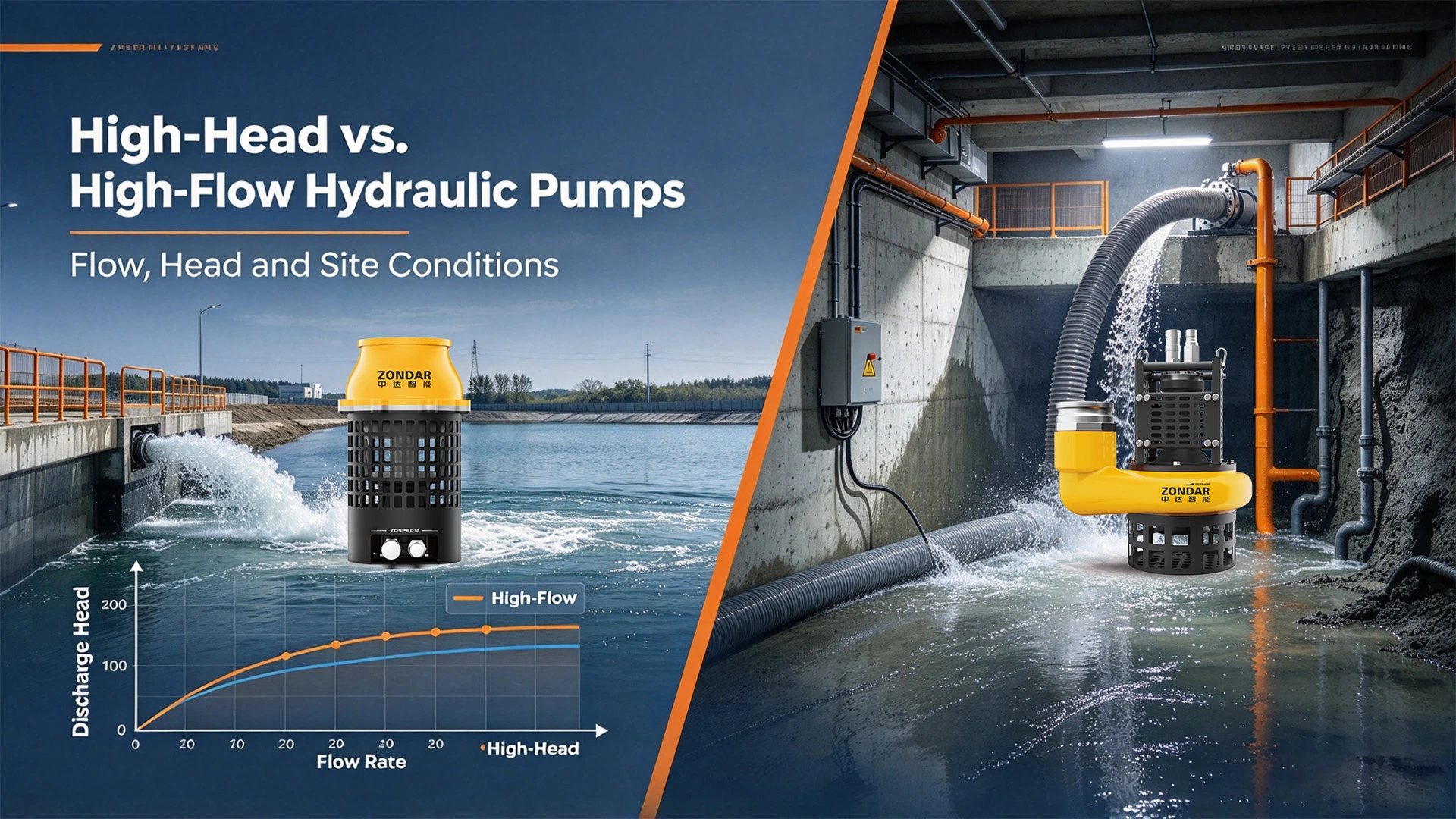
Vacuum trucks equipped with PTO hydraulic systems can operate hydraulic slurry pumps and submersible pumps directly, creating a rapid-response flood control solution. When handling abrasive sludge, sand, and debris, the advantages of hydraulic slurry pumps become especially evident in demanding municipal and industrial applications.
Selecting the appropriate pump and power source can dramatically improve drainage efficiency during emergency operations. Our Flood Emergency Drainage Equipment Selection Guide compares hydraulic submersible pumps, slurry pumps, and drainage robots for different flood response scenarios.
Scenario 3: Sewer Maintenance Operations
Hydraulic slurry pumps can remove heavy sludge, sand, and debris where conventional electric pumps struggle.
Scenario 4: Mining and Quarry Applications
Hydraulic breakers and rock drills powered by existing carrier equipment allow operators to expand capabilities without investing in dedicated power systems.
Frequently Asked Questions
Can I use my existing hydraulic power unit?
In most cases, yes, provided flow, pressure, return-line requirements, and coupler standards match.
Can a skid steer power a hydraulic ring saw?
Yes. Most modern skid steers with auxiliary hydraulics can operate hydraulic ring saws when flow and pressure requirements are met. If don’t know how to connect, contact ZONDAR for technical guidance.
What happens if hydraulic flow is too high of the oil hose connected to the multi-way valve circuit?
Excessive flow and the wrong oil hose connection can result in seal damage, overheating, and premature failure.
Can one hydraulic power source run multiple tools?
Yes. Many contractors use a single hydraulic power source with multiple attachments, provided each tool falls within the system’s operating range.
Are special hydraulic couplers required?
Not always. However, standardizing on ISO 16028 flat-face couplers can significantly improve fleet compatibility.
7 Advantages of Open-Compatible Hydraulic Tools for Contractors and Municipal Fleets
In today’s construction, municipal maintenance, mining, and emergency response industries, equipment owners are increasingly looking for ways to maximize the value of their existing machinery. Open-compatible hydraulic tools offer a practical solution by allowing operators to utilize existing hydraulic power sources rather than investing in dedicated systems for every application.
Here are seven key advantages of ZONDAR open-compatible hydraulic tools.
1. Lower Equipment Investment Costs
One of the biggest advantages is the ability to use existing hydraulic power sources, including skid steers, excavators, vacuum trucks, municipal service vehicles, and portable hydraulic power units.
Instead of purchasing a dedicated power source for each attachment, operators can leverage equipment already in their fleet, significantly reducing capital expenditure.
2. Greater Fleet Flexibility
A single hydraulic power source can often operate multiple attachments, including:
- Hydraulic breakers
- Hydraulic rock drills
- Hydraulic ring saws
- Hydraulic slurry pumps
- Hydraulic submersible pumps
This flexibility allows contractors to quickly adapt to different job requirements without adding more machines to their fleet.
3. Faster Jobsite Deployment
Open-compatible hydraulic tools can be connected to available hydraulic carriers on-site, reducing setup time and eliminating the need to transport additional power equipment.
For municipal maintenance and emergency response teams, faster deployment often translates directly into improved operational efficiency.
4. Reduced Transportation and Logistics Costs
Using existing skid steers, vacuum trucks, or service vehicles as hydraulic power sources reduces the number of machines required at the jobsite.
Fewer machines mean:
- Lower transportation costs
- Reduced fuel consumption
- Simplified fleet management
This is especially valuable for contractors managing multiple projects simultaneously.
5. Improved Emergency Response Capability
During flood emergencies, natural disasters, or infrastructure failures, equipment compatibility becomes critical.
Hydraulic tools that can connect to various power sources allow emergency crews to deploy available equipment immediately rather than waiting for dedicated systems to arrive.
This flexibility can significantly improve response times in critical situations.
6. Easier Equipment Expansion
As operational requirements grow, contractors can expand capabilities simply by adding compatible hydraulic tools rather than replacing existing machinery.
For example, a contractor already operating a skid steer may later add:
- A hydraulic breaker for demolition
- A hydraulic ring saw for precision cutting
- A hydraulic slurry pump for drainage operations
- All while continuing to use the same hydraulic carrier.
7. Better Long-Term Return on Investment
Open-compatible systems help maximize utilization of existing assets.
Instead of tying tools to a single brand or proprietary platform, operators gain the freedom to integrate equipment across multiple hydraulic systems.
This approach improves equipment utilization rates and often delivers a stronger long-term return on investment.
By understanding both compatibility requirements and equipment advantages, operators can build more flexible, cost-effective, and efficient hydraulic systems. For operators working in remote locations, understanding the advantages of portable hydraulic power units can help reduce transportation costs while improving equipment flexibility.
Conclusion
Hydraulic compatibility is not simply about connecting hoses. It is about matching flow, pressure, return-line conditions, and connection standards to create a reliable, efficient, and safe operating system.
By choosing open-compatible hydraulic tools, contractors, municipalities, emergency response teams, and industrial operators can maximize the value of their existing equipment while expanding operational capabilities.
Whether your power source is a skid steer, vacuum truck, excavator, municipal service vehicle, or portable hydraulic power unit, selecting the right hydraulic tools begins with understanding compatibility.