The global handheld rock drill market records a 6.4% CAGR from 2026 to 2035, driven by three irreversible shifts: nationwide blasting bans in urban zones, and surging infrastructure construction across remote mountainous and off-grid regions.
If you run small quarries, rural road projects, municipal pipeline crews or underground artisanal mines, you must have struggled to pick the right drilling equipment among three mainstream tools: pneumatic jackhammer, excavator-mounted hydraulic breaker, and portable hydraulic rock drill.
Most online articles make a fatal mistake: mixing up portable hydraulic rock drill (single-person handheld drilling equipment) and excavator breaker (heavy demolition attachment fixed on digger arms). They serve totally different construction purposes and cannot replace each other. This guide will clarify their core differences, share verified real-site pain points from our global clients, and deliver quantifiable cost & productivity data to help you make cost-effective equipment upgrades.
Clear Definition to Avoid Confusion
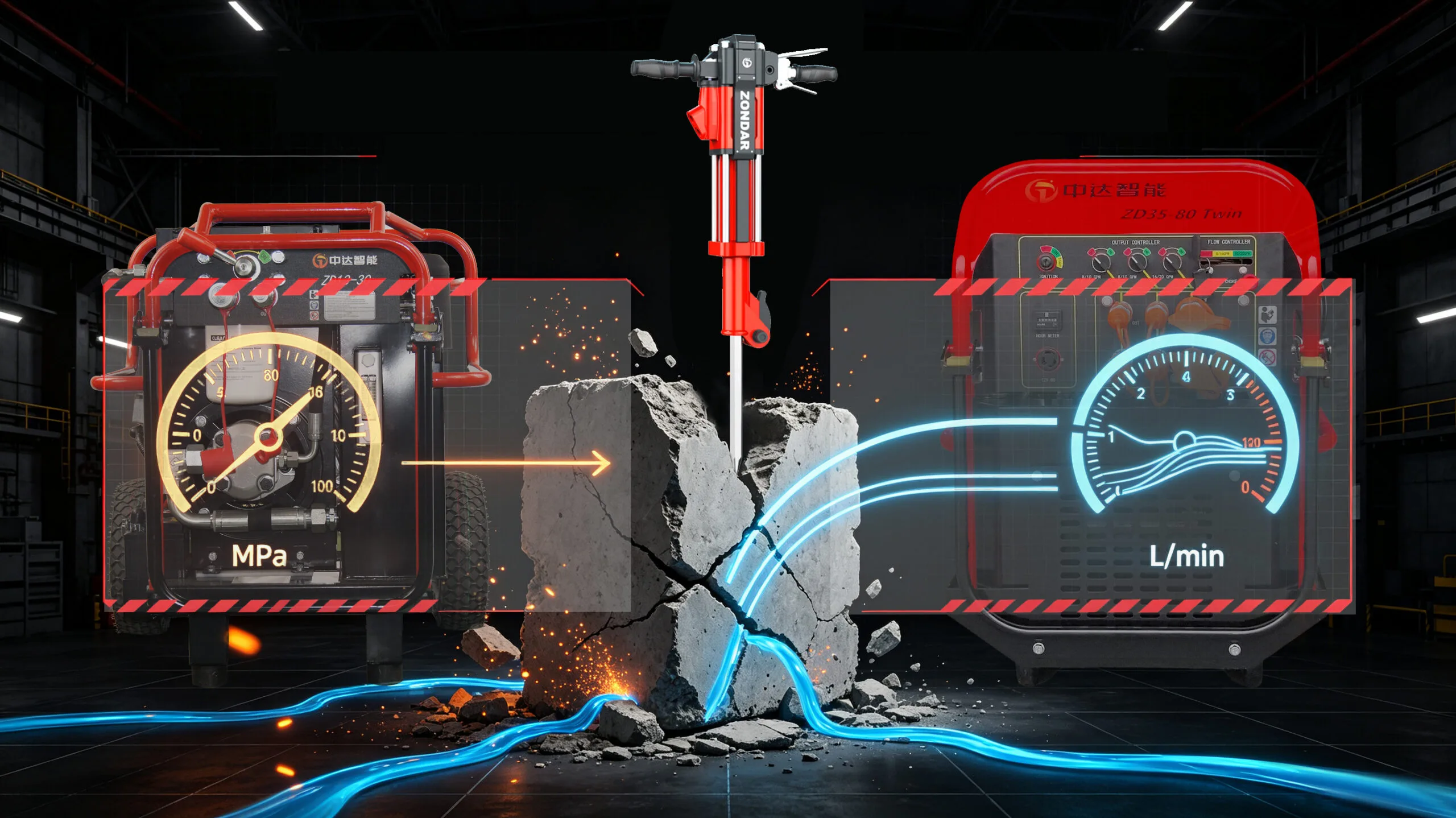
Portable hydraulic rock drill Lightweight 12–30kg handheld drill, matched with independent gasoline/electric hydraulic power pack, single-person operation. Core function: drill 26–45mm width and up to 4m deep pre-split anchor holes for rock bolting, quarry static splitting, tunnel drift drilling. Works in narrow trenches, underground small drifts and remote sites without excavators or air compressors.
Pneumatic jackhammer / pneumatic rock drill Rely on heavy diesel air compressors, long air hoses required. High vibration, high fuel consumption, poor mobility in scattered mountain job sites.
Excavator-mounted hydraulic breaker Digger attachment for bulk rock crushing and demolition. Large footprint, unable to access narrow spaces; it crushes rock blocks instead of drilling precise holes, cannot cooperate with hydraulic splitters for dimension stone mining.
Real Site Pain Points & Comparative Solutions with Portable Hydraulic Rock Drill
Scenario 1: Suburban Limestone Quarry in Vietnam — Blasting Ban & Excavator Breaker Material Waste
User Pain Points
The quarry lies 1.2km from residential areas, so local authorities fully banned industrial blasting. They once used an excavator hydraulic breaker to split dimension stone, but the violent impact cracked intact stone blocks, creating 40% material waste and huge economic loss.
Solution with Drill + Splitter Integrated System
Work flow: Drill precise split holes with portable hydraulic rock drill first, then insert hydraulic splitters for static, shockwave-free rock separation. Material loss rate fell below 8%, daily qualified stone output tripled. This complete non-blasting solution is fully explained in our earlier rock classification solution blog.
Scenario 2: Underground Small Gold Mine in Central Asia — Narrow Drift Access Restriction
User Pain Points
Underground drifts are only 1.2 meters wide, making large excavator breakers and heavy pneumatic rigs impossible to move deep underground.
Solution with Lightweight Portable Hydraulic Rock Drill
Our portable hydraulic rock drill supporting standing, squatting and overhead drilling in confined tunnels. Operators can sustain stable work for full 8-hour shifts without severe fatigue, solving narrow-space drilling bottlenecks completely.
Scenario 3: South America Municipal Pipeline Team — Frequent Pneumatic Equipment Maintenance
User Pain Points
Air hoses, sealing rings and compressor filters of pneumatic drills wear rapidly under urban dust and high pressure. Leakage and power attenuation forced 18 hours of monthly maintenance, plus continuous spare part procurement costs.
Solution with Compressor-Free Hydraulic Drilling Circuit
No air pipeline or compressor maintenance needed. Only regular hydraulic oil and filters replacement and drill bit inspection are required. Monthly maintenance hours dropped to 4, and spare part expenditure cut by 60%.
2026 Quantitative Cost & Productivity Comparison Table
| Evaluation Item | Portable Hydraulic Rock Drill | Pneumatic Rock Drill | Excavator-Mounted Hydraulic Breaker |
| Supporting Equipment | Self-contained hydraulic power pack | Heavy air compressor + long hoses | Full-size excavator carrier |
| Single Shift Drilling Output | 30–35 anchor holes | 14–18 anchor holes | Cannot drill precise holes |
| Monthly Fuel Cost | Baseline 100% | +30% higher | +85% higher (excavator fuel) |
| Daily Labor Requirement | 1 operator | 2 operators (drill + compressor mover) | 1 excavator driver |
| Suitable Space | Narrow tunnel, trench, remote mountain | Wide open flat ground only | Large open quarry, demolition yard |
| Matching Hydraulic Splitter | Perfect compatible pre-drilling tool | Poor compatibility | Not applicable |
Core Advantages of ZONDAR Portable Hydraulic Rock Drill
Combining all global client construction cases, our portable hydraulic rock drill targets the universal defects of pneumatic drills and excavator breakers:
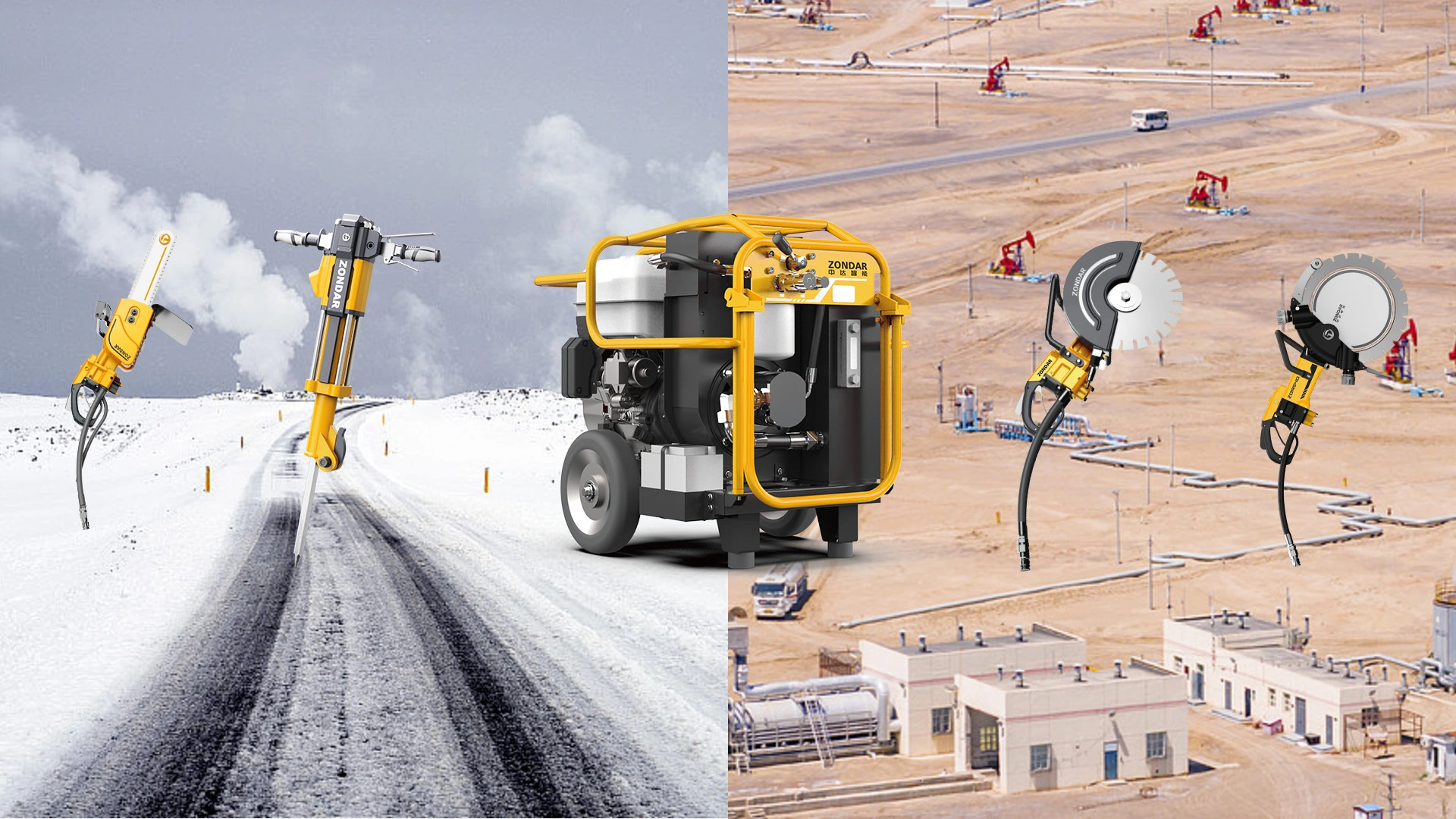
Independent hydraulic power unit, completely eliminating air compressor dependence for off-grid remote sites;
Ultra-light single-person design, flexible operation in narrow underground drifts, pipeline trenches and slope anchor gaps;
Stepless adjustable impact & rotary torque, stable penetration speed on mixed granite, limestone and sandstone strata;
Simplified hydraulic circuit, ultra-low maintenance frequency and long service life of core components;
Standardized drill bit interface, seamlessly matched with ZONDAR hydraulic splitters to form a full non-blasting rock breaking production solution.
How to Choose Your Matching Portable Hydraulic Rock Drill Model
Before procurement, confirm three core site conditions to avoid mismatched equipment:
Power supply environment: Remote mountain mines select gasoline hydraulic power pack; indoor tunnel projects can choose electric power unit.
Drilling parameter demand: Our standard portable model covers hole diameter 26–45mm and maximum drilling depth 4 meters, meeting most anchoring and quarry splitting needs.
Construction workflow: If your area enforces blasting restrictions, purchase portable hydraulic rock drill and hydraulic splitter as a complete set to maximize site efficiency.
Conclusion
Against stricter environmental, safety and blasting regulatory pressure worldwide, portable hydraulic rock drill has become an irreplaceable core drilling tool for small and medium rock engineering projects. Unlike generic parameter introductions flooding the internet, this article distinguishes three easily-confused rock tools and provides real construction cases with measurable cost data from our global partners.
If you face mobility limits, high fuel expenditure, safety inspection risks or narrow-space construction troubles on your job site, ZONDAR Intelligent offers customized portable hydraulic rock drill and hydraulic splitter integrated rock mining solutions. Contact our professional engineering team for free site assessment and personalized equipment configuration suggestions.