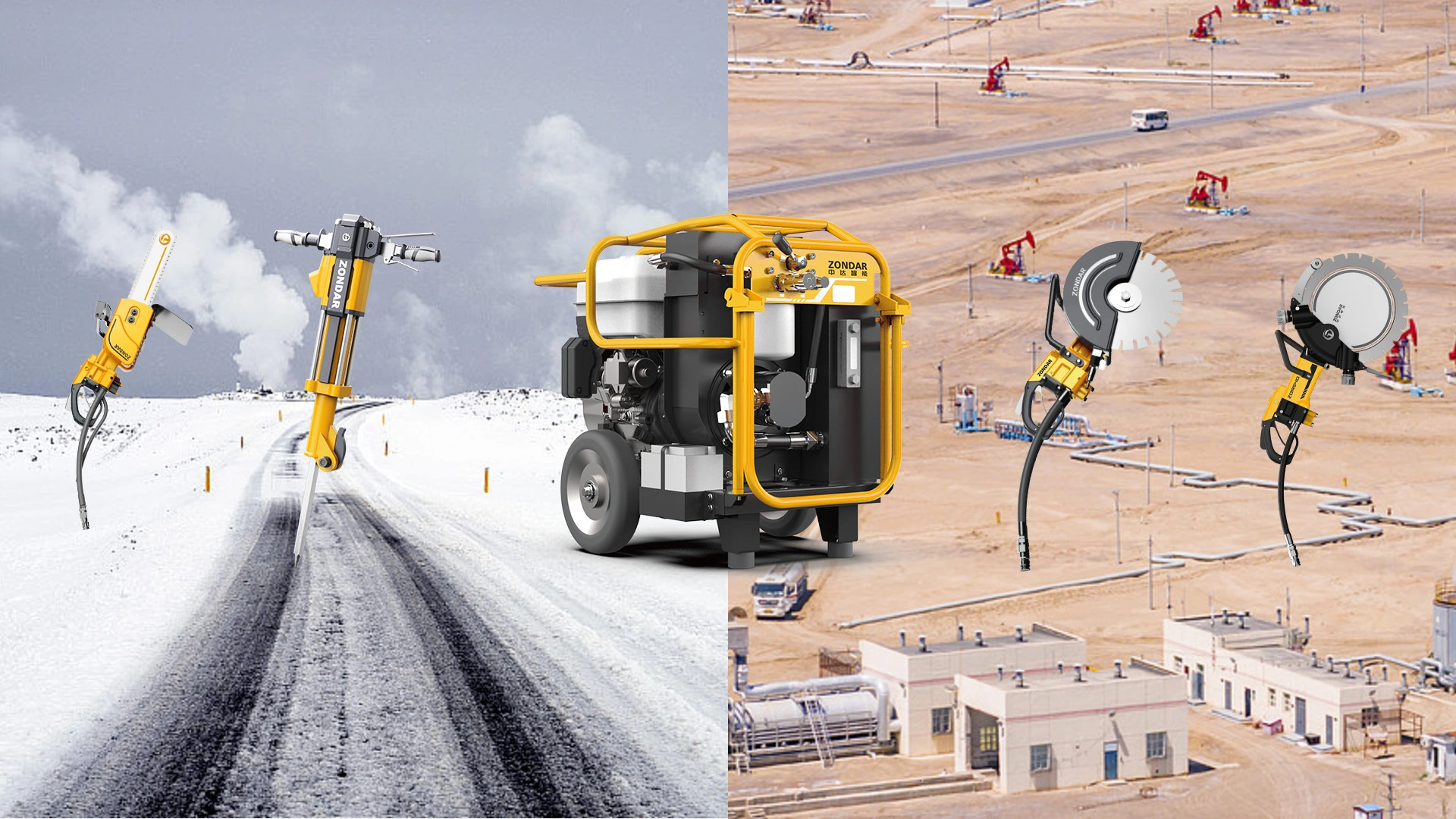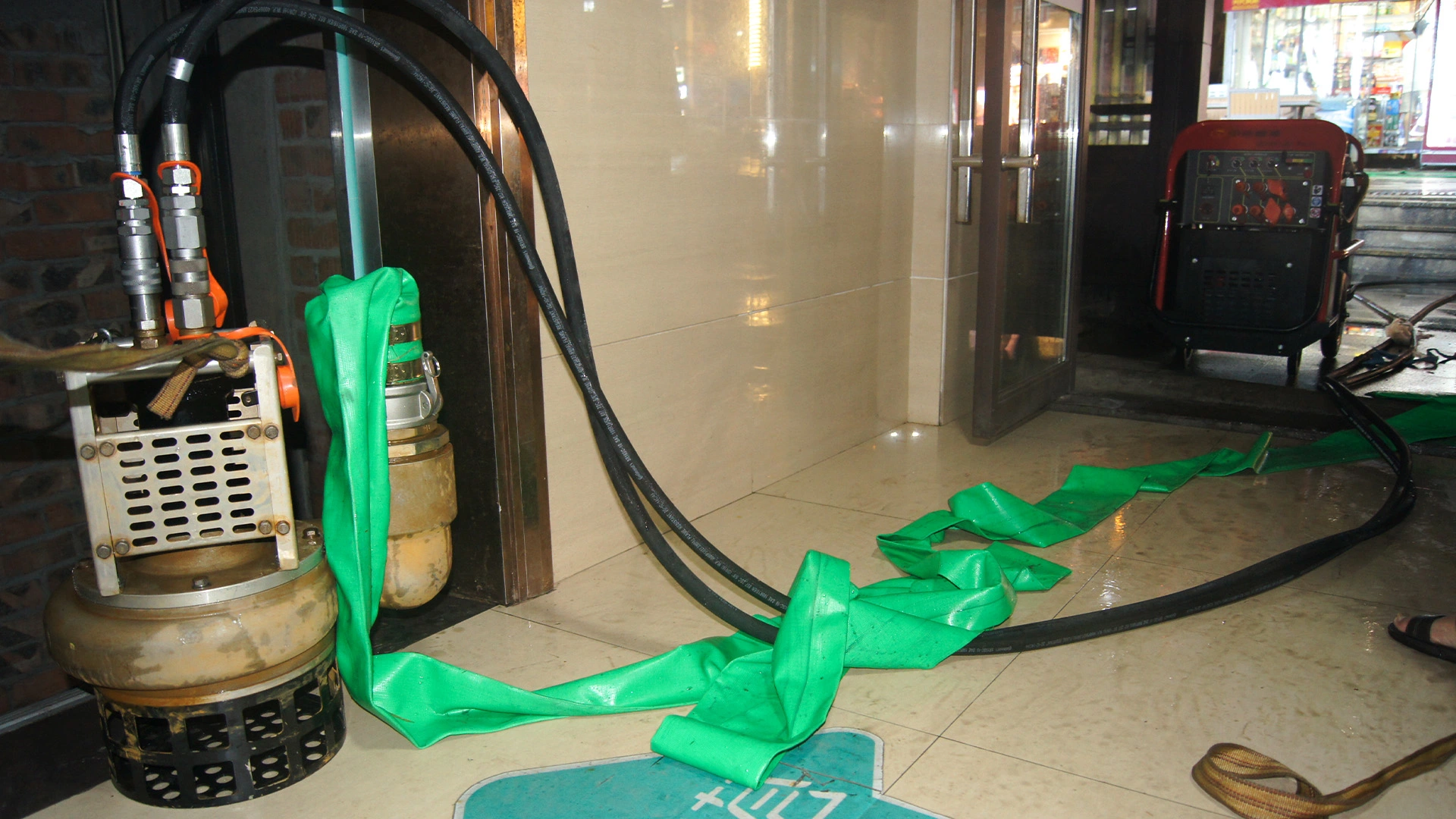
When contractors use hydraulic equipment on demanding jobsites, the hydraulic power unit is often connected to different tools depending on the task. The same portable hydraulic power unit may be used with a breaker for concrete demolition, a cutter for rescue work, a drill for construction, or a saw for cutting operations.
This flexibility is one of the main advantages of hydraulic equipment. Instead of carrying a separate power source for every tool, operators can use one hydraulic power unit with multiple compatible tools and change them through hydraulic hoses and quick couplers.
In this type of system, hydraulic hose size and specification are important. However, hose selection does not usually mean that operators need to calculate pressure loss and fluid velocity for every job. In practical applications, the more important approach is to use hoses that match the hydraulic power unit and tool requirements, use compatible quick couplers, and keep the complete hydraulic circuit in good condition.
Why Does Hydraulic Hose Size Matter?
A hydraulic hose provides the connection between the hydraulic power unit and the hydraulic tool. The pump generates hydraulic flow and pressure, while the hose provides the path through which hydraulic oil reaches the tool and returns to the power unit.
This means the hose does not create additional hydraulic flow or pressure. Instead, the hose needs to allow the available hydraulic power to reach the tool without creating unnecessary restrictions.
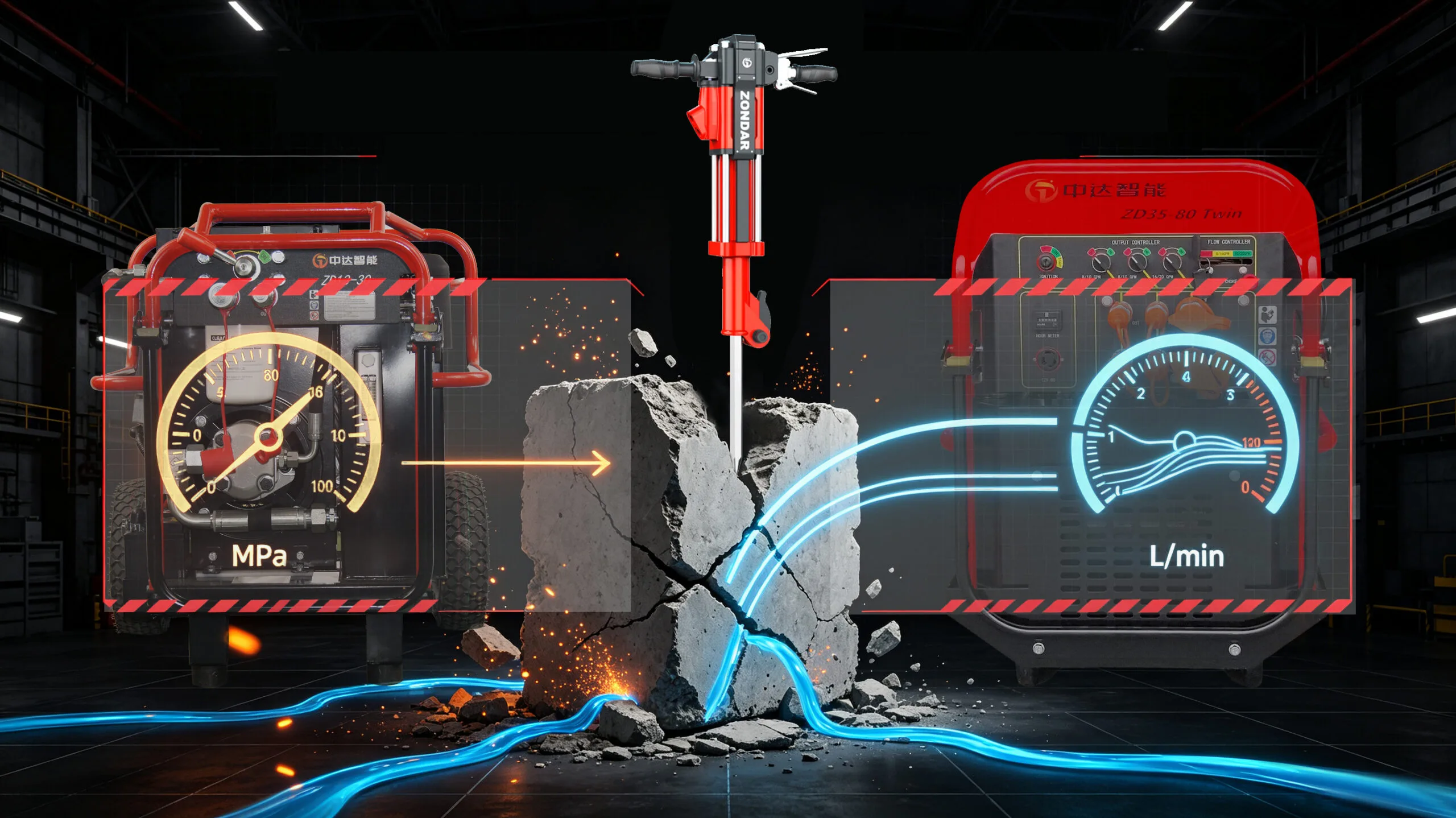
This is closely related to the relationship between hydraulic flow and pressure. Flow is mainly associated with tool operating speed, while pressure is related to the force or torque that the hydraulic tool can develop.
If the hose specification is not suitable for the system, the tool may not receive the hydraulic flow it needs. In practical use, this can appear as slow tool operation, reduced performance, excessive heat, or other abnormal behavior.
Standardized Hydraulic Hoses Make Multi-Tool Systems Easier to Use
One of the practical advantages of portable hydraulic equipment is that one HPU can power different hydraulic tools.
For example, a contractor may use the same power unit during different stages of a project:
- A hydraulic breaker for concrete or asphalt
- A hydraulic cutter for rescue or maintenance work
- A hydraulic drill for drilling operations
- A hydraulic saw for cutting concrete, masonry, or other materials
Instead of creating a completely different hydraulic system for every tool, standardized hose assemblies and quick couplers make tool replacement much easier.
The operator can disconnect one tool and connect another compatible tool to the same power unit. This reduces equipment complexity and makes a portable hydraulic system easier to transport and deploy.
For contractors and emergency rescue teams, this can be particularly useful when equipment needs to be moved between different working locations.
Does a Larger Hydraulic Hose Always Mean Better Performance?
Not necessarily.
A common misunderstanding is that a larger hose will automatically make a hydraulic tool more powerful or faster. In reality, the pump, hydraulic circuit, tool design, operating pressure, and required flow all affect tool performance.
The purpose of choosing an appropriate hose size is to ensure that the hose can handle the required hydraulic flow and pressure without becoming an unnecessary restriction.
Using a hose that is significantly different from the manufacturer’s recommended specification may create compatibility or performance problems. On the other hand, simply choosing the largest possible hose is not necessarily the best solution. Larger hoses can add weight and make portable equipment less convenient to handle.
For most users, the practical solution is much simpler: use the hose specification recommended for the hydraulic power unit and tool combination.
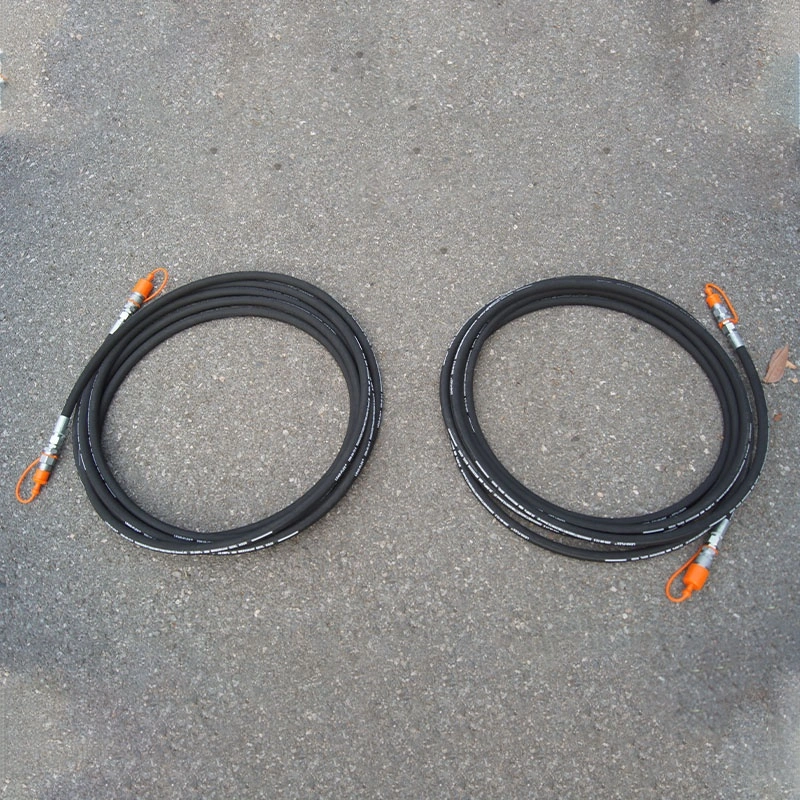
Hose Size and Hydraulic Flow
Different hydraulic tools require different flow rates.
For example, a hydraulic breaker may have a different flow requirement from a hydraulic core drill or hydraulic saw. The hydraulic power unit therefore needs to be selected according to the tools it will operate.
The same principle applies to the hose.
If the hydraulic system is designed to deliver a certain amount of flow, the hose and fittings need to be capable of supporting that flow. A hose that is too restrictive for the application can reduce the amount of useful flow reaching the tool.
This is why hose selection should be considered together with hydraulic power unit selection .
The goal is not simply to choose a hose based on diameter. The complete system needs to be compatible:
Hydraulic power unit → hydraulic hose → quick coupler → hydraulic tool → return hose → hydraulic power unit
When these components are correctly matched, the system can operate more consistently.
Hose Length Also Matters in Real-World Applications
Hydraulic hose length can affect the resistance within a hydraulic circuit. As hose runs become longer, the system may experience greater resistance than with a shorter connection.
However, this does not mean that operators need to calculate pressure loss every time they use a hydraulic tool.
In most practical construction, maintenance, and emergency rescue applications, users work with standard hose assemblies and recommended configurations. The more important consideration is whether the hose length and specification are appropriate for the equipment being used.
For example, if an HPU is supplied with a standard hose configuration for a particular hydraulic tool, there is normally no reason for the operator to redesign the hydraulic circuit.
Problems become more likely when users extend hoses significantly, replace hoses with unsuitable alternatives, or combine components that were not designed to work together.
Quick Couplers Are Just as Important as the Hose
A hydraulic hose can be correctly selected but still cause problems if the quick coupler is unsuitable or incorrectly connected.
Quick couplers provide a convenient way to connect and disconnect hydraulic tools. For a multi-tool hydraulic system, they are especially important because tools may be changed frequently during a project.
The couplers should be compatible with the hydraulic system’s pressure and flow requirements. They should also be kept clean and properly connected.
A partially connected coupler, contaminated coupling surface, damaged sealing component, or incompatible coupler can restrict hydraulic flow.
When a hydraulic tool suddenly becomes slow or weak, operators should therefore check the couplers as well as the hose.
This is an important part of overall hydraulic tool compatibility .
One HPU, Multiple Hydraulic Tools: What Should Operators Check?
A typical portable hydraulic system may be used with several tools during the same project.
The operator does not need to redesign the hydraulic hose system every time a tool is changed. Instead, several basic points should be confirmed.
First, make sure the hydraulic tool is compatible with the HPU’s operating pressure and flow range.
Second, use the recommended hydraulic hose and quick coupler configuration.
Third, make sure the couplers are fully connected before starting the tool.
Finally, check the hose condition before operation.
This approach is especially useful for emergency rescue teams. A portable HPU may need to power different tools depending on the situation. The faster the team can safely switch between compatible tools, the easier it is to respond to changing site conditions.
What If the Hydraulic Tool Suddenly Becomes Slow?
A slow hydraulic tool does not necessarily mean that the tool itself has failed.
The hydraulic hose and connection system should also be checked.
For example, operators can inspect whether:
- The hose is severely bent or crushed
- The hose has visible damage
- The quick coupler is fully connected
- The coupler is clean and compatible
- The hydraulic oil level is appropriate
- The HPU is operating normally
- The tool is being used within its specified flow and pressure range
If the problem appears immediately after changing a tool or replacing a hose, the connection should be one of the first things to inspect.
This simple troubleshooting approach can help prevent unnecessary tool replacement and reduce downtime.
For a broader maintenance approach, see hydraulic tool maintenance.
Hydraulic Hoses in Emergency Rescue Applications
Emergency rescue environments place particular demands on portable hydraulic equipment.
A rescue team may arrive at a site without knowing exactly which hydraulic tool will be required. One operation may require a breaker, while another may require a cutter, saw, or other hydraulic tool.
A portable HPU with standardized hydraulic hoses and quick couplers allows the team to build a flexible tool system around a common power source.
In these situations, hose reliability is not simply a matter of equipment performance. A damaged hose, poor connection, or unsuitable replacement can interrupt the operation when the equipment is needed most.
For this reason, hose inspection should be part of routine preparation, especially for rescue equipment that may remain unused for periods of time and then need to operate immediately.
Hose Selection Should Be Part of the Complete Hydraulic System
Hydraulic hose size is important, but it should not be considered as an isolated specification.
The hose works together with the hydraulic power unit, quick couplers, valves, hydraulic oil, and tool. A well-designed hydraulic system therefore considers the complete connection between the power source and the working tool.
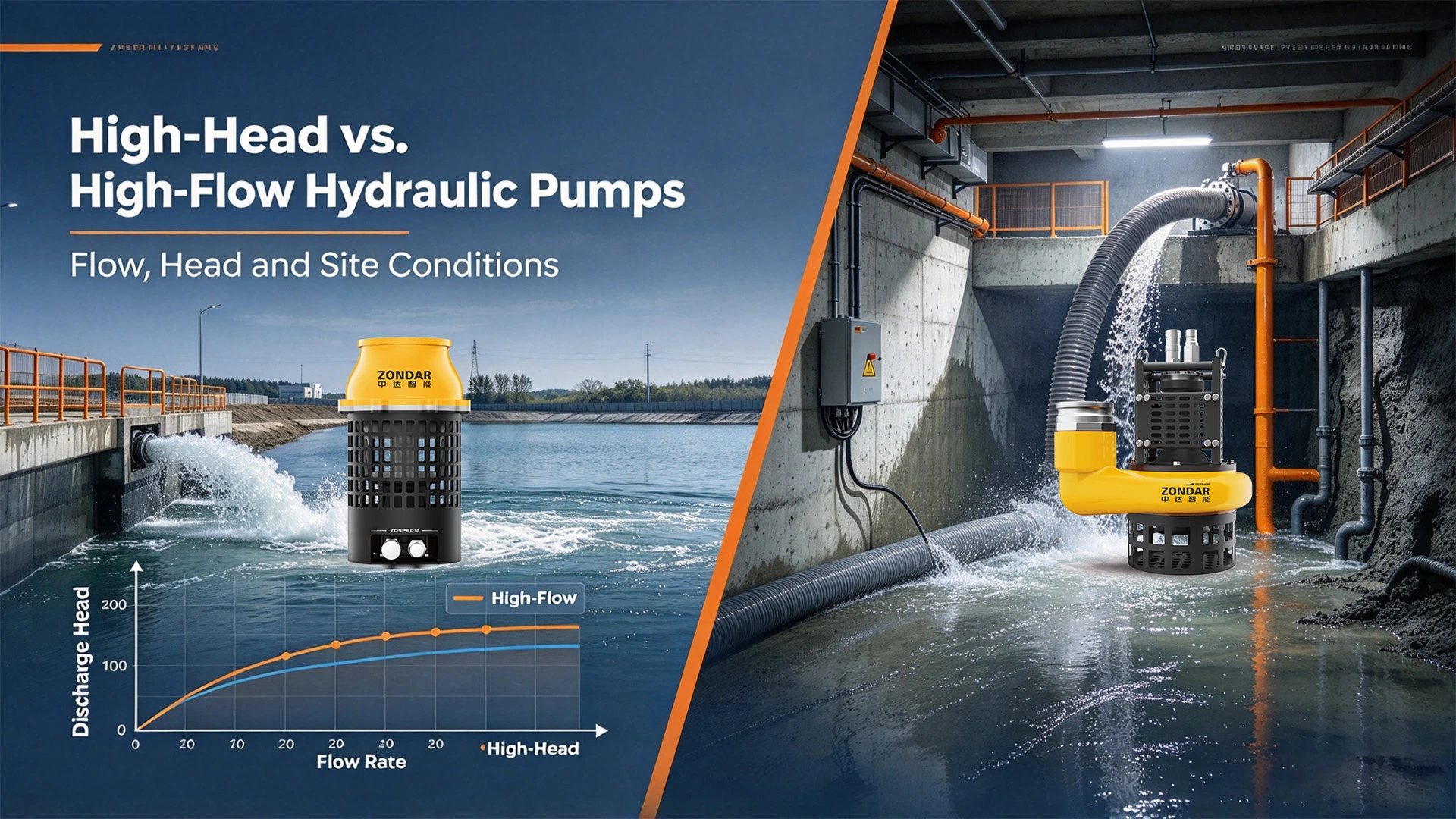
For pumping applications, the same principle applies. The hose arrangement should be considered together with the pump’s flow, head, discharge requirements, and working conditions. For example, a high-head hydraulic submersible pump may be used in applications where discharge conditions are very different from those of a handheld hydraulic tool.
The equipment may be different, but the basic principle remains the same: hydraulic components need to work together as one system.
Conclusion
Hydraulic hose size affects hydraulic tool performance because the hose is an important part of the path through which hydraulic oil reaches the tool.
However, for most contractors and equipment operators, hose selection does not need to become a complicated engineering calculation.
A more practical approach is to use manufacturer-recommended hose specifications, compatible quick couplers, and standardized connections. When one hydraulic power unit is used with multiple hydraulic tools, this approach makes equipment changes faster and the overall system easier to operate.
When a hydraulic tool does not perform as expected, the hose and quick couplers should also be checked instead of immediately assuming that the tool or power unit has failed.
In a portable hydraulic system, good performance comes from the compatibility of the entire system—not from any single component alone.