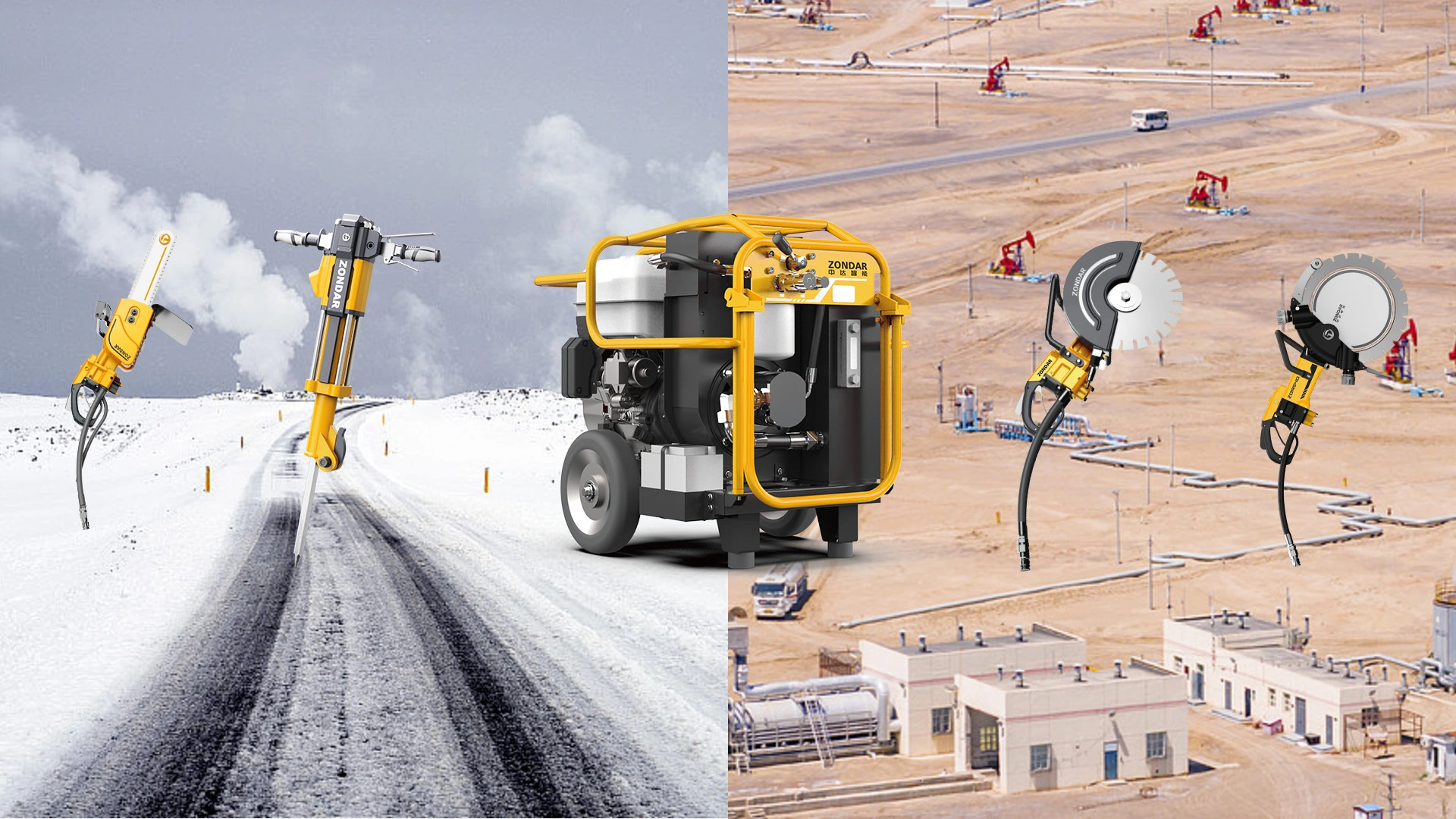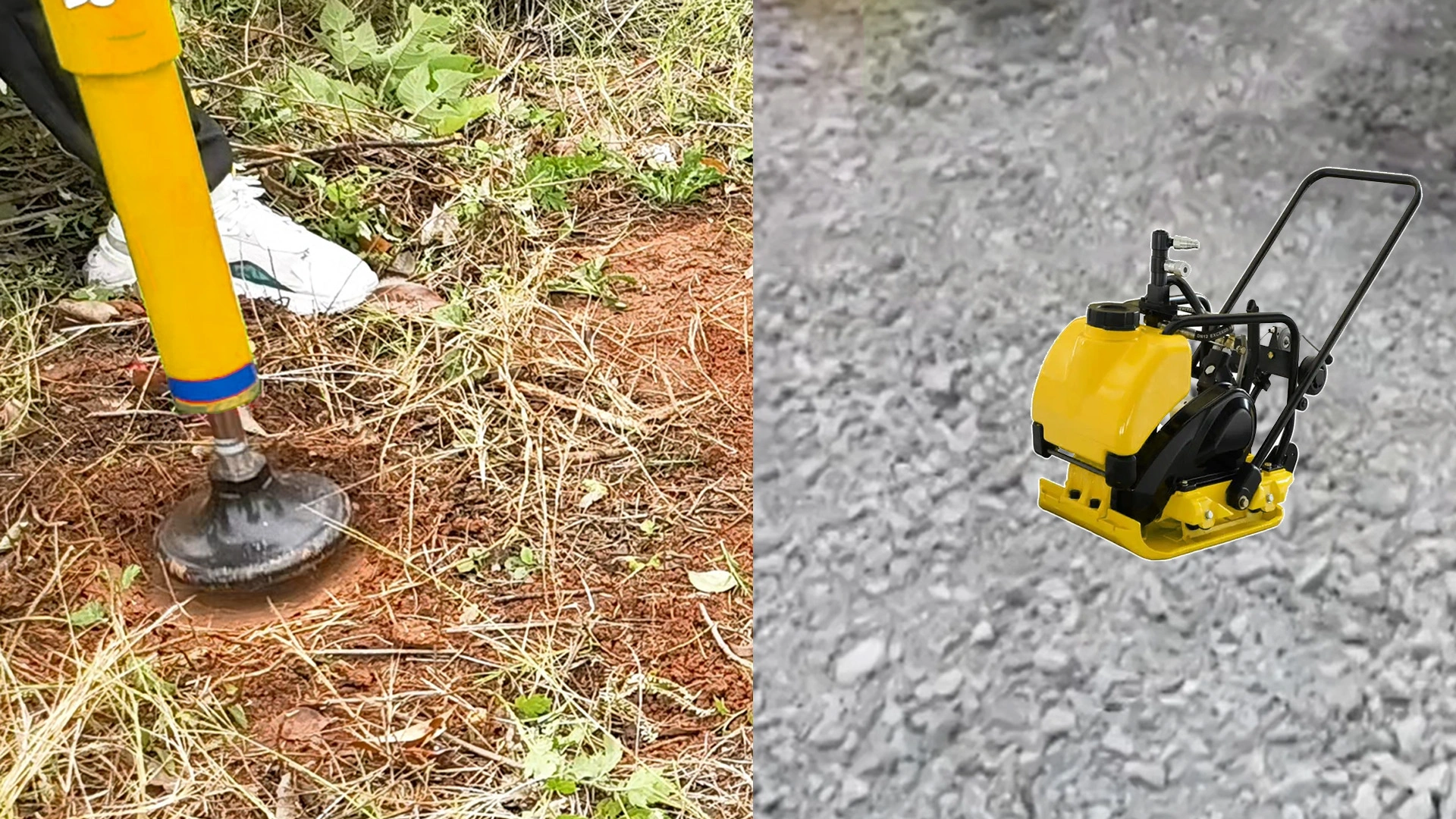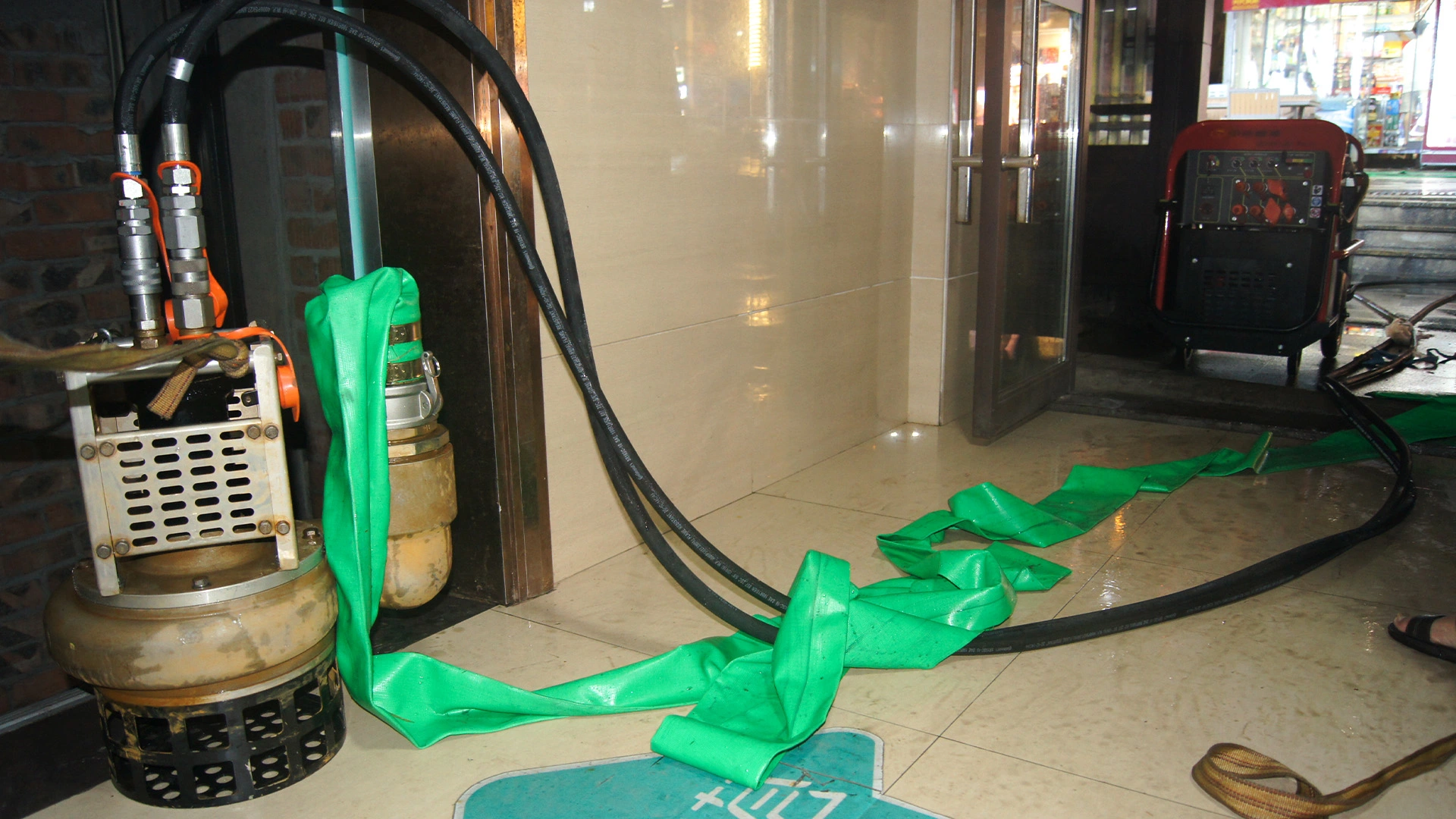
Every ZONDAR hydraulic equipment unit goes through important performance checks before shipment, with hydraulic flow and pressure among the key parameters we verify.
For hydraulic power units, breakers, pumps, and other hydraulic equipment, flow and pressure directly affect how the system performs under working conditions. A hydraulic tool may have sufficient pressure but operate too slowly if the flow is insufficient. On the other hand, a system with adequate flow may still fail to deliver the required working force if the pressure does not meet the tool’s requirements.
Understanding the difference between hydraulic flow and pressure is therefore important for equipment manufacturers, contractors, rescue teams, and operators. These two parameters are closely related, but they do not perform the same function.
In this article, we will explain what hydraulic flow and pressure mean, how they work together, and why finding the right balance between them is important for hydraulic tools and emergency rescue equipment.
What Is Hydraulic Flow?
Hydraulic flow refers to the volume of hydraulic fluid moving through a hydraulic system over a certain period of time.
It is commonly measured in:
Liters per minute (L/min)
Gallons per minute (GPM)
In simple terms, hydraulic flow describes how much hydraulic oil is moving through the system.
For example, a hydraulic power unit supplying 20 L/min delivers approximately 20 liters of hydraulic fluid through the circuit every minute under the specified operating conditions.
Flow has a significant influence on the operating speed of hydraulic equipment. Depending on the design of the hydraulic tool, a higher flow rate can allow a hydraulic motor, actuator, or other component to operate faster.
However, more flow does not automatically mean better performance. Every hydraulic tool has a recommended flow range. Supplying flow beyond the tool’s specifications can increase heat generation and may damage components if the system is not designed to handle it.
The objective is therefore not simply to maximize flow, but to provide the flow required by the specific tool and application.
What Is Hydraulic Pressure?
Hydraulic pressure represents the pressure developed within the hydraulic system as the fluid works against resistance.
Pressure is commonly measured in:
- Bar
- PSI (pounds per square inch)
- MPa
In practical terms, pressure is closely related to the force or torque that a hydraulic tool can develop.
For example, when a hydraulic breaker encounters hard concrete or rock, resistance increases and the hydraulic system operates under load. A hydraulic motor or actuator uses the available pressure to generate the required working force.
This is why pressure is particularly important for rescue and demolition applications where hydraulic tools must overcome strong resistance.
However, pressure should not be interpreted as a constant value that a tool produces regardless of the working condition. Actual system pressure changes according to load, hydraulic circuit design, pump characteristics, valves, and pressure settings.
Hydraulic Flow vs. Pressure: The Key Difference
The simplest way to understand the difference is:
Flow is primarily related to operating speed, while pressure is primarily related to available force or torque.
A hydraulic system needs both.
| Hydraulic Parameter | What It Describes | Common Units | Typical Effect |
| Hydraulic Flow | Volume of fluid moving through the system | L/min, GPM | Influences operating speed |
| Hydraulic Pressure | Pressure developed under load | Bar, PSI, MPa | Influences available force or torque |
This is why looking at only one specification can lead to an incorrect equipment selection.
A hydraulic tool may have sufficient pressure but insufficient flow, resulting in adequate force but slow operation. Conversely, a system may provide high flow but insufficient pressure, allowing fast fluid movement without enough force to handle a demanding load.
How Flow and Pressure Work Together
Flow and pressure should not be considered separately.
Hydraulic power is related to both pressure and flow. In simplified form:
Hydraulic Power = Pressure × Flow
This relationship explains why a hydraulic system needs an appropriate combination of flow and pressure to deliver useful power.
For example, a hydraulic breaker may require a certain flow range to achieve its intended impact frequency and a specific pressure range to generate the required working performance.
A hydraulic pump may be capable of providing high pressure, but if the available flow is too low, the tool may operate slowly.
Likewise, a system may provide plenty of flow but insufficient pressure, resulting in inadequate working force.
Matching a hydraulic tool with a power unit involves more than checking whether the connectors fit. Flow rate, operating pressure, hydraulic circuit configuration, and connection specifications should all be considered to ensure proper hydraulic tool compatibility.
When selecting a hydraulic power unit, both pressure and flow should be considered according to the requirements of the hydraulic tool. Pressure determines whether the tool can generate the required force or torque, while flow affects its operating speed. Therefore, finding the right balance between these two parameters is an important part of hydraulic power unit selection.
Hydraulic Flow and Pressure in Emergency Rescue Applications
Emergency rescue is one of the clearest examples of why hydraulic flow and pressure need to be balanced.
Rescue teams may need to work in collapsed buildings, damaged roads, tunnels, mines, traffic accidents, or other difficult environments where electrical power is unavailable or equipment access is limited.
In these situations, hydraulic tools such as hydraulic breakers, hydraulic chainsaws, hydraulic rock drills, and other rescue equipment need a reliable portable hydraulic power source.
For concrete-breaking applications, pressure must be sufficient for the hydraulic breaker to generate the required impact force, while adequate flow helps maintain the intended operating speed. However, flow and pressure are only part of the equation. The tool configuration and working material also matter when making hydraulic breaker and chisel selection.
For many rescue hydraulic tools, operating pressure is commonly around the 14–21 MPa range, depending on the tool design and manufacturer’s specifications. For example, ZONDAR’s current hydraulic tool specifications commonly use an 18 MPa operating or maximum-pressure level for several tools, while the required flow varies according to the tool.
This illustrates an important point:
Pressure and flow solve different problems during rescue operations.
What Does Sufficient Pressure Mean During Rescue?
When the hydraulic system reaches the pressure required by the tool, the tool has the hydraulic pressure needed to develop its intended working force or torque.
This matters when rescue personnel need to:
- Break concrete pavement
- Break or remove masonry
- Drill through concrete or rock
- Cut reinforced concrete and other structural materials
- Perform demanding cutting operations
- Carry out forcible-entry and structural access work
For example, ZONDAR’s hydraulic chain saws are designed for cutting reinforced concrete, rock, pipeline, masonry, and other materials, with operating flow of 20–40 L/min and a listed maximum pressure of 18 MPa.
If pressure is insufficient, a hydraulic tool may appear to be running but still fail to deliver the required working performance.
This can be described simply as:
The tool has movement, but not enough force.
It is therefore important not to assume that increasing flow can compensate for insufficient pressure.
If the pressure requirement is not met, simply providing more hydraulic oil per minute does not necessarily give the tool more breaking or cutting force.
What Does Higher Flow Mean During Rescue?
If pressure is closely related to available force, flow is primarily related to operating speed and throughput.
Higher flow, within the tool’s specified range, can allow:
A hydraulic breaker to maintain a higher impact frequency
A hydraulic motor-driven saw to operate at the required speed
A drilling tool to maintain appropriate rotational or operating speed
A hydraulic pump to deliver greater water-handling capacity, depending on pump design
This directly affects rescue efficiency.
If the flow is too low, a tool may still have sufficient pressure to overcome hard resistance, but its operating speed can be reduced.
In practical terms:
Sufficient pressure helps the tool overcome the load; sufficient flow helps the tool work at the required speed.
Flow Is Not Always “The More, the Better”
It is tempting to assume that a larger hydraulic power unit with higher flow will always provide better rescue performance.
That is not necessarily true.
Excessive flow can bring additional requirements, including:
- Larger hydraulic hoses
- Larger hydraulic components
- Greater equipment weight
- Higher engine and fuel demand
- Greater heat-generation and cooling requirements
This is especially important in emergency rescue.
Rescue equipment may need to be carried through narrow passages, moved across damaged roads, transported up stairs, or deployed quickly by a small team.
Therefore, portability is part of performance.
The relationship between flow and pressure also varies by application. For example, hydraulic drainage equipment may prioritize moving a large volume of water over short or long distances, while a high-head hydraulic submersible pump is designed for applications where greater lifting height is required. In these cases, pump flow and head should be evaluated together rather than simply choosing the highest available flow.
A very large hydraulic power unit may provide high flow, but if it becomes difficult to transport to the actual rescue location, its theoretical output does not necessarily translate into better field efficiency.
This is one reason portable hydraulic power units need to balance flow, pressure, engine power, equipment size, cooling capacity, and weight.
ZONDAR’s portable HPU range includes compact single-circuit units as well as larger twin-circuit configurations designed to provide different flow combinations for hydraulic tools. For example, the ZD13-30 provides 30 L/min, while larger twin-circuit models are designed for higher or multiple flow outputs.
Three Common Misconceptions About Hydraulic Flow and Pressure
Misconception 1: Higher Pressure Means Faster Operation
Not necessarily.
Pressure is primarily related to the force or torque available to the hydraulic tool. Once the tool has sufficient pressure to perform its intended task, increasing pressure does not automatically make the tool operate faster.
If flow is insufficient, the tool may still operate slowly even when the pressure requirement is satisfied.
Higher pressure also requires hydraulic components, hoses, seals, valves, and other system parts to be rated appropriately.
For portable rescue equipment, unnecessarily high pressure can increase system complexity, component requirements, and weight.
The practical goal is therefore:
Use sufficient pressure, not simply the highest possible pressure.
Misconception 2: Higher Flow Means More Force
Not necessarily.
Increasing flow primarily increases the amount of hydraulic fluid delivered over time. Depending on the tool design, this can increase operating speed.
It does not automatically increase the maximum force available from the hydraulic system.
For example, if a hydraulic breaker requires a specific pressure to work against hard concrete, simply increasing flow while leaving the pressure capability unchanged does not necessarily provide greater breaking force.
In simple terms:
More flow can make the tool work faster; more pressure can increase the force or torque available within the tool’s design limits.
Both must remain within the manufacturer’s specifications.
Misconception 3: Two Hydraulic Systems With the Same Power Must Perform the Same
Not necessarily.
Two systems can have similar theoretical hydraulic power while using different combinations of pressure and flow.
For example:
Higher Pressure + Lower Flow
This configuration can be suitable for applications where significant force or torque is required but extremely high fluid volume is not.
Typical examples can include:
Hydraulic breakers
Hydraulic rock drills
Certain hydraulic cutting tools
Other compact rescue tools
The combination can provide strong working performance while allowing the hydraulic equipment to remain relatively compact.
Lower Pressure + Higher Flow
Other applications place greater emphasis on moving a large volume of hydraulic fluid continuously.
Hydraulic slurry pumps are a good example. Their primary objective is not to generate extremely high breaking force, but to use hydraulic power to drive a pump capable of moving large volumes of water and solids.
This is why the same hydraulic power rating can be configured differently depending on the intended application.
For ZONDAR, this is also the basic logic behind offering different hydraulic power unit models and flow configurations: the objective is to match pressure and flow to the actual rescue or field application rather than simply maximize one specification.
Safety: Why Pressure Control Matters
Hydraulic systems operate under high pressure, so pressure control is an important part of system safety.
A properly designed hydraulic power unit can incorporate pressure-control components such as relief valves. When system pressure reaches the configured limit, the relief system can divert or release hydraulic flow according to the system design, helping prevent pressure from exceeding the intended setting.
This can help protect Hydraulic hoses, valves, pumps, hydraulic tools, seals and other components
However, a relief valve is not a substitute for correct equipment selection.
Maintaining the correct hydraulic pressure and flow is also important for hydraulic tool maintenance. Excessive pressure, restricted flow, contaminated hydraulic oil, or insufficient cooling can increase system temperature and accelerate wear on hoses, seals, valves, pumps, and hydraulic tools.
Operators should never intentionally exceed the rated pressure of a hydraulic tool, hose, coupler, or other component. All pressure settings should remain within the manufacturer’s specified limits.
Practical Selection Tips for Emergency Rescue Teams
The correct balance between flow and pressure depends on the rescue task.
1. Vehicle Access, Concrete Breaking and Rock Drilling
Prioritize the required operating pressure first, then select an appropriate flow rate according to the tool specification.
The goal is to obtain sufficient working force while maintaining manageable equipment weight and portability.
2. Emergency Dewatering With Hydraulic Slurry Pumps
For hydraulic slurry pumps, the required flow and pump performance become particularly important.
The objective is to move water, mud, and debris efficiently rather than generate extremely high breaking force.
Pump head, discharge distance, fluid conditions, and hydraulic input requirements should all be considered.
3. Operating Two Hydraulic Tools Simultaneously
If a hydraulic power unit is expected to operate two tools at the same time, the available hydraulic flow must be sufficient for both circuits.
Otherwise, both tools may experience reduced operating speed when operated simultaneously.
For example, ZONDAR’s twin-circuit hydraulic power units are designed to provide separate flow outputs and can support two hydraulic tools depending on the model and tool requirements.
4. Rescue in Confined or Difficult-to-Reach Locations
Portability becomes particularly important.
A compact HPU with sufficient pressure and an appropriate, rather than excessive, flow rate may be more practical than a much larger unit.
This is particularly relevant when rescue personnel must carry equipment through narrow access points, damaged structures, tunnels, or other restricted areas.
A Practical Way to Think About Hydraulic Performance
For emergency rescue teams, the relationship can be remembered as follows:
Pressure → Can the tool develop enough force or torque for the job?
Flow → Can the tool perform that work at the required speed?
Hydraulic power → How much hydraulic energy can the system deliver through the combination of pressure and flow?
Equipment design → Can that performance be delivered safely, reliably, and with enough portability for the actual rescue environment?
This is why hydraulic equipment selection should not focus on one number alone.
Conclusion: Match Pressure and Flow to the Rescue Task
Hydraulic flow and pressure are two independent but interconnected parameters.
Pressure is closely related to the force or torque a hydraulic tool can develop, while flow is primarily related to operating speed and hydraulic throughput.
In emergency rescue, the right balance is particularly important. A hydraulic breaker, drill, or cutting tool needs sufficient pressure to handle demanding loads, while adequate flow allows the tool to operate at the required speed. A hydraulic slurry pump, meanwhile, may place greater emphasis on hydraulic flow and pumping performance.
At the same time, increasing flow or pressure without considering equipment size, heat generation, hose requirements, component ratings, and portability can create new problems.
For rescue teams, the practical principle is therefore simple:
Pressure helps the tool overcome the load. Flow helps the tool work efficiently. The right combination depends on the task.
ZONDAR’s portable hydraulic power units and hydraulic tools are designed around different combinations of hydraulic pressure and flow for applications including emergency rescue, road maintenance, construction, mining, and drainage. Selecting the appropriate combination allows rescue equipment to balance working capability, operating efficiency, safety, and portability in demanding field conditions.