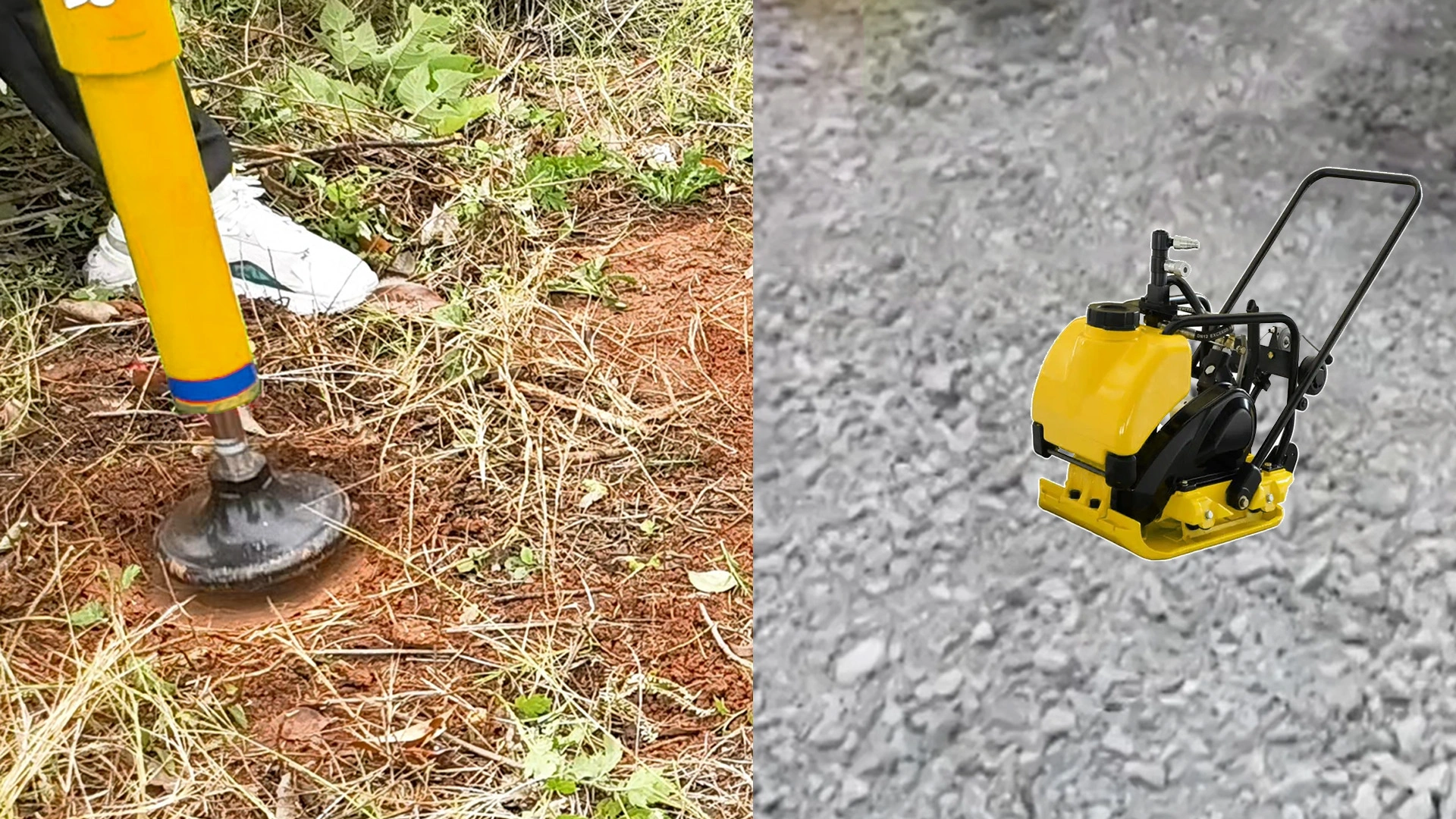
Hydraulic tools are designed to work in demanding environments, from construction sites and infrastructure projects to emergency rescue and flood-response operations.
But hydraulic equipment does not experience the same working conditions everywhere.
A hydraulic breaker working in northern Canada may face sub-zero temperatures for extended periods. A hydraulic power unit operating in the Middle East may work outdoors when the air temperature approaches 50°C. In tropical regions, high temperature can be combined with humidity, rain and continuous heavy workloads.
So, what temperature is actually too cold or too hot for a hydraulic tool?
The answer is not simply the temperature shown on a weather app.
For hydraulic equipment, ambient temperature is only one part of the equation. Hydraulic oil temperature, oil viscosity, cooling capacity, seals, hoses and the design specifications of the individual tool all influence whether a system is operating normally.
Understanding this relationship is essential for year-round hydraulic tool maintenance.
Ambient Temperature Is Not the Same as Hydraulic Oil Temperature
One of the most important points in hydraulic tool maintenance is the difference between ambient temperature and hydraulic fluid temperature.
A machine operating outdoors at 35°C does not necessarily have hydraulic oil at 35°C.
During operation, a hydraulic system generates heat as mechanical and hydraulic energy is converted and transmitted. Hydraulic systems generate heat during operation and that controlling hydraulic oil temperature is important for reducing wear and maintaining system efficiency.
The reverse is also true.
A machine operating at -10°C does not necessarily mean that every hydraulic component is at -10°C after the system has warmed up.
This leads to a more useful way of looking at temperature:
Ambient temperature affects the hydraulic system, but hydraulic oil temperature and viscosity determine much of the system’s actual operating condition.
What Is a Normal Temperature Range for Hydraulic Equipment?
There is no single temperature range that applies to every hydraulic tool.
Different hydraulic breakers, cutters, drills, pumps, power units and other tools can use different hydraulic fluids, seals and component designs.
Even within the same equipment category, manufacturers may specify different operating limits.
For example, a recommended oil temperature of 30°C to 60°C for several of its hydraulic units, while certain products have permissible oil-temperature ranges extending from approximately -30°C to 100°C.
This distinction is important.
A recommended operating range is not necessarily the same as the maximum permissible range.
Therefore, operators should always use the operating temperature, hydraulic-fluid specification and maintenance instructions provided for the specific hydraulic tool and power unit.
The figures in this article are general engineering references, not universal operating limits.
Why Cold Weather Affects Hydraulic Tools
Low temperature primarily changes the viscosity of hydraulic oil.
As hydraulic oil becomes colder, it generally becomes more viscous.
In simple terms, the oil becomes thicker and has greater resistance to flowing through pumps, hoses, valves and other hydraulic components.
This can affect the equipment in several ways:
- Slower hydraulic response
- Higher resistance to oil flow
- Increased startup load
- Reduced hydraulic efficiency
- Greater difficulty achieving normal operating performance
- Increased risk of cavitation if the system is not properly warmed
- Greater stress on seals and other components
Excessive oil viscosity caused by low temperature as a condition that can affect hydraulic filter and system performance.
This is why simply starting a hydraulic power unit and immediately applying full load is not good practice in very cold weather.
Winter Rule: Warm the System Before Heavy Work
How to use hydraulic tools in cold weather? The basic winter principle is simple:
Start slowly. Circulate the oil. Monitor the system. Increase the workload gradually.
The exact warm-up procedure depends on the equipment.
For a hydraulic power unit, operators should follow the manufacturer’s instructions for engine warm-up and hydraulic oil circulation.
For a hydraulic breaker or other handheld hydraulic tool, the tool should not immediately be subjected to maximum impact or load when the hydraulic oil is still excessively cold.
The objective is not to make the entire machine “warm” simply for comfort.
The objective is to bring the hydraulic fluid and components into an appropriate operating condition.
Winter Hydraulic Tool Maintenance Checklist
1. Select Hydraulic Oil for the Working Climate
Hydraulic oil should be selected according to the manufacturer’s specifications and the expected operating temperature.
Do not assume that the same oil grade is appropriate for every climate.
A fluid suitable for a warm environment may not provide the required viscosity characteristics during cold starts.
The equipment manual and hydraulic-fluid supplier’s specifications should therefore be checked before changing oil grades.
2. Allow Sufficient Warm-Up Time
Cold oil requires time to circulate.
Avoid immediately applying maximum pressure or continuous heavy load after startup.
A gradual increase in workload allows the hydraulic system to reach a more suitable operating condition.
3. Inspect Hoses and Seals
Low temperatures can make elastomeric components less flexible.
Before operation, inspect hydraulic hoses, hose connections, o-rings, seals, couplers, fittings.
Look for cracking, hardening, leakage or other abnormal conditions.
4. Check the Power Unit
For fuel-powered hydraulic power units, winter preparation also includes the engine and starting system.
Low temperatures can make engine starting more difficult and can reduce battery performance.
Hydraulic equipment maintenance therefore involves more than the hydraulic circuit itself.
5. Protect the Equipment During Storage
If equipment is not going to be used for an extended period, follow the manufacturer’s storage instructions.
Keep hydraulic components protected from moisture, contamination and unnecessary exposure to extreme temperature changes.
Why Hot Weather Creates a Different Hydraulic Risk
Cold weather makes hydraulic oil more viscous.
Hot weather produces almost the opposite problem.
As hydraulic oil temperature increases, viscosity generally decreases.
If the oil becomes too hot, it may become less effective at maintaining the desired lubrication and sealing characteristics. Excessive temperature can also accelerate fluid degradation and reduce the service life of hydraulic components.
Oil operating temperature of approximately 30°C to 60°C in relevant hydraulic applications and hydraulic oil service life is strongly related to operating temperature.
This does not mean that every hydraulic tool must stop at 60°C.
Instead, it illustrates an important principle:
Recommended operating temperature and maximum permissible temperature are different concepts.
The correct limit must come from the specifications of the actual hydraulic system.

Summer Rule: Control Heat Before It Becomes a Problem
Hot weather creates a difficult situation for hydraulic equipment. How to use hydraulic tools in hot weather?
The hydraulic system is already generating heat through normal operation, while the surrounding air is also hot.
When the temperature difference between the hydraulic oil and the surrounding environment becomes smaller, the system may have greater difficulty releasing heat.
The result can be a gradual rise in hydraulic oil temperature.
A typical chain can look like this:
High ambient temperature → reduced heat dissipation → rising oil temperature → lower viscosity → increased internal leakage → additional heat generation.
This is why hydraulic equipment that operates normally in a temperate climate may require more careful monitoring in a hot environment.
Summer Hydraulic Tool Maintenance Checklist
1. Monitor Hydraulic Oil Temperature
If the power unit is equipped with a temperature gauge or monitoring system, check the hydraulic oil temperature during extended operation.
Do not rely only on external air temperature.
The hydraulic oil temperature provides more direct information about the operating condition of the hydraulic circuit.
2. Keep the Cooler and Ventilation Areas Clean
Dust, mud and debris can restrict airflow through cooling components.
This is particularly important for equipment used at construction sites, demolition sites, rescue scenes, flooded areas, mining environments, dusty outdoor locations.
A clean cooling system is an important part of temperature management.
3. Check Hydraulic Oil Level
Maintain the hydraulic oil level according to the manufacturer’s specification.
An incorrect oil level can affect hydraulic system performance and heat management.
4. Avoid Unnecessary Continuous Heavy Loading
Hydraulic tools generate heat during operation.
A breaker running continuously under heavy load can generate considerably more heat than intermittent operation.
Where the application permits, appropriate work cycles can help control hydraulic temperature.
5. Inspect Hoses and Seals
Hot temperatures, high pressure and continuous operation can increase stress on hydraulic hoses and seals.
Inspect for oil leakage, hose abrasion, swelling, cracking, damaged fittings, loose connections.
Any damaged hydraulic hose should be handled according to the manufacturer’s safety and replacement requirements.
Where Are Hydraulic Tools Most Likely to Face Extreme Temperatures?
Hydraulic equipment is used worldwide, but some regions experience particularly challenging temperature conditions.
The purpose of looking at these regions is not to suggest that a hydraulic tool can automatically operate there.
Instead, they illustrate why climate-specific equipment preparation matters.
Northern Canada, Greenland and Northern Russia
Parts of the Arctic and sub-Arctic experience extremely low temperatures.
The World Meteorological Organization recognizes -69.6°C in Greenland as the Northern Hemisphere’s lowest verified temperature record.
Northern Russia also contains some of the world’s coldest permanently inhabited locations.
These conditions are far beyond the normal operating environment of many conventional hydraulic tools.
At such temperatures, standard hydraulic-fluid selection and normal startup procedures may not be sufficient.
Specialized low-temperature equipment, appropriate fluids, heating arrangements and manufacturer-approved procedures may be required.
Scandinavia and Northern Europe
Northern parts of Norway, Sweden and Finland can experience prolonged winter conditions, although temperatures vary significantly by location.
Construction, forestry, mining, road maintenance and emergency-response equipment may therefore need to operate during periods of freezing temperatures.
In these environments, cold-weather startup and hydraulic oil viscosity become important maintenance considerations.
Middle East and North Africa
The challenge changes dramatically in desert environments.
Countries such as Saudi Arabia, Kuwait and the United Arab Emirates can experience very high summer temperatures.
At the same time, hydraulic equipment may be operating under heavy outdoor workloads.
This combination creates additional demands on hydraulic cooling systems and oil-temperature management.
Australia and Other Hot-Climate Regions
Parts of Australia regularly experience very high summer temperatures, particularly in inland regions.
Similar challenges can occur in parts of North Africa, South Asia and other hot climates.
Again, the issue is not simply whether the air temperature is high.
The key question is whether the hydraulic system can maintain appropriate oil temperature and viscosity under the actual workload.
The World’s Temperature Extremes Put Hydraulic Limits into Perspective
The most extreme recorded weather conditions show just how different operating environments can be.
The World Meteorological Organization’s global extremes archive records -69.6°C in Greenland as the verified Northern Hemisphere low.
At the other end of the scale, WMO’s global climate extremes records include 56.7°C at Furnace Creek, California, as the historical official maximum temperature record.
These are exceptional records rather than normal working conditions.
But they demonstrate why a hydraulic tool designed for one climate cannot automatically be assumed to perform identically in another.
A hydraulic tool may be perfectly suitable for a temperate construction site while requiring additional preparation, different fluid specifications or operating restrictions in an extreme climate.
A More Useful Way to Think About Temperature Limits
When operators ask:
“Can this hydraulic tool work at -20°C?”
or
“Can this hydraulic power unit work at 45°C?”
the answer should not come from ambient temperature alone.
A better assessment considers at least five factors:
1. Ambient Temperature
What is the outdoor temperature?
2. Hydraulic Oil Temperature
What temperature does the hydraulic fluid actually reach during operation?
3. Oil Viscosity
Is the hydraulic fluid within the viscosity range specified for the hydraulic components?
4. Workload
Is the tool operating intermittently or continuously under heavy load?
5. Equipment Specification
What temperature, viscosity and operating limits does the manufacturer specify?
This produces a much more reliable assessment than simply comparing the weather forecast with a single temperature number.
Winter and Summer Maintenance at a Glance
| Working Condition | Main Temperature Challenge | Key Maintenance Focus |
| Below freezing | Hydraulic oil becomes more viscous | Warm-up and correct oil selection |
| Very low temperature | Cold-start and component performance | Manufacturer-approved cold-weather procedures |
| Moderate temperature | Normal operating conditions | Routine inspection and fluid maintenance |
| Hot weather | Hydraulic oil temperature rises | Cooling and temperature monitoring |
| Very hot weather | Reduced viscosity and heat buildup | Oil specification, cooling and workload management |
| Extreme temperature | System may exceed design assumptions | Follow equipment-specific operating limits |
These are general maintenance principles, not universal temperature limits. Always follow the specifications for the individual hydraulic tool, power unit and hydraulic fluid.
Why Climate Should Be Considered When Choosing Hydraulic Equipment
For international contractors, rescue organizations and equipment distributors, climate should be considered before hydraulic equipment is deployed.
A portable hydraulic breaker used in Northern Europe may need different preparation from one used in Southeast Asia.
A hydraulic power unit used for emergency drainage in a tropical city may experience high temperature, humidity and continuous operation.
A hydraulic slurry pump deployed in a desert environment may face high ambient temperature and dust at the same time.
This is why equipment selection should consider more than pressure and flow.
Important factors can include:
Operating temperature, hydraulic oil viscosity, cooling capacity, hose specifications, seal materials, workload, storage conditions and the manufacturer’s maintenance requirements.
The correct equipment is not simply the equipment with the highest pressure or largest flow.
It is equipment that can operate reliably within the conditions in which it will actually be used.
How ZONDAR Approaches Hydraulic Equipment for Different Working Environments
For portable hydraulic equipment, temperature is only one part of operating reliability.
The hydraulic power unit, hydraulic tools, hoses, couplers and hydraulic oil form one working system.
For this reason, maintenance should be considered from the power source to the final tool.
Before operation, operators should verify the hydraulic oil level and condition, inspect hoses and couplers, check the power unit and confirm that the expected ambient and hydraulic temperatures are within the equipment’s specified operating conditions.
During operation, temperature, pressure and abnormal noise or performance changes should be monitored where the equipment provides these indicators.
After operation, the hydraulic system should be shut down and stored according to the manufacturer’s maintenance and storage instructions.
This approach is particularly important for portable hydraulic equipment used in construction, maintenance, emergency rescue and flood-response operations, where equipment may be transported between different climate zones.
The Key Principle: Maintain the System, Not Just the Tool
Winter and summer create different challenges, but the maintenance principle is the same.
Cold weather requires attention to viscosity and warm-up.
Hot weather requires attention to temperature and heat dissipation.
In both cases, operators need to understand the relationship between the environment and the hydraulic system.
The most important question is therefore not:
“Is the weather too cold or too hot?”
It is:
“Is the hydraulic system operating within the temperature, viscosity and workload limits specified for this equipment?”
That distinction can help operators avoid applying a single temperature rule to every hydraulic tool.
For equipment used internationally, proper hydraulic-fluid selection, pre-operation inspection, controlled warm-up, cooling-system maintenance and temperature monitoring are practical parts of year-round hydraulic tool maintenance.
Whether the equipment is working through a cold winter in Northern Europe or a hot summer in the Middle East, understanding the climate is part of understanding the hydraulic system.