Soil compaction is an important part of construction, road maintenance, utility installation, landscaping, and municipal infrastructure projects. Proper compaction improves ground stability, reduces the risk of settlement, and provides a stronger base for subsequent construction.
For jobs where large rollers are impractical, contractors often rely on compact hydraulic compaction equipment. Two useful options are the hydraulic handheld tamper and the hydraulic plate compactor.
Both machines use hydraulic power, but they are designed to deliver compaction energy in different ways.
A hydraulic handheld tamper applies concentrated tamping force through a relatively small working foot, while a hydraulic plate compactor uses vibration through a larger base plate. As a result, each machine has different strengths when it comes to accessibility, working area, productivity, and application.
So, which one should contractors choose?
The answer depends on the working environment and the type of compaction required.
What Is a Hydraulic Handheld Tamper?
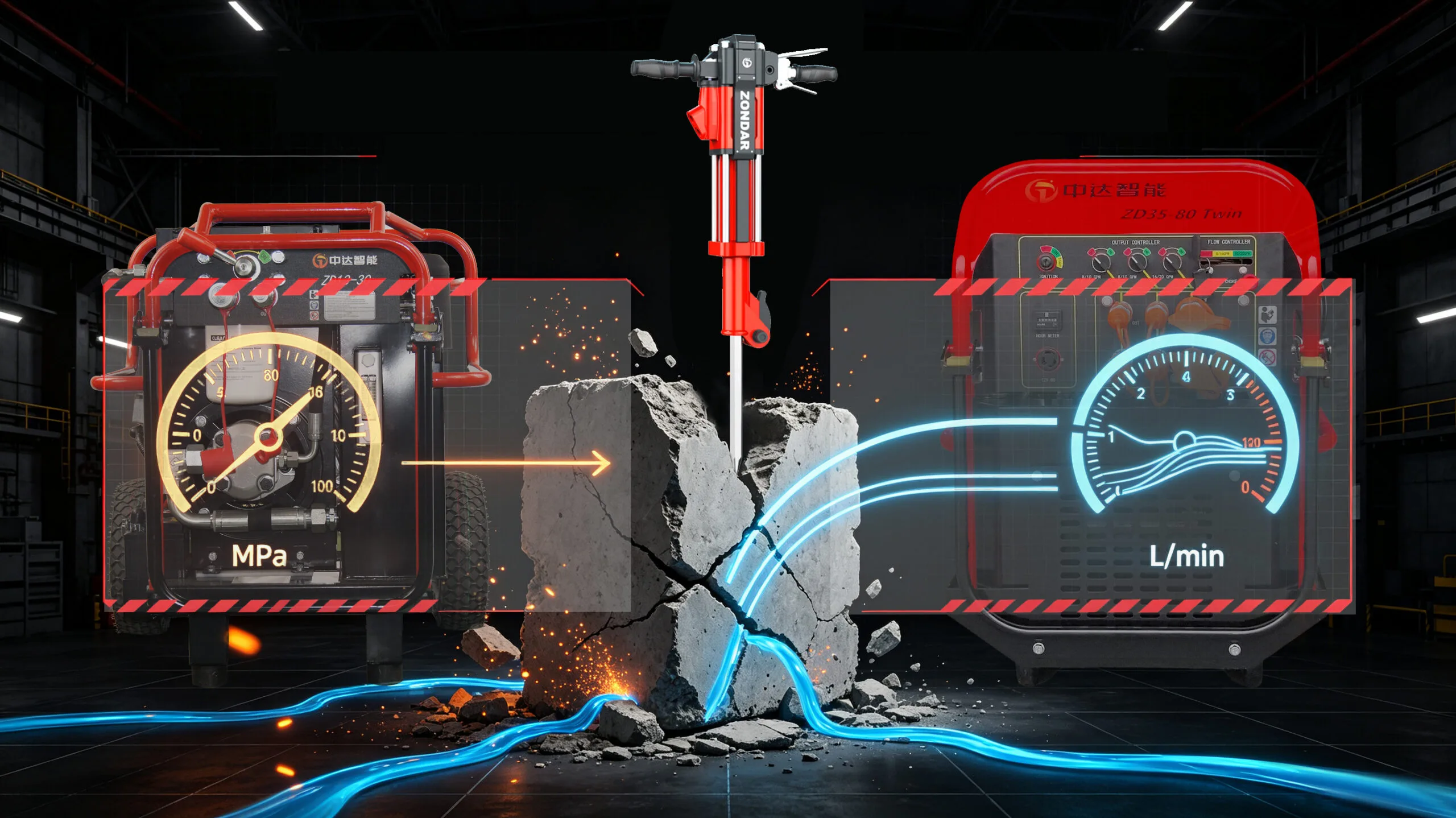
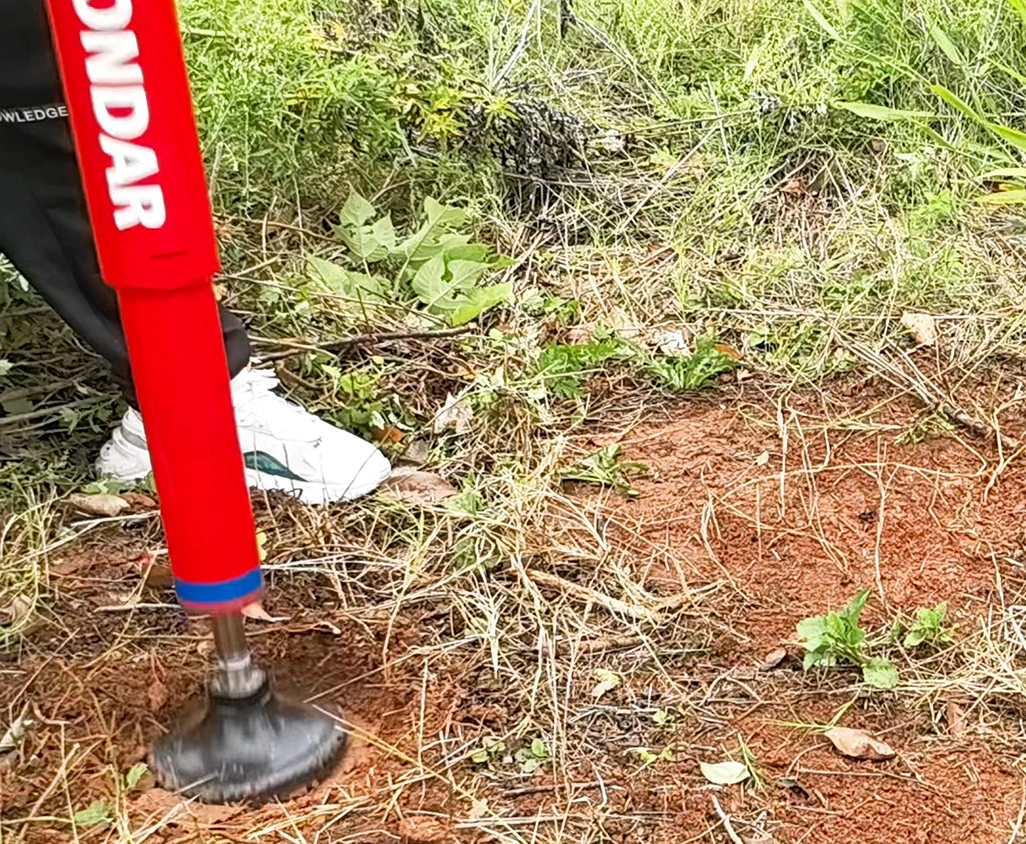
A hydraulic handheld tamper is a portable compaction tool powered by hydraulic flow from an external hydraulic power source.
Instead of having its own gasoline or diesel engine, the tamper is connected to a hydraulic power unit through hydraulic hoses. The hydraulic system supplies pressurized hydraulic oil, which drives the tamping mechanism.
A typical system can be configured as:
Hydraulic Power Unit → Hydraulic Hose → Hydraulic Handheld Tamper
The tamper transfers hydraulic energy into repeated tamping movement at the working foot. Because the contact area is relatively small, the compaction force is concentrated in a specific area.
This compact design makes a hydraulic handheld tamper particularly useful where access is more important than wide-area coverage.
Typical applications include utility trench backfilling, pipeline construction, road repair, foundation work, municipal maintenance, compaction around structures, narrow construction areas, localized soil compaction.
The exact application depends on the specifications of the hydraulic handheld tamper, the hydraulic power source, and the characteristics of the material being compacted.
What Is a Hydraulic Plate Compactor?
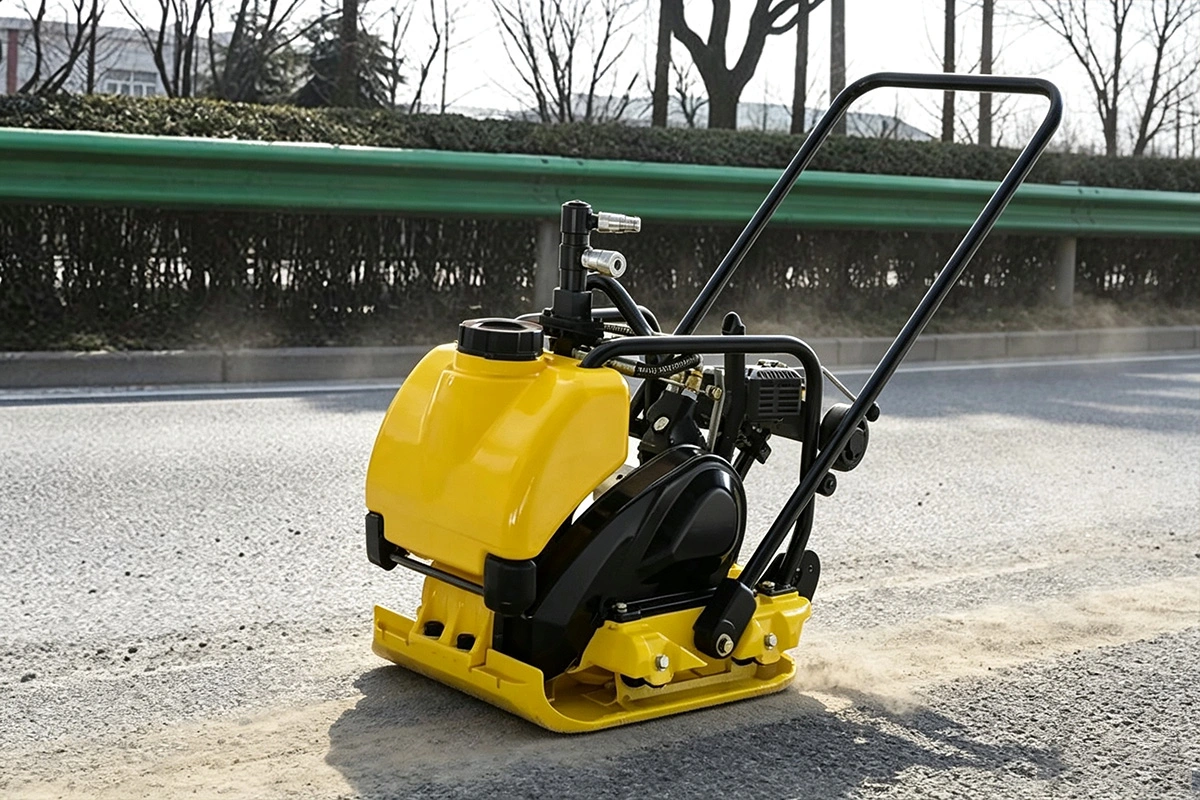
A hydraulic plate compactor is a vibratory compaction machine powered by a hydraulic system.
Unlike a handheld tamper, it uses a relatively wide compaction plate. Hydraulic power drives the machine’s vibration mechanism, allowing vibratory energy to be transferred through the plate and into the material below.
A typical hydraulic plate compactor system may include:
Hydraulic Power Unit → Hydraulic Hoses → Hydraulic Plate Compactor
The wider plate allows the machine to cover more surface area during each pass.
Hydraulic plate compactors can be used for applications such as: road construction and maintenance, aggregate base preparation, sand and gravel compaction, paver installation, sidewalk construction, driveway preparation, landscaping, asphalt repair, municipal infrastructure projects.
For relatively open and flat working areas, the larger working surface can provide higher coverage and productivity.
What Do Hydraulic Handheld Tampers and Hydraulic Plate Compactors Have in Common?
Although they work differently, the two machines have several important similarities.
1. Both Use Hydraulic Power
The most obvious similarity is that both machines can be powered by an external hydraulic system.
This means contractors can integrate the equipment into a hydraulic tool system rather than relying on a dedicated engine for every individual tool.
A properly matched hydraulic power unit can provide the flow and pressure required by the compaction equipment.
This modular approach can be particularly useful for contractors who already use hydraulic breakers, saws, pumps, drills, or other hydraulic tools.
2. Both Are Designed for Portable Compaction
Neither machine is intended to replace a large road roller in every application.
Instead, hydraulic handheld tampers and hydraulic plate compactors are useful when contractors need compact and maneuverable equipment.
They can be transported to locations where larger compaction machines may be difficult to deploy.
3. Both Improve Soil and Material Stability
The purpose of both machines is to transfer mechanical energy into the ground or construction material to increase its density and stability.
Depending on the application, proper compaction can help reduce settlement, improve load-bearing performance, stabilize backfill, prepare construction bases, improve surface consistency.
However, the effectiveness of compaction depends on the material, moisture content, layer thickness, machine specifications, and operating technique.
4. Both Can Be Used in Infrastructure Projects
Hydraulic compaction tools can be useful in a wide range of construction and maintenance projects.
For example, contractors working on municipal infrastructure may need different compaction methods at different stages of the same project.
This is where having both types of hydraulic compaction equipment can provide greater flexibility.
Hydraulic Handheld Tamper vs. Hydraulic Plate Compactor: Key Differences
The main differences are related to compaction movement, working footprint, accessibility, coverage, and operating method.
1. Tamping Action vs. Vibratory Compaction
The most fundamental difference is how the two machines transfer energy to the ground.
A hydraulic handheld tamper uses repeated tamping movement. Its working foot moves against the material and concentrates compaction energy into a relatively small area.
A hydraulic plate compactor generates vibration through its larger plate. The vibratory energy is distributed across the contact surface.
In simple terms:
Hydraulic Handheld Tamper = concentrated tamping action
Hydraulic Plate Compactor = wider-area vibratory action
This difference affects which machine is more practical for a particular job.
2. Small Footprint vs. Large Working Plate
The hydraulic handheld tamper has a relatively small working foot.
This is one of its most important advantages.
The smaller footprint allows operators to work in narrow locations, around obstacles, and in areas where a larger machine cannot easily fit.
A hydraulic plate compactor has a wider working plate.
The larger contact area allows more material to be compacted during each pass, but it also requires more working space.
Therefore:
Small and confined area → Hydraulic Handheld Tamper
Open and relatively flat area → Hydraulic Plate Compactor
3. Accessibility vs. Coverage
The two machines are designed around different priorities.
The handheld tamper prioritizes accessibility.
The plate compactor prioritizes coverage.
For example, imagine a narrow utility trench.
The trench may contain pipes, cables, or other infrastructure, leaving very limited room for machinery.
A handheld tamper can be positioned inside the trench and operated directly on the backfill.
By contrast, a plate compactor may require more space to enter and maneuver effectively.
Now consider a large area of compacted aggregate.
The wider plate of a hydraulic plate compactor allows the operator to cover a larger area with each pass.
In this situation, coverage becomes more important than the compact footprint of a handheld tool.
4. Handheld Operation vs. Machine-Guided Operation
A hydraulic handheld tamper is designed to be operated directly by the user.
The operator guides the tool to the required location and controls the compaction process manually.
A hydraulic plate compactor is generally a larger walk-behind machine.
The operator guides the machine across the surface while the hydraulic system drives the compaction mechanism.
This creates different operating experiences.
The handheld tamper provides greater flexibility in tight spaces, while the plate compactor is generally more efficient for continuous movement across open surfaces.
5. Localized Compaction vs. Surface Compaction
Another important distinction is the area being compacted.
A hydraulic handheld tamper is well suited to localized compaction.
For example a narrow trench, a small excavation, an area beside a foundation, a confined section around a pipe, a small repair zone
A hydraulic plate compactor is more suitable for surface-area compaction.
For example road bases, paving areas, driveways, sidewalks, aggregate surfaces
This does not mean that one machine can only perform one type of work. Rather, each design is optimized for a different operating environment.
Hydraulic Handheld Tamper vs. Hydraulic Plate Compactor Comparison
| Feature | Hydraulic Handheld Tamper | Hydraulic Plate Compactor |
| Power source | External hydraulic power | External hydraulic power |
| Compaction method | Repeated tamping | Vibratory compaction |
| Working footprint | Small | Larger |
| Main advantage | Accessibility and concentrated compaction | Coverage and productivity |
| Confined spaces | Excellent | More limited |
| Open surfaces | Suitable for localized work | Highly suitable |
| Operator control | Handheld | Walk-behind |
| Surface coverage | Lower | Higher |
| Typical applications | Trenches, edges, confined areas | Roads, paving, aggregate, open surfaces |
| Hydraulic system | Required | Required |
This table provides a general comparison. Actual performance depends on the specifications of the equipment and the conditions at the jobsite.
When Should You Choose a Hydraulic Handheld Tamper?
A hydraulic handheld tamper is a strong option when the main challenge is limited access.
Utility Trenches
Utility installation is one of the typical situations where compact equipment becomes important.
Water pipes, drainage systems, gas pipelines, electrical cables, and communication infrastructure may require narrow excavation and backfilling.
A large compaction machine may not fit into the trench.
A hydraulic handheld tamper can be positioned in the confined area and used to compact the backfill.
Around Structures
Construction sites often contain obstacles such as foundations, walls, pipes, posts, manholes, drainage structures
A small handheld tool can provide better access around these structures.
Localized Road Repair
Road maintenance does not always involve an entire road section.
A contractor may only need to repair a small damaged area.
For localized work, bringing large equipment to the site may be unnecessary.
A compact hydraulic handheld tamper can be used where concentrated compaction is required within a small work zone.
Confined Municipal Projects
Municipal maintenance projects frequently involve limited working space.
Examples include drainage repair, utility maintenance, trench restoration, and infrastructure rehabilitation.
In these situations, equipment size and maneuverability can be just as important as compaction force.
When Should You Choose a Hydraulic Plate Compactor?
A hydraulic plate compactor is generally more suitable when the project requires efficient compaction over a larger and relatively open surface.
Road Base Preparation
Road construction often requires aggregate materials to be compacted before the next construction layer is installed.
The wider plate allows the operator to cover more area during each pass.
Paving Projects
Before installing paving stones or other surface materials, the underlying base may need to be properly compacted.
A plate compactor can provide efficient vibratory compaction across the prepared surface.
Sand, Gravel, and Aggregate
Granular construction materials are commonly compacted over relatively broad areas.
In these situations, the coverage advantage of a plate compactor can become particularly useful.
Driveways and Sidewalks
Small civil construction projects such as driveways, sidewalks, and landscaping often require equipment that is smaller than a conventional roller but more productive than a handheld tool.
A hydraulic plate compactor can fill this role when hydraulic power is available.
Can Hydraulic Handheld Tampers and Hydraulic Plate Compactors Be Used on the Same Project?
Absolutely.
In many projects, the two machines can complement each other.
Consider a municipal drainage project.
First, workers excavate a narrow trench and install a drainage pipe.
The trench is then backfilled in appropriate layers.
Because the available space is limited, a hydraulic handheld tamper can be used for localized compaction.
Once the work reaches the surrounding road base, the available surface becomes wider.
At this stage, a hydraulic plate compactor can be used to compact the larger surface area more efficiently.
This demonstrates an important principle:
Different working conditions require different compaction tools.
The question is not always whether to choose a hydraulic handheld tamper or a hydraulic plate compactor.
For contractors handling different types of construction and maintenance work, having access to both can provide greater jobsite flexibility.
Why Is Hydraulic Power Useful for Compaction Equipment?
Hydraulic power allows compaction tools to become part of a broader modular equipment system.
Instead of every tool requiring its own dedicated engine, an external hydraulic power unit can supply energy to compatible tools.
For example, a contractor may use one hydraulic power source with different hydraulic attachments or tools, depending on the required flow and pressure.
This can simplify equipment transportation and deployment.
A hydraulic tool system can be particularly useful for contractors working in Remote locations, Construction sites without convenient electrical power, emergency maintenance projects, municipal infrastructure projects, confined work areas, multi-tool applications
However, hydraulic compatibility must always be checked before connecting equipment.
The hydraulic power unit should match the tool’s required Hydraulic flow, operating pressure, hose configuration, coupling specifications, return-line requirements, hydraulic oil requirements
Correct matching is essential for safe and reliable operation.
How to Choose Between a Hydraulic Handheld Tamper and Hydraulic Plate Compactor
Before selecting equipment, contractors should consider five basic questions.
1. How much working space is available?
If the area is narrow, confined, or surrounded by obstacles, a hydraulic handheld tamper may be the more practical choice.
If the area is open and flat, a hydraulic plate compactor may provide better productivity.
2. What type of material needs to be compacted?
Consider whether the material is soil, backfill, sand, gravel, crushed aggregate, road base, paving material, asphalt
Material characteristics can significantly influence compaction performance.
3. Is the work localized or spread over a large area?
For small and localized work, the handheld tamper’s compact footprint can be an advantage.
For larger surfaces, the wider plate of a hydraulic plate compactor can reduce the number of passes required to cover the area.
4. What hydraulic power source is available?
Both machines require a compatible hydraulic power source.
Check the required hydraulic flow and pressure before selecting the hydraulic power unit.
A properly matched power source helps the tool operate within its intended performance range.
5. Do you need a single tool or a modular hydraulic system?
If a contractor already uses multiple hydraulic tools, adding a hydraulic tamper or hydraulic plate compactor to the same equipment system may provide additional flexibility.
This can be particularly useful when different tools are required at different stages of a project.
Final Thoughts
The hydraulic handheld tamper and hydraulic plate compactor have the same fundamental purpose to provide effective compaction where portable construction equipment is required.
For narrow trenches, localized repairs, and confined construction areas, a hydraulic handheld tamper can provide the accessibility needed to reach difficult locations.
For road bases, paving areas, aggregate surfaces, and larger open work zones, a hydraulic plate compactor may provide better coverage and productivity.
For contractors who work across different types of infrastructure and maintenance projects, the two machines can also work together as complementary hydraulic compaction tools.
Ultimately, the right compaction equipment is the one that matches the working space, material, compaction method, hydraulic power source, and productivity requirements of the project.