Skyscrapers, smart transportation systems, underground utility networks, real-time weather forecasting, and digital city management platforms are often seen as symbols of modern urban development. Yet when intense rainstorms strike, many technologically advanced cities around the world still experience serious urban flooding. Roads become rivers, underground garages are inundated, subway stations close, traffic collapses, and residents become trapped in low-lying areas.
This apparent contradiction raises an important question: If cities are becoming more advanced, why does flooding still occur?
The answer is not that modern technology has failed. Rather, urban flooding is the result of a complex interaction between extreme weather, urban expansion, aging infrastructure, drainage capacity limits, and emergency management challenges. Understanding these factors is essential for building truly resilient cities.
Rainfall Is Becoming More Intense
One of the biggest changes in recent decades is the increasing frequency of short-duration extreme rainfall events. A city may receive a month’s worth of rain within a few hours. Drainage systems are usually designed according to historical rainfall statistics, such as storms expected once every 5, 10, or 20 years. When actual rainfall exceeds those assumptions, flooding becomes likely even if the system is functioning correctly.
Climate change is contributing to warmer air that can hold more moisture. When storms develop, they can release that moisture rapidly, producing intense downpours that overwhelm urban drainage networks. In many cases, the problem is not continuous rain over several days but an exceptionally heavy burst of rain within a short period.
For city managers, this means that infrastructure designed for yesterday’s climate may not be sufficient for tomorrow’s storms.
Urbanization Reduces Natural Drainage
Before urban development, rainwater could infiltrate soil, vegetation, wetlands, and open land. Modern cities replace these surfaces with concrete, asphalt, rooftops, and pavement. These impervious surfaces prevent infiltration and cause rainfall to run off almost immediately.
A useful comparison is a sponge versus a metal tray. Natural ground absorbs water like a sponge; paved urban surfaces shed water like a tray. As urban density increases, the proportion of impervious area rises, and runoff reaches drains much faster.
This creates two major problems:
Higher runoff volume reaching the drainage network.
Shorter concentration time, meaning water arrives more quickly than the system can discharge it.
Even a well-designed drainage network can struggle when thousands of hectares of urban surface send water into pipes simultaneously.
Drainage Systems Have Physical Limits
A common misconception is that drainage pipes can simply be enlarged indefinitely. In reality, urban drainage systems are constrained by space, cost, existing utilities, and downstream discharge capacity.
Underground pipes compete with water mains, gas lines, telecommunications cables, district cooling systems, and transportation infrastructure. Enlarging one section may provide little benefit if downstream pipes, pumping stations, or rivers remain bottlenecks.
Moreover, designing every street to withstand the most extreme imaginable storm would be economically unrealistic. Engineers must balance acceptable flood risk with construction and maintenance costs. As a result, some level of flooding may occur during events that exceed the design standard.
The critical question is not whether flooding can be eliminated entirely, but whether its impact can be minimized and recovery can be accelerated.
Aging Infrastructure in Growing Cities
Many major cities expanded rapidly during periods when rainfall patterns, population density, and land use were very different from today. Drainage systems built decades ago may now serve far larger populations and much denser development.
Common issues include:
- Sediment accumulation in drains
- Blocked inlets
- Structural deterioration of pipes
- Insufficient pumping capacity
- Unauthorized connections to stormwater systems
Maintenance is often less visible than new construction, yet it is one of the most important factors in flood performance. A modern city with poorly maintained drainage infrastructure may perform worse than an older city with a well-maintained system.
Underground Space Increases Flood Vulnerability
Modern cities increasingly develop underground space: subway systems, underground malls, parking garages, utility tunnels, and basements. These facilities are economically valuable but inherently vulnerable because water naturally flows downward.
Once floodwater enters an underground structure, removal becomes difficult. Access may be limited, electrical systems may need to be isolated, and water depth can increase rapidly. In severe events, underground flooding can cause greater economic loss than surface flooding.
This is why emergency drainage capability has become an essential component of urban resilience planning.
Flooding Is Also a Surface Management Problem
Urban flooding is not determined only by underground pipes. Surface topography strongly influences how water moves through streets and neighborhoods.
Low points in road networks, depressed intersections, underpasses, and poorly graded developments can collect water even when nearby drains are functioning. Buildings constructed below street level are particularly vulnerable.
Modern flood management therefore combines underground drainage with surface flow planning, temporary storage areas, detention parks, retention ponds, and controlled overflow routes.
The Role of Emergency Drainage Technology
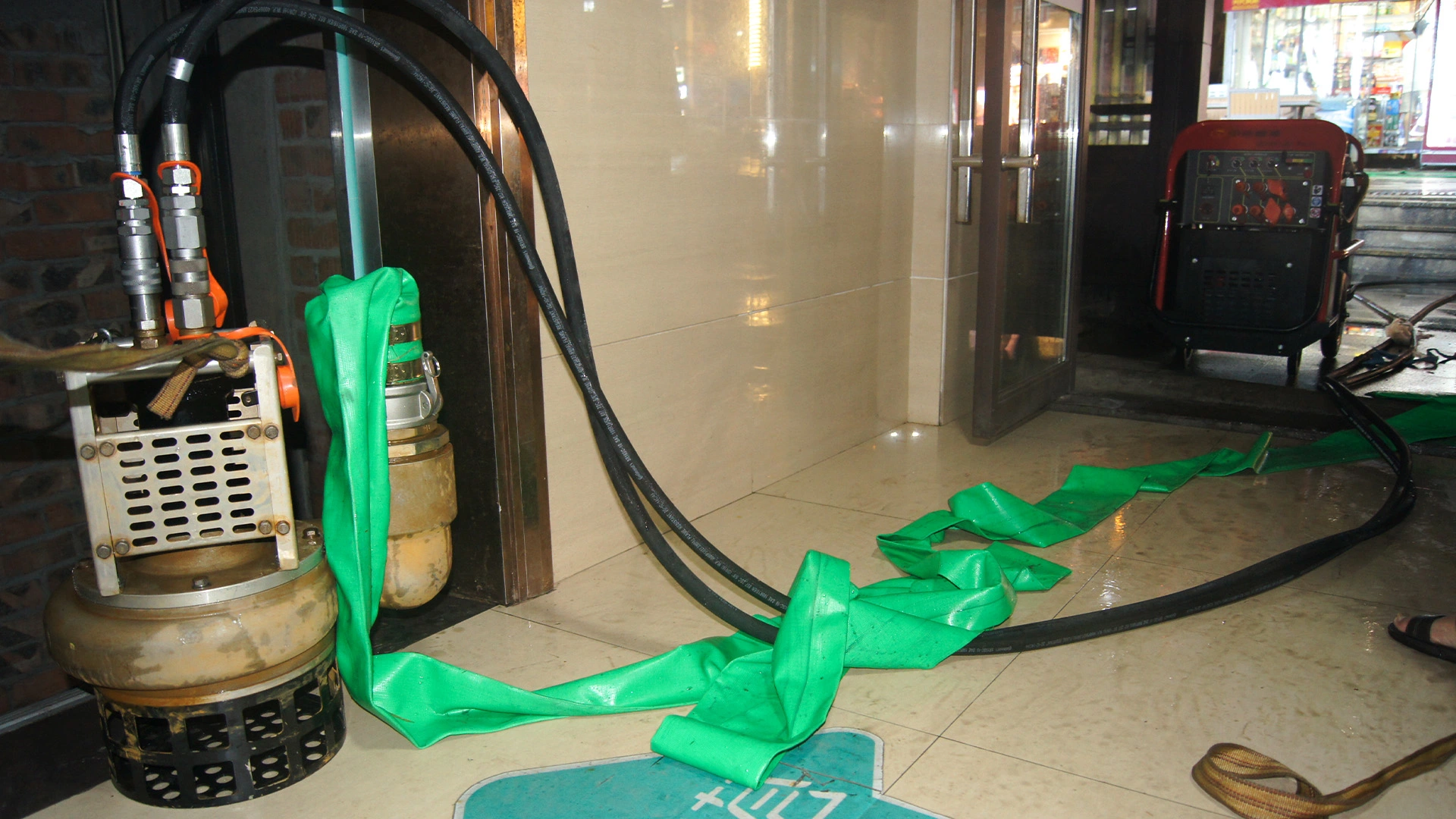
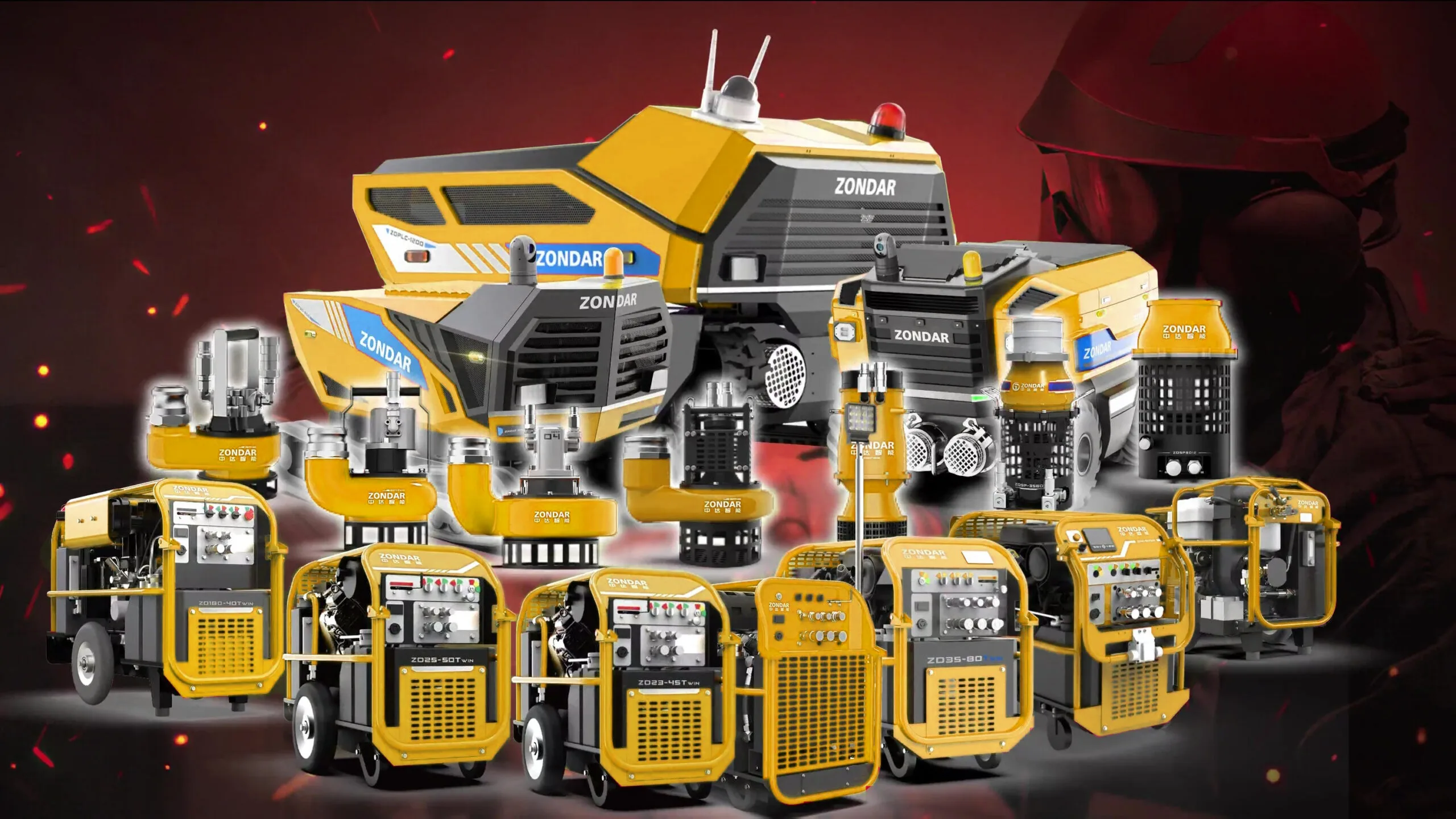
When rainfall exceeds the capacity of permanent infrastructure, emergency response becomes critical. Municipal authorities increasingly rely on mobile drainage equipment that can be deployed rapidly to flooded streets, tunnels, basements, subway entrances, and utility facilities.
ZONDAR Intelligent Technology develops hydraulic flood-control and emergency drainage equipment for these demanding scenarios, including:
- Hydraulic submersible pumps
- Portable hydraulic power units
- High-head emergency drainage systems
- Flood-control drainage robots for underground and confined spaces
Hydraulic systems offer important advantages during flood emergencies because they can operate in wet environments without placing electrical motors directly in floodwater. Their portability allows emergency teams to respond where fixed pumping infrastructure is unavailable, damaged, or inaccessible.
Modern urban resilience depends not only on permanent infrastructure but also on the ability to restore drainage quickly when extraordinary conditions occur.
Smart Cities Need Smart Flood Management
Digital technology is transforming flood management through real-time rainfall monitoring, water-level sensors, predictive modeling, GIS flood mapping, and automated warning systems. These tools improve situational awareness and help authorities deploy resources more effectively.
However, data alone cannot remove water from a flooded street. Sensors must be connected to operational capabilities:
- Trained emergency teams
- Clear command structures
- Mobile pumping equipment
- Traffic control plans
- Public communication systems
- Evacuation procedures
A truly smart city integrates information, infrastructure, equipment, and people into a coordinated flood-response system.
From Flood Control to Flood Resilience
Historically, many cities focused on flood prevention—trying to keep all water out. Increasingly, experts emphasize flood resilience, which recognizes that some flooding may still occur during extreme events.
Resilient cities aim to:
Protect critical facilities such as hospitals, power stations, and transport hubs.
Reduce the depth and duration of flooding.
Maintain emergency access routes.
Restore essential services quickly.
Minimize economic disruption.
Protect human life above all else.
This shift changes the design philosophy from “zero flooding” to “safe failure and rapid recovery.”
What Citizens Can Do
Urban flood resilience is not solely the responsibility of governments. Residents can also reduce risk by:
Monitoring official weather warnings.
Avoiding flooded roads and underpasses.
Keeping drainage inlets near homes clear of debris.
Parking vehicles away from low-lying areas during storms.
Preparing emergency contact information and evacuation plans.
Moving valuables and electrical equipment above expected flood levels.
Public awareness remains one of the most cost-effective flood mitigation measures.
Conclusion
Modern cities flood not because they lack technology, but because rainfall intensity, urbanization, infrastructure constraints, underground development, and climate variability create challenges that no city can eliminate completely. Advanced forecasting, smart sensors, and digital management systems are valuable tools, yet they must be combined with robust drainage infrastructure, effective maintenance, emergency pumping capability, and resilient urban planning.
The real measure of a modern city is not whether it never floods, but how well it anticipates risk, protects people, responds during an emergency, and recovers afterward. As extreme weather becomes more common, investing in resilient drainage systems and rapid emergency response will be just as important as investing in smart buildings and intelligent transportation.
At ZONDAR Intelligent Technology, we believe that urban flood resilience requires both engineering foresight and operational readiness. By combining advanced emergency drainage equipment with practical flood-response planning, cities can reduce the impact of severe storms and recover more quickly when extraordinary rainfall occurs.