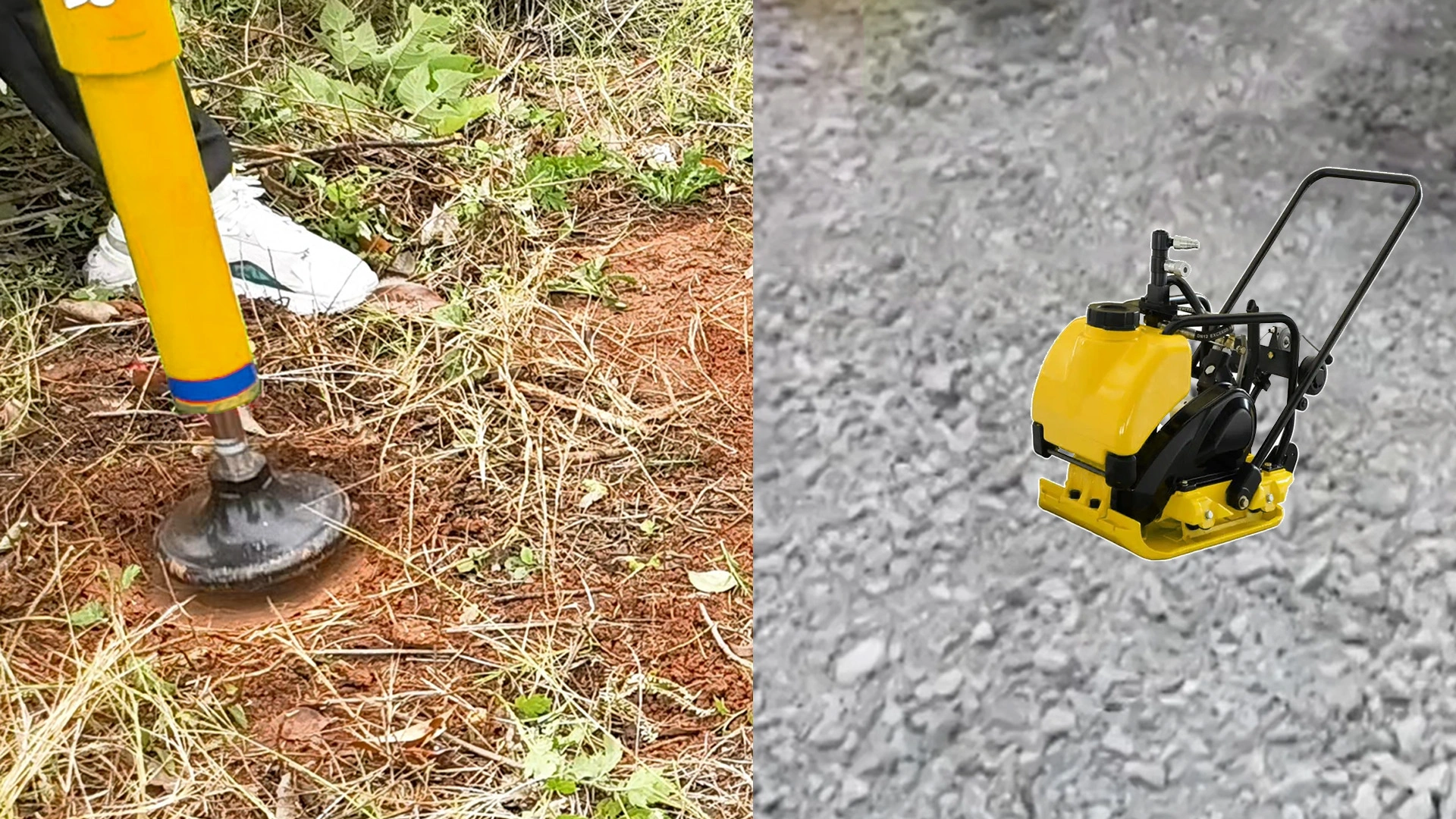
A handheld hydraulic breaker is widely used for breaking concrete, asphalt, masonry, and other hard materials in construction, road maintenance, and emergency rescue operations. Powered by a hydraulic power unit (HPU), it provides portable breaking performance without requiring a large excavator or an onboard electric power source.
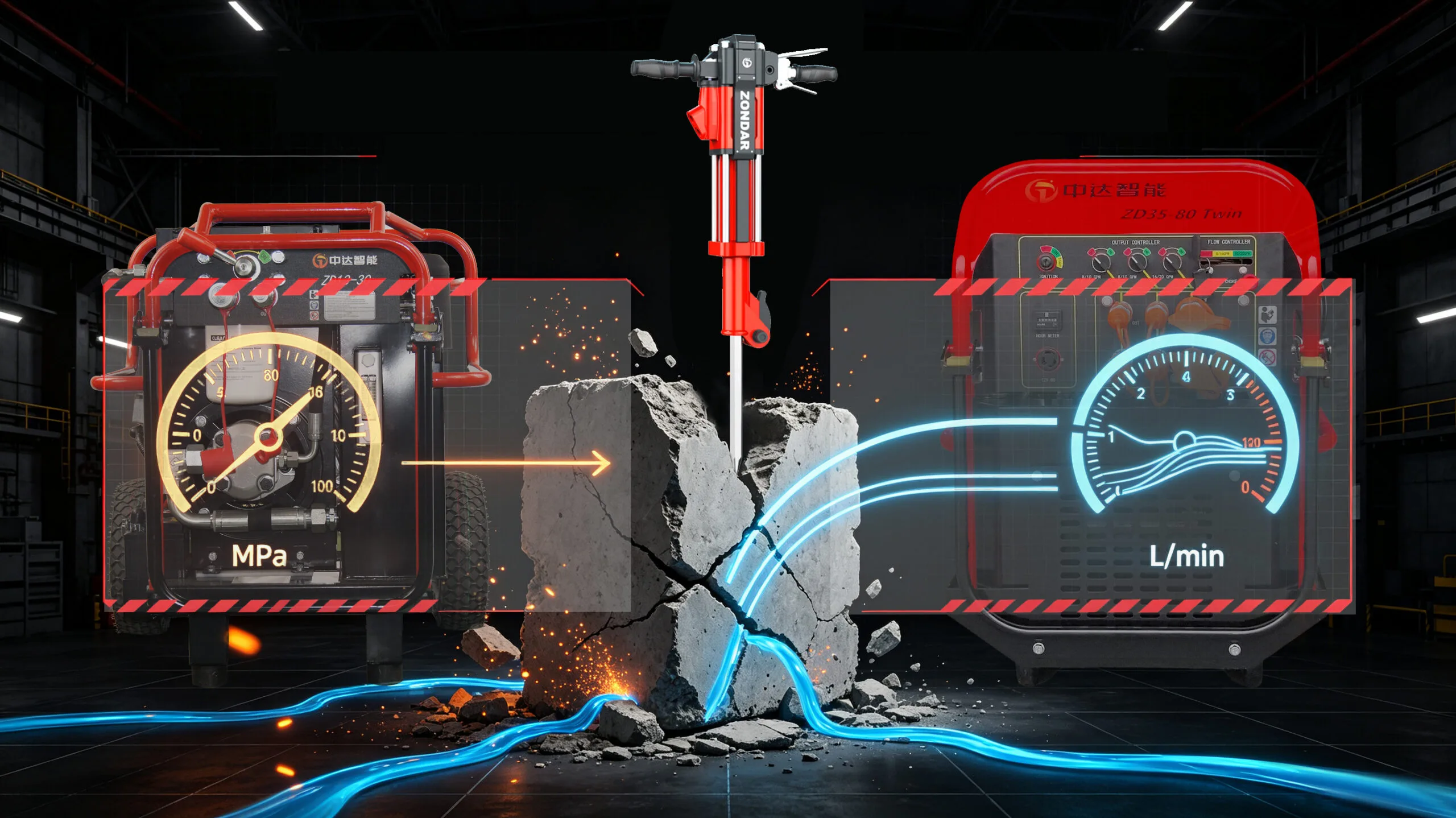
When a handheld hydraulic breaker becomes weak, strikes more slowly, or takes longer to break material, the problem does not necessarily originate inside the tool. Insufficient hydraulic flow, unsuitable operating pressure, restricted hoses, faulty quick couplers, overheating, or an unsuitable chisel can all affect performance.
For contractors and maintenance teams, the best approach is to check the complete hydraulic system before replacing parts or adjusting settings. This guide explains the common causes of low impact in handheld hydraulic breakers and provides a practical troubleshooting sequence for portable hydraulic equipment.
1. How to Recognize Low Impact in a Handheld Hydraulic Breaker
Low impact can appear in several ways. The breaker may strike less frequently, deliver weaker impacts, stop intermittently, or make little progress when working on concrete or asphalt.
These symptoms do not all indicate the same fault. A reduction in impact frequency may point toward a flow-related issue, while weak performance under load may involve insufficient pressure, restricted hydraulic flow, or a problem inside the tool. Slow breaking progress can also result from a worn chisel, an unsuitable working angle, or harder material.
Before troubleshooting, identify what has changed. Did the problem begin after connecting a different power unit? Did it appear after replacing a hose? Does the breaker work normally at first but weaken after extended operation? These details can help narrow down the possible causes.
2. Hydraulic Power Unit Problems
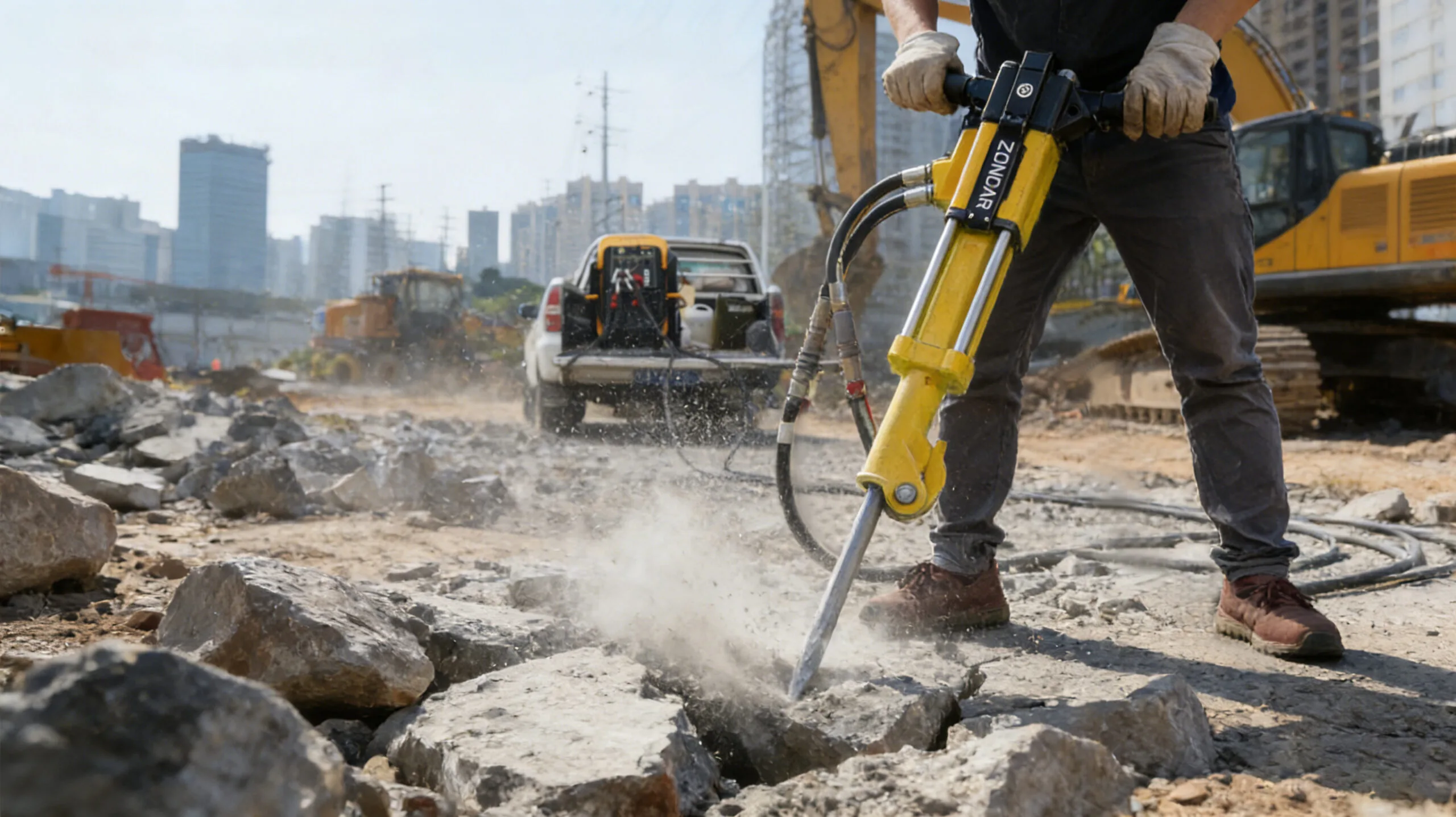
The hydraulic power unit is the first major component to check because the handheld breaker depends on it for a suitable supply of hydraulic oil.
Insufficient hydraulic flow
If the HPU cannot deliver the flow required by the breaker, the tool may operate more slowly or fail to achieve its intended impact frequency.
Possible causes include a pump that is not delivering its expected output, insufficient engine speed, a restricted hydraulic circuit, or a mismatch between the power unit and the breaker.
Check the rated flow requirements of the specific breaker and compare them with the HPU specifications. If the problem persists, a qualified technician can measure the actual flow under the appropriate test conditions.
Insufficient operating pressure
A hydraulic breaker also requires an appropriate operating pressure. If the system cannot achieve the required pressure under load, breaking performance may decline.
Possible causes include an HPU fault, excessive internal leakage, or a problem with a pressure-control component. These conditions cannot always be identified through visual inspection alone.
Do not increase the pressure setting simply because the breaker seems weak. The correct pressure range depends on the tool and hydraulic system design. Adjustments should follow the manufacturer’s specifications and be performed by qualified personnel.
For more information about hydraulic power unit selection for different hydraulic tools.
3. Hydraulic Hose and Quick Coupler Restrictions
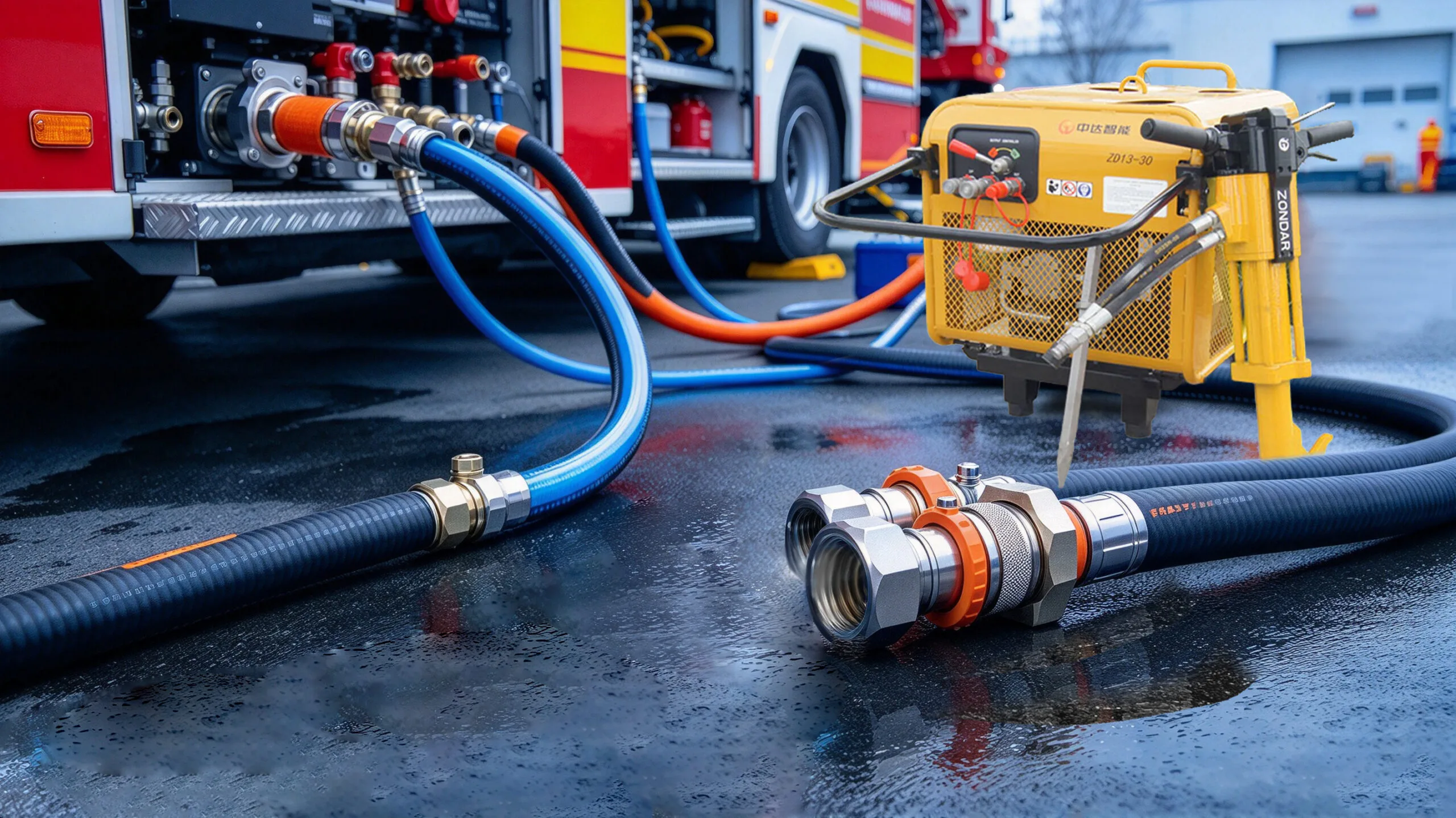
The hydraulic hose and quick couplers connect the HPU to the handheld breaker. If the connection is damaged, restricted, or incompatible, the breaker may not receive the hydraulic flow it needs.
Start with a visual inspection of the hoses. Look for kinks, crushed sections, external damage, or visible oil leakage. Confirm that the hoses meet the manufacturer’s requirements for the tool and power unit.
Next, check the quick couplers. They must be compatible with the system’s pressure and flow requirements and connected according to the manufacturer’s instructions. A coupler that is not fully connected or is internally damaged may restrict flow even if no external leak is visible.
The return line also matters. A restricted return path can interfere with the hydraulic circuit’s operation. If the breaker becomes weak after a hose or coupling change, inspect the connection arrangement before assuming that the tool has failed.
Operators generally do not need to calculate hydraulic pressure loss for every job. A more practical approach is to use the recommended hose assemblies, avoid unauthorized substitutions, and keep the connections clean and in good condition.
For further guidance, see hydraulic hose size and flow restrictions → How Hydraulic Hose Size Affects Flow and Tool Performance.
4. Hydraulic Oil Level, Contamination, and Temperature
Hydraulic oil transmits power and helps lubricate and cool components within the hydraulic system. Problems with oil level, cleanliness, or temperature can affect system performance and reliability.
Low hydraulic oil level
If the HPU oil level falls below the specified range, the system may not operate correctly. In some circumstances, inadequate oil supply can contribute to aeration or pump cavitation, potentially causing noise, unstable operation, or reduced performance.
Check the oil level using the manufacturer’s specified procedure. Do not continue operating equipment that shows signs of inadequate oil supply or abnormal pump noise.
Contaminated or unsuitable oil
Dirt, water, or other contaminants can contribute to component wear and valve problems. Oil that does not meet the specified requirements may also affect system operation.
Follow the HPU manufacturer’s recommendations for oil type, cleanliness, inspection, and replacement intervals. If contamination is suspected, identify the source rather than simply adding fresh oil.
Excessive oil temperature
If the breaker becomes weaker after prolonged operation, check whether the HPU is overheating or displaying a warning. Excessive temperature can alter oil viscosity and may indicate an underlying problem, such as a restriction or abnormal system operation.
Stop the equipment if the temperature exceeds the manufacturer’s permitted range. Allow it to cool safely and investigate the cause before restarting.
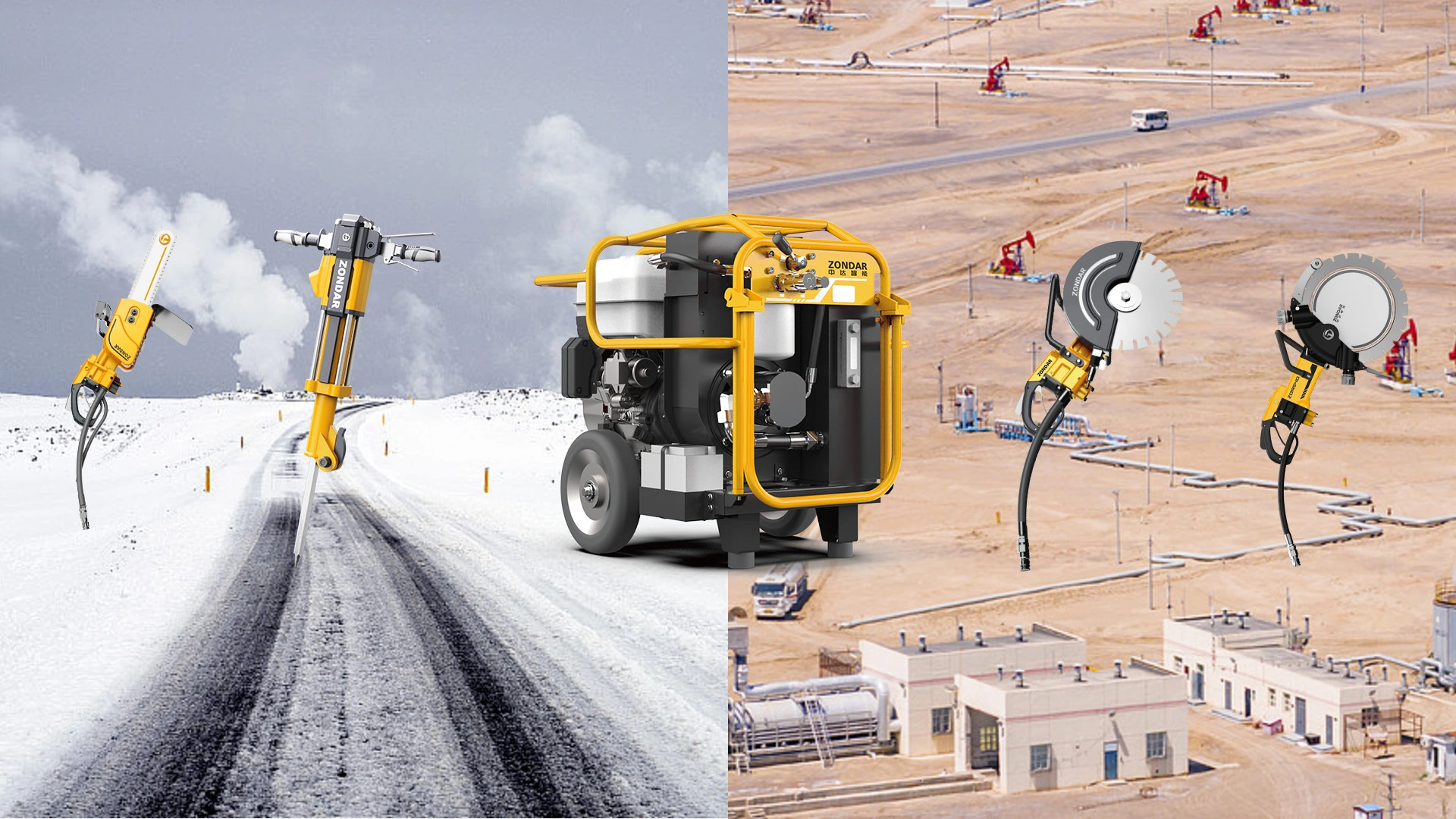
For more information, see hydraulic tool maintenance in Winter and Summer.
5. Chisel Wear and Incorrect Operating Technique
Not every low-impact problem comes from the HPU or hydraulic circuit. The chisel and the way the breaker is operated can also influence breaking efficiency.
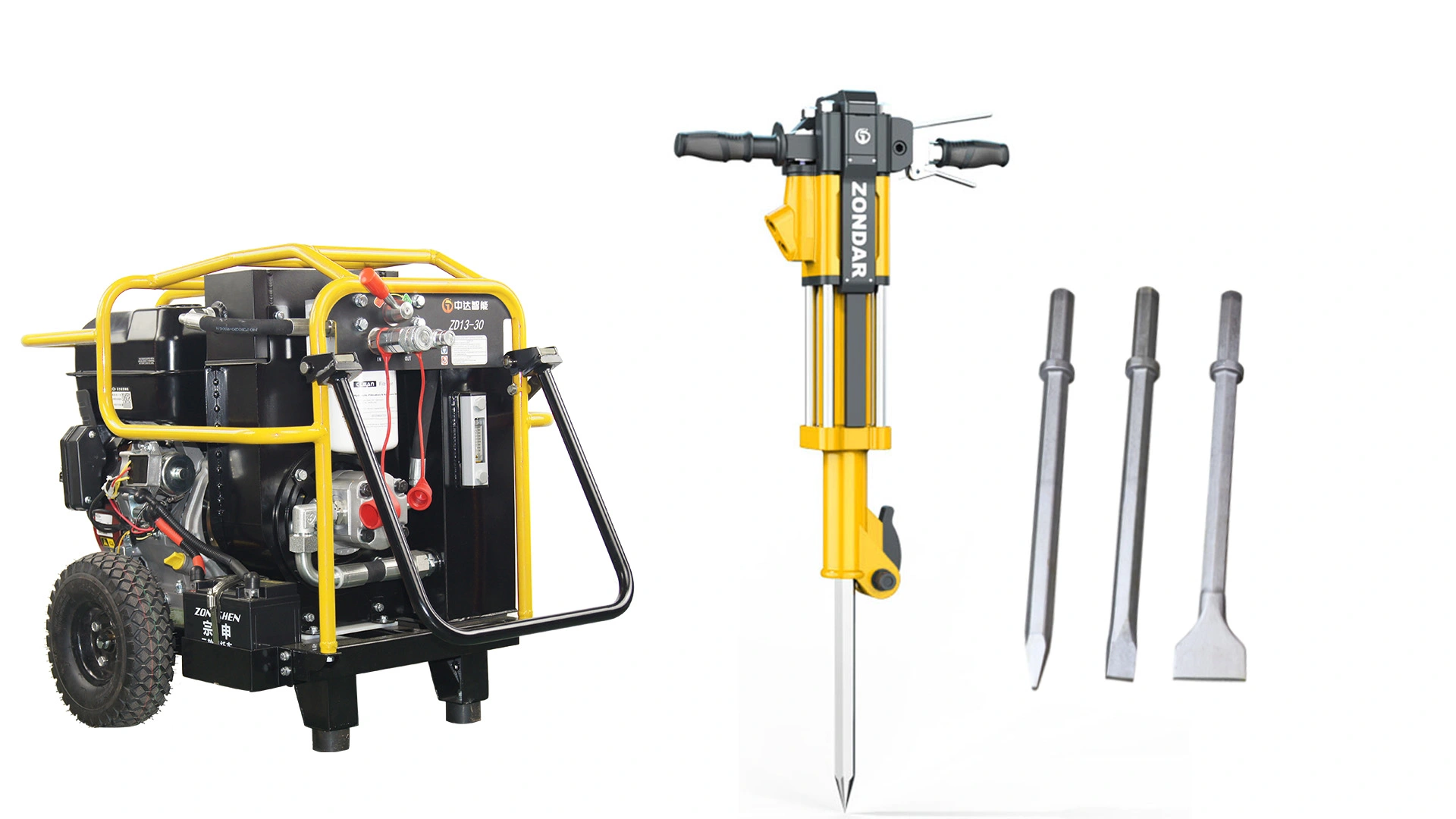
A worn, damaged, or unsuitable chisel may transfer impact energy less effectively to the material. Inspect the chisel for visible damage and wear, and confirm that its type is appropriate for the working material and the breaker’s design.
Operating technique is equally important. The chisel should be positioned correctly against the work surface, and the breaker should be operated according to the manufacturer’s instructions.
If the breaker still produces regular impacts but breaks the material slowly, check the chisel condition, the material itself, and the working technique before concluding that hydraulic output is insufficient.
The guide to hydraulic breaker and chisel selection provides additional guidance on choosing a suitable chisel for different applications.
6. Internal Wear or Mechanical Problems
If the HPU, hoses, quick couplers, oil condition, chisel, and operating technique have been checked without resolving the problem, the breaker itself may need professional inspection.
Depending on the specific breaker design, internal faults may involve worn or damaged impact components, piston or cylinder damage, sealing problems, or a malfunction in the internal hydraulic control mechanism.
Some hydraulic impact tools use specialized energy-storage components, while others use different internal designs. Accumulator or nitrogen-pressure checks should therefore only be included when the specific model has those components and its manufacturer provides an applicable service procedure.
Symptoms such as abnormal impact behavior, repeated loss of performance, unusual mechanical noise, or visible leakage warrant further inspection. If the breaker is suspected of having an internal fault, stop using it and follow the manufacturer’s service recommendations.
Do not dismantle the breaker, adjust internal valves, or attempt nitrogen charging without the required training, equipment, and model-specific instructions.
7. Step-by-Step Troubleshooting for Handheld Hydraulic Breakers
A consistent troubleshooting sequence helps identify likely causes without immediately dismantling the tool.
Step 1: Confirm the symptom. Determine whether the breaker strikes slowly, has weak impacts, stops intermittently, or works normally but breaks material inefficiently.
Step 2: Check the operating setup. Confirm that the breaker is suitable for the job and that the chisel is properly positioned and supported against the material.
Step 3: Inspect the hydraulic connections. Check hoses, quick couplers, visible leaks, and any signs of kinking or damage. Make sure the connection arrangement follows the manufacturer’s requirements.
Step 4: Check the HPU. Confirm that the power unit is operating normally and is rated for the breaker. Review any warning indicators and verify the specified oil level.
Step 5: Check temperature and oil condition. If the problem occurs after prolonged use, investigate overheating or signs of oil contamination.
Step 6: Arrange hydraulic testing if necessary. If the external checks do not identify the cause, qualified personnel should test actual flow and pressure and inspect the hydraulic circuit.
Step 7: Inspect the breaker internally if required. If the supply system is confirmed to be operating correctly but the breaker remains weak, follow the manufacturer’s service procedure.
Always shut down the HPU, isolate the power source, and release stored hydraulic pressure according to the manufacturer’s instructions before disconnecting hoses or inspecting components. Hydraulic oil can remain hot and pressurized after shutdown. Never use your hands to locate a suspected hydraulic leak, because pressurized fluid can penetrate the skin and cause serious injury.
8. Preventive Maintenance to Reduce Low-Impact Problems
Regular inspection can help prevent many performance problems and reduce unnecessary downtime.
Before operation, inspect hydraulic hoses and couplers for damage, leakage, and secure connections. Check the HPU oil level and review any warning indicators. Examine the chisel and confirm that it is suitable for the task.
During operation, use the breaker according to its instructions. Avoid blank firing, excessive side loading, and applications beyond the tool’s intended capability. Monitor the equipment for abnormal noise, overheating, or changes in impact behavior.
Follow the manufacturer’s maintenance schedule for hydraulic oil, filters, and other service items. Keep hydraulic connections clean when changing tools, and use compatible replacement hoses, couplers, and parts.
For equipment that remains in storage between emergency response operations, periodic inspection is particularly important. A tool may need to operate immediately after a long idle period, so checking the power unit, hoses, couplers, and working end before deployment can help reduce avoidable delays.
Conclusion
Low impact in a handheld hydraulic breaker can result from several different problems. The most practical starting points are the hydraulic power unit, hose and quick coupler connections, oil condition, chisel condition, and operating technique.
By checking these areas in a consistent order, contractors and rescue teams can narrow down the cause before replacing components or arranging internal repairs. If the problem remains unresolved, qualified personnel should verify the hydraulic supply and inspect the breaker according to the manufacturer’s procedures.
A reliable handheld hydraulic system depends on the compatibility of the power unit, hydraulic circuit, breaker, and accessories. Correct matching, routine inspection, and appropriate operating practices all contribute to dependable performance on the jobsite.