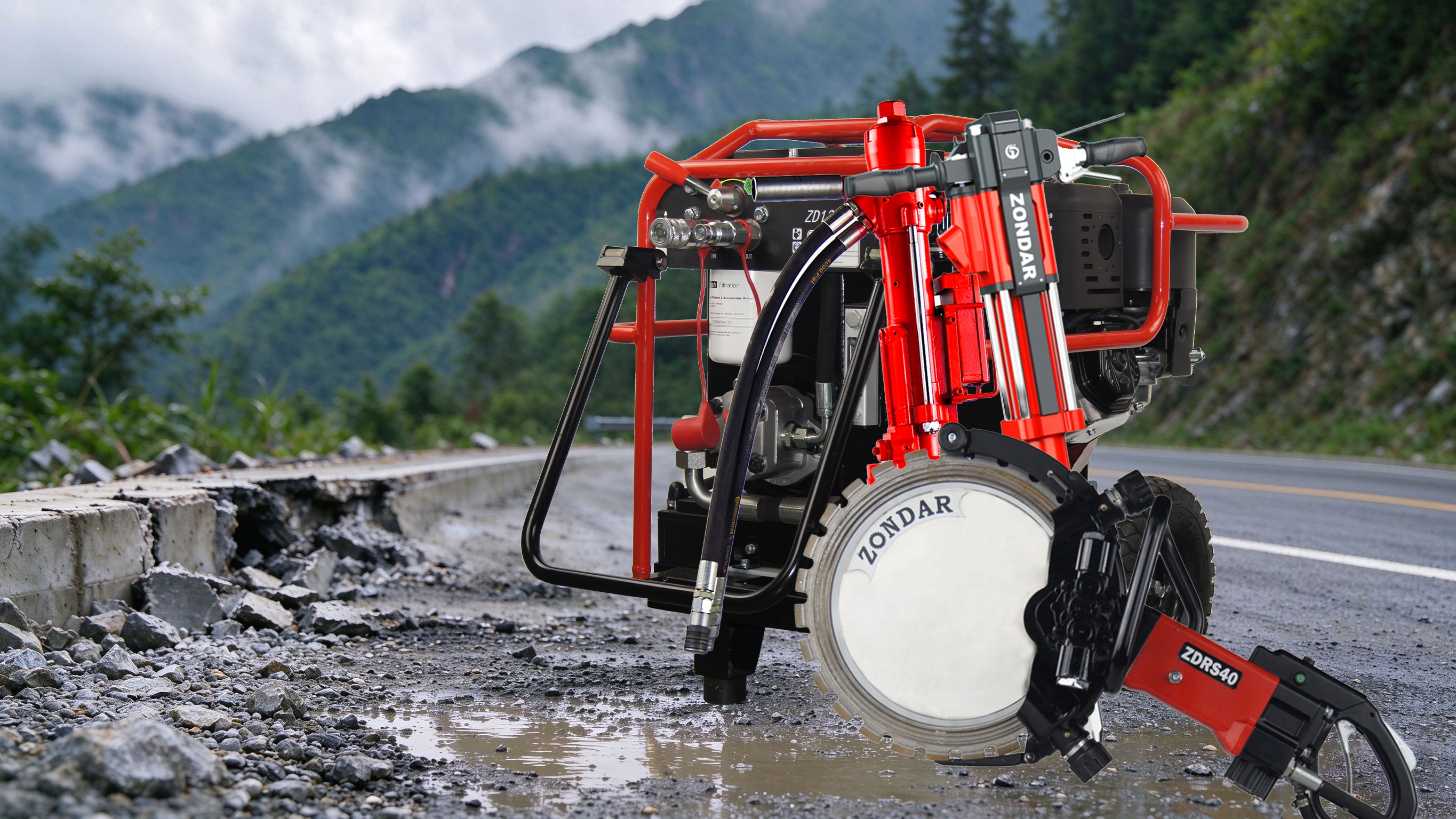
Installing posts is a common task in agricultural fencing, road construction, municipal maintenance, and temporary site protection. However, ground conditions can vary significantly from one jobsite to another. Loose sandy soil, compacted clay, gravel, and rocky ground all affect how easily a post can be driven into the ground and how securely it will remain in position.
A hydraulic post driver provides a powered solution for installing steel posts, signposts, fence supports, guardrail stakes, and temporary anchors. However, choosing the right installation method requires more than simply selecting a powerful tool. The soil condition, post dimensions, installation depth, and ground obstacles must also be considered.
This article explains how hydraulic post drivers are used in different ground conditions and what operators should consider before starting a post installation project.
1. Hydraulic Post Driver Applications in Different Ground Conditions
1.1 Loose and Sandy Soil
Loose sandy soil is generally easier to penetrate than compacted or rocky ground. Posts can often be driven directly into the soil without extensive ground preparation, making this condition suitable for hydraulic post driving.
Typical applications include:
- Agricultural fencing and livestock enclosures
- Vineyard and orchard support posts
- Temporary construction barriers
- Flood-control fencing and temporary safety boundaries
In sandy soil, the main consideration is not only driving the post into the ground but also ensuring sufficient holding stability. Loose soil may provide less lateral resistance, especially when the post is subjected to wind, fence tension, or external loads.
Operators should check the required installation depth and post spacing according to the project requirements. For applications involving significant lateral loads, additional ground support or a different foundation method may be necessary.
1.2 Moist and Cohesive Soil
Moist, cohesive soil, such as loam and certain clay soils, can provide good resistance around an installed post. However, its behavior varies depending on moisture content and soil composition.
When the soil is moderately moist, a hydraulic post driver can often install suitable posts directly. In very wet or saturated ground, however, the soil may lose stability, making it difficult for the post to remain upright.
Typical applications include:
- Farm and pasture fencing
- Agricultural boundary posts
- Temporary site barriers
- Utility and access-control fencing
During installation, operators should pay attention to post alignment and ground stability. If the soil is waterlogged or unstable, additional support or a different installation method may be needed.
1.3 Compacted or Dry Clay Soil
Compacted soil and dry clay can create greater resistance during post installation. A post that can be driven easily into sandy ground may progress much more slowly in hard, compacted soil.
In these conditions, operators should first assess whether the post can be driven directly. If penetration becomes difficult, a pilot hole may help reduce initial soil resistance and guide the post into position.
Recommended considerations include:
- Check whether the ground is excessively dry or compacted.
- Use a suitable pilot hole when direct driving is not practical.
- Confirm that the post diameter and shape are appropriate for the installation method.
- Stop if the post repeatedly fails to advance or begins to deform.
A hydraulic post driver can improve installation efficiency, but it cannot eliminate the need for ground preparation when soil resistance exceeds the practical limits of the post and equipment.
1.4 Gravel and Stony Ground
Gravel and stony ground present a different challenge. Small stones may move aside during installation, but larger stones can obstruct the post and prevent it from advancing vertically.
This can result in tilted posts, damaged post ends, or unnecessary impact on the equipment.
For these conditions, operators should:
- Inspect the installation area for large stones and visible obstacles.
- Position the post where the ground is relatively clear.
- Use a pilot hole or pre-drilling method if the ground contains dense gravel or larger stones.
- Stop driving if the post suddenly stops advancing rather than continuing to apply impact.
If a large stone blocks the installation path, relocating the post slightly or preparing the ground may be more effective than continuing to drive against the obstruction.
1.5 Rocky or Frozen Ground
Solid rock and heavily frozen ground are generally unsuitable for direct post driving with a small portable hydraulic post driver.
In these conditions, the installation method should be determined before the equipment is deployed. Depending on the ground composition and project requirements, drilling a pilot hole, using an auger, or preparing a foundation may be necessary.
A post driver should not be expected to drive a post through solid rock. Continuing to operate against an immovable obstruction can damage the post and create unnecessary equipment and operator risks.

2. Typical Applications of Hydraulic Post Drivers
Hydraulic post drivers are used in a variety of industries because they can install different types of posts without relying entirely on manual hammering.
Agricultural Fencing and Vineyard Installation
Farmers and agricultural contractors frequently install fence posts, vineyard supports, and boundary stakes across large areas.
A hydraulic post driver can help reduce repetitive manual work and improve installation consistency, especially when many posts need to be installed along a fence line or across agricultural land.
The suitable installation method depends on soil conditions, post dimensions, and the required stability of the finished fence.
Road Signs and Highway Guardrails
Road maintenance and infrastructure projects often require the installation of signposts, steel stakes, and guardrail supports.
A hydraulic post driver can be used to drive compatible posts into prepared ground along roadsides and construction areas.
For highway applications, post alignment, embedment depth, and foundation requirements must follow the relevant road authority’s specifications. A post driver does not replace the engineering requirements of the guardrail or sign support system.
Construction Sites and Temporary Barriers
Construction projects often require temporary fencing, safety barriers, and ground anchors to define work zones or secure equipment.
A portable hydraulic post driver is useful when posts need to be installed at multiple locations or in areas where larger construction machinery is difficult to position.
Emergency Rescue and Flood-Control Barriers
During emergency response operations, hydraulic tools for emergency flood control generally used for temporary fences, barriers, and stakes may be required to establish restricted areas, secure temporary structures, or support flood-control arrangements.
A portable hydraulic post driver can help teams install compatible steel stakes and anchors more efficiently, particularly in locations where access for large machinery is limited.
3. What Types of Posts Can a Hydraulic Post Driver Install?
The post profile and dimensions affect how the tool grips and drives the post. A suitable hydraulic post driver should be matched to the post type and the manufacturer’s specified operating range.
Common post types include:
- Round steel posts: Used in fencing, temporary barriers, and general support structures.
- Square steel posts: Commonly used for signposts, fencing, and construction applications.
- Channel steel posts: Used in selected barrier and support installations.
- Steel stakes and anchors: Used for temporary structures, emergency barriers, and site protection.
For example, the ZONDAR ZDPD-30 hydraulic post driver is designed for channel steel piles, square pipe piles, round piles, and other compatible posts. Its specified pile-head diameter range is 40–140 mm.
Before operation, confirm that the post dimensions and profile are compatible with the tool’s gripping arrangement.
4. ZONDAR ZDPD-30 Hydraulic Post Driver for Field Installation
The ZONDAR ZDPD-30 is a portable hydraulic post driver designed for installing various small posts, stakes, anchors, and rods in construction, road maintenance, agriculture, and emergency applications.
Its main specifications include:
| Parameter | ZDPD-30 |
|---|---|
| Weight | 25 kg |
| Operating Flow | 20–40 L/min |
| Maximum Pressure | 18 MPa |
| Pile Head Diameter | 40–140 mm |
| Reference Driving Speed | Approx. 2 m/min in sandy soil |
| Hose Connection | Quick coupling |
| Control Options | Built-in control or remote control |
The tool features a double-gripper design and lifting rings to support handling under different operating conditions. Its integrated control valve uses a spring-return closing design, and users can choose between built-in and remote-control configurations.
For portable field operations, the hydraulic post driver can be connected to a compatible hydraulic power unit. The power source must provide the required hydraulic flow and pressure within the tool’s specified operating range.
The actual installation speed depends on soil composition, post dimensions, installation depth, and site conditions. The reference speed specified for sandy soil should not be treated as a guaranteed rate in compacted or rocky ground.
5. What Should You Check Before Driving Posts?
Before beginning installation, operators should evaluate the following factors:
1. Ground condition
Identify whether the soil is loose, cohesive, compacted, gravelly, rocky, or frozen. This helps determine whether direct driving is suitable or ground preparation is required.
2. Post dimensions and profile
Check the post diameter, head dimensions, shape, and material. Make sure they are compatible with the post driver’s gripping arrangement.
3. Required installation depth
Determine the required embedment depth based on the application and project specifications. Fence posts, road signs, and guardrail supports may have different foundation requirements.
4. Underground obstacles
Check for buried pipes, cables, foundations, and other underground utilities before driving posts. This is particularly important in municipal and construction areas.
5. Hydraulic power supply
Confirm that the hydraulic power unit can provide the required flow and pressure. Check hose connections and inspect the hydraulic system before operation.
6. Post alignment and operator safety
Keep the post correctly aligned during installation and follow the equipment operating instructions. Use appropriate protective equipment and keep personnel clear of the impact area.
Conclusion
Hydraulic post drivers are useful for installing fence posts, signposts, guardrail stakes, construction barriers, and temporary anchors across a range of working environments.
Loose and sandy soil is generally suitable for direct post driving, while compacted clay and dense gravel may require pilot holes or additional ground preparation. Rocky and frozen ground require particular attention, and solid rock is not suitable for direct driving with a portable post driver.
The key to successful installation is matching the post driver, post dimensions, hydraulic power source, and installation method to the actual ground conditions.
The ZONDAR ZDPD-30 hydraulic post driver offers a portable solution for compatible post installation in agricultural, construction, road maintenance, and emergency applications.