When dealing with wastewater, muddy water, or sediment-laden liquids, different types of pumps may be required depending on the application. Municipal slurry pumps, industrial dredging pumps, and mud pumps are sometimes confused because they all handle liquids containing solid materials. However, they are designed for different operating environments and pumping tasks.
Understanding these differences is important when selecting equipment for municipal sewer maintenance, construction drainage, river dredging, or emergency flood control.
This article explains the main differences between these pump types and introduces the applications of ZONDAR hydraulic slurry pumps, submersible pumps, and drainage robots.
1. What Is a Municipal Slurry Pump?
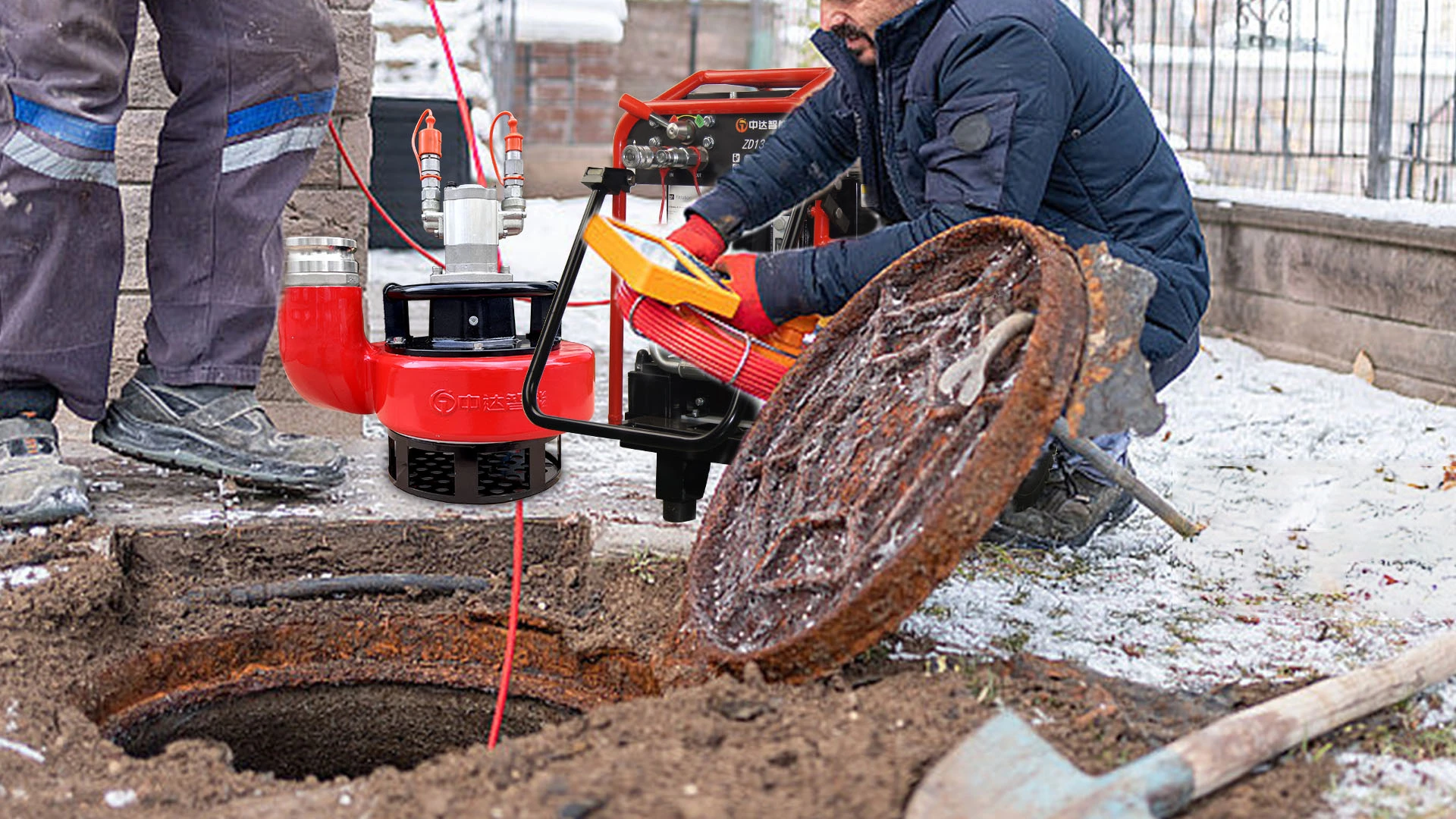
A municipal slurry pump is used to transfer wastewater, muddy water, and liquids containing suspended solids or other impurities. It is commonly used in municipal drainage maintenance, sewer cleaning, construction sites, and emergency wastewater removal.
Unlike a conventional clean-water pump, a slurry pump is designed to handle liquids containing suitable solid particles. Depending on its structure and specifications, it can be used for tasks such as:
- Municipal sewer maintenance: Removing wastewater and accumulated sediment from manholes, drainage channels, and sewer systems.
- Construction site drainage: Pumping muddy water containing sand and other impurities from excavations and construction areas.
- Emergency wastewater removal: Transferring contaminated water during municipal maintenance and emergency drainage operations.
Portable hydraulic slurry pumps are particularly useful when pumping equipment needs to be moved between different work locations or connected to an independent hydraulic power source. For more information about hydraulic slurry pump selection and applications, see our guide to different hydraulic slurry pump models and their working conditions.
However, a municipal slurry pump is not necessarily suitable for large-scale river dredging. Its intended application is generally municipal wastewater and localized muddy-water removal rather than continuous extraction and transportation of large volumes of riverbed sediment.
2. What Is an Industrial Dredging Pump?
An industrial dredging pump is designed for removing sand, silt, mud, and other sediment from underwater environments such as rivers, lakes, harbors, and reservoirs.
Unlike municipal slurry pumps, which are commonly used for localized drainage and wastewater transfer, industrial dredging pumps are generally part of larger dredging systems. They may be installed on dredging vessels, floating platforms, excavators, or other specialized equipment.
Typical applications include:
- River and lake dredging: Removing accumulated sediment to maintain water depth and improve waterway conditions.
- Harbor and port maintenance: Clearing sand and silt from navigation channels and harbor basins.
- Sand and sediment extraction: Transporting underwater sand, mud, and sediment for construction or maintenance projects.
- Reservoir dredging: Removing accumulated deposits from reservoirs and other water storage areas.
Industrial dredging pumps are generally designed for demanding continuous-duty operations involving abrasive sediment and relatively high concentrations of solids.
A key distinction is that dredging is not simply pumping muddy water. It involves extracting accumulated underwater material and transporting it through a dedicated dredging system.
3. What Is a Mud Pump or Sludge Pump?
The terms mud pump and sludge pump can refer to different types of equipment depending on the industry. They should not automatically be treated as synonyms for municipal slurry pumps.
Mud Pump
In the oil and gas industry, a mud pump usually refers to a high-pressure reciprocating pump used to circulate drilling fluid through a drilling system.
Its primary function is to deliver drilling fluid under pressure, rather than to drain municipal wastewater or remove riverbed sediment.
Therefore, when searching for a mud pump, it is important to identify whether the intended application is drilling-fluid circulation or general muddy-water pumping.
Sludge Pump
A sludge pump is generally used to transfer thick sludge, semi-solid waste, and high-viscosity mixtures in wastewater treatment plants and industrial processes.
Typical applications include:
- Municipal wastewater treatment and sludge transfer.
- Industrial wastewater treatment.
- Transfer of thickened sludge and other viscous waste materials.
Although sludge pumps and slurry pumps may handle similar materials in some applications, their designs and operating characteristics can differ depending on the consistency and composition of the pumped medium.
4. Key Differences Between Municipal Slurry Pumps, Dredging Pumps, and Mud Pumps
| Equipment Type | Main Application | Typical Pumping Medium | Common Operating Environment |
|---|---|---|---|
| Municipal Slurry Pump | Municipal drainage, sewer maintenance, construction drainage | Wastewater, muddy water, suspended solids | Manholes, drainage channels, construction sites |
| Industrial Dredging Pump | River, lake, harbor, and reservoir dredging | Sand, silt, underwater sediment | Dredging vessels, floating platforms, dredging sites |
| Oil-field Mud Pump | Drilling-fluid circulation | Drilling mud and drilling fluids | Oil and gas drilling operations |
| Sludge Pump | Wastewater and industrial sludge transfer | Thick sludge and viscous waste | Wastewater treatment plants and industrial facilities |
The main difference is not simply the type of liquid each pump can handle. It is the intended operating task and the equipment system in which the pump is used.
A municipal slurry pump handles wastewater and muddy water containing suitable solids. An industrial dredging pump is designed for extracting and transporting underwater sediment. An oilfield mud pump delivers drilling fluid under pressure, while a sludge pump is used for transferring thicker waste materials.
5. ZONDAR Hydraulic Pumps and Drainage Robots for Municipal and Emergency Applications
For municipal drainage, construction dewatering, and emergency flood control, different equipment configurations may be needed depending on the worksite.
ZONDAR provides hydraulic slurry pumps, hydraulic submersible pumps, and mobile drainage robots for these applications.
Hydraulic Slurry Pumps for Municipal Wastewater
ZONDAR’s portable hydraulic slurry pump is designed for municipal wastewater removal, sewer maintenance, construction drainage, and other tasks involving muddy water with suitable solid impurities.
The portable configuration makes them useful for localized drainage work where equipment needs to be transported and deployed at different locations.
They are intended for municipal and emergency wastewater pumping, rather than replacing large industrial dredging systems.
Hydraulic Submersible Pumps for Emergency Dewatering
ZONDAR’s hydraulic submersible pump is designed to operate with the pump body placed directly in the water, making it suitable for flood drainage, construction dewatering, and emergency water transfer.
For example, the ZONDAR ZDSP-4515 hydraulic submersible pump offers:
- Rated flow: 450 m³/h
- Discharge outlet: 8 inches
- Pumping head: 15 m
- Maximum solids passage size: 25 mm
- Quick-coupling connection
It can also be used as a relay pump in suitable pumping arrangements, helping transfer water over longer distances or through multiple pumping stages.
For applications requiring greater pumping head, ZONDAR also offers a high-head hydraulic submersible pump series designed for demanding emergency dewatering tasks.
Hydraulic Drainage Robots for Large-Scale Flood Control
For large-scale urban flooding and drainage operations in difficult-access areas, a standalone pump may not provide sufficient mobility or operational flexibility.
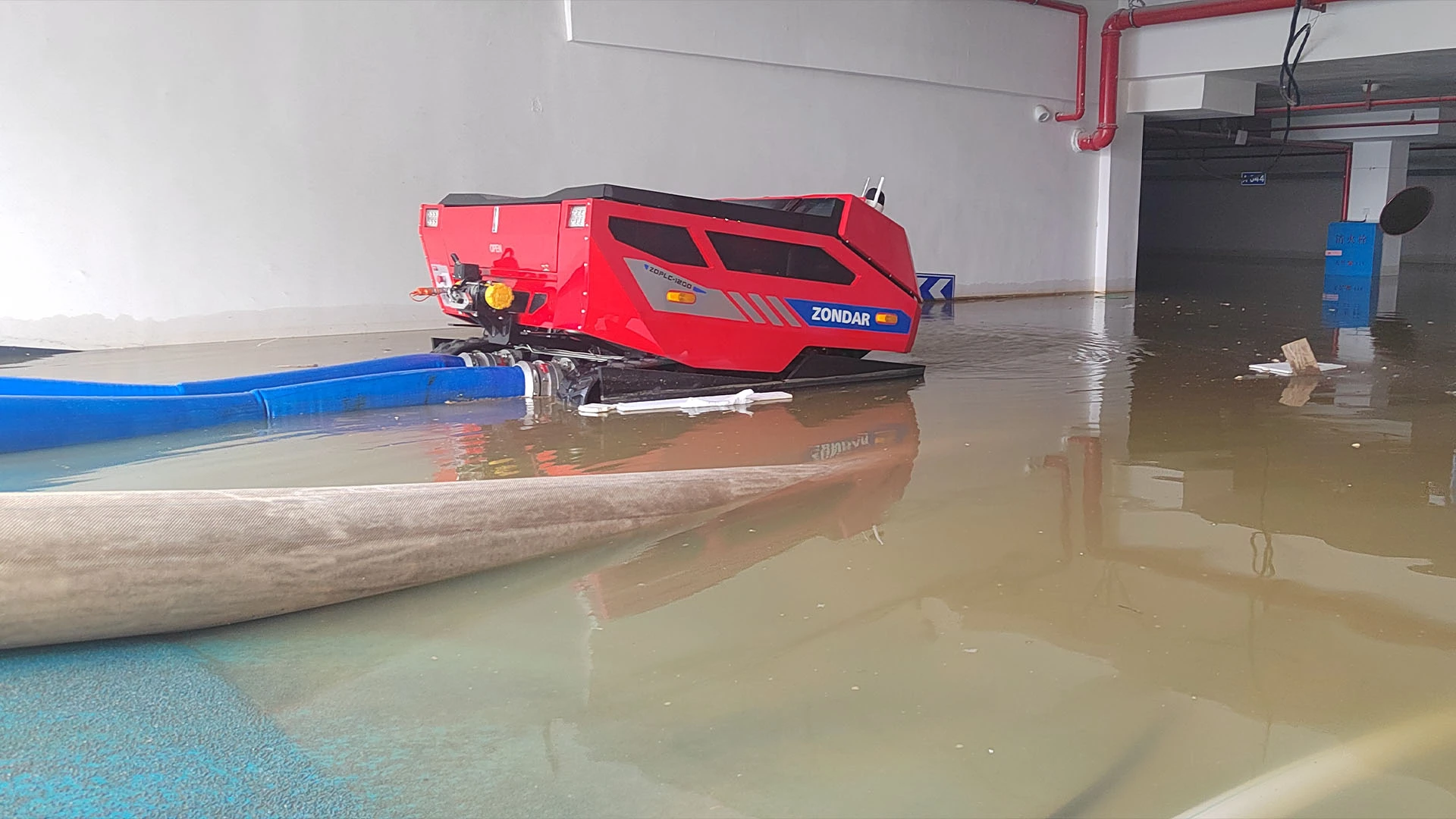
ZONDAR’s hydraulic drainage robot integrates a high-capacity pumping system with a tracked mobile platform and remote-control capabilities, providing a mobile solution for large-scale urban flood control.
The ZONDAR ZDPLC-1200 drainage robot, for example, features:
- Rated drainage capacity: up to 1,200 m³/h
- Pumping head: 15 m
- Wading depth: over 700 mm
- Obstacle-crossing capability: up to 250 mm
- Remote-control distance: approximately 300 m to 1 km, depending on configuration
Unlike a standalone pump, a drainage robot combines pumping and mobility in one platform. It is particularly suitable for large-scale urban flood control and emergency drainage projects where equipment access and remote operation are important.
Comparing ZONDAR Pumping and Drainage Equipment
| Equipment Type | ZONDAR Product | Typical Applications | Main Characteristics |
|---|---|---|---|
| Hydraulic Slurry Pump | Hydraulic slurry pump | Municipal sewer maintenance, manholes, construction sites, emergency wastewater removal | Handles wastewater and muddy water containing suitable solid impurities |
| Hydraulic Submersible Pump | Hydraulic submersible pump | Urban flood drainage, construction dewatering, emergency water transfer | Operates underwater; suitable models handle solids within specified limits |
| High-Head Hydraulic Submersible Pump | High-head submersible pump series | Deep-area drainage and applications requiring greater pumping head | Designed for higher-head drainage requirements |
| Hydraulic Drainage Robot | ZDPLC-1200 and other drainage robot models | Urban flood control, large-scale emergency drainage, difficult-access flooded areas | Integrated tracked platform, high-capacity pumping, and remote operation |
These products serve different roles rather than competing as interchangeable equipment. A hydraulic slurry pump is intended for wastewater and muddy-water handling, a hydraulic submersible pump is selected when the pump needs to operate underwater, and a drainage robot provides a mobile, integrated solution for large-scale emergency flood control.
6. Which Type of Pump Should You Choose?
The right equipment depends primarily on the actual operation rather than the general description of the liquid.
- For municipal sewer maintenance and wastewater removal: A municipal slurry pump may be suitable for pumping wastewater and muddy water containing appropriate solid impurities.
- For riverbed sediment removal and large-scale dredging: Choose a dedicated industrial dredging pump designed for abrasive sediment extraction and transportation.
- For oilfield drilling-fluid circulation: Use a dedicated drilling mud pump rather than a general-purpose slurry pump.
- For thick sludge transfer: Select a sludge pump designed for the consistency and characteristics of the material.
- For emergency flood drainage and construction dewatering: Hydraulic submersible pumps are suitable when the pump needs to operate directly in the water.
- For large-scale urban flood control in difficult-access areas: A mobile hydraulic drainage robot may provide a more integrated solution.
Before selecting a pump, users should also check the actual model’s flow rate, pumping head, allowable solids passage size, and operating conditions. Equipment suitability cannot be determined by the product name alone.
Conclusion
Municipal slurry pumps, industrial dredging pumps, mud pumps, and sludge pumps serve different purposes, even though they may all handle liquids containing solid materials.
Municipal slurry pumps are commonly used for wastewater and localized muddy-water removal, while industrial dredging pumps are designed for extracting and transporting underwater sediment. Oilfield mud pumps serve drilling-fluid circulation systems, and sludge pumps are used for transferring thick sludge and industrial waste.
For municipal drainage and emergency dewatering, ZONDAR offers hydraulic slurry pumps, hydraulic submersible pumps, and mobile drainage robots to address different site requirements. Choosing the right equipment starts with understanding the actual pumping task and the operating environment.