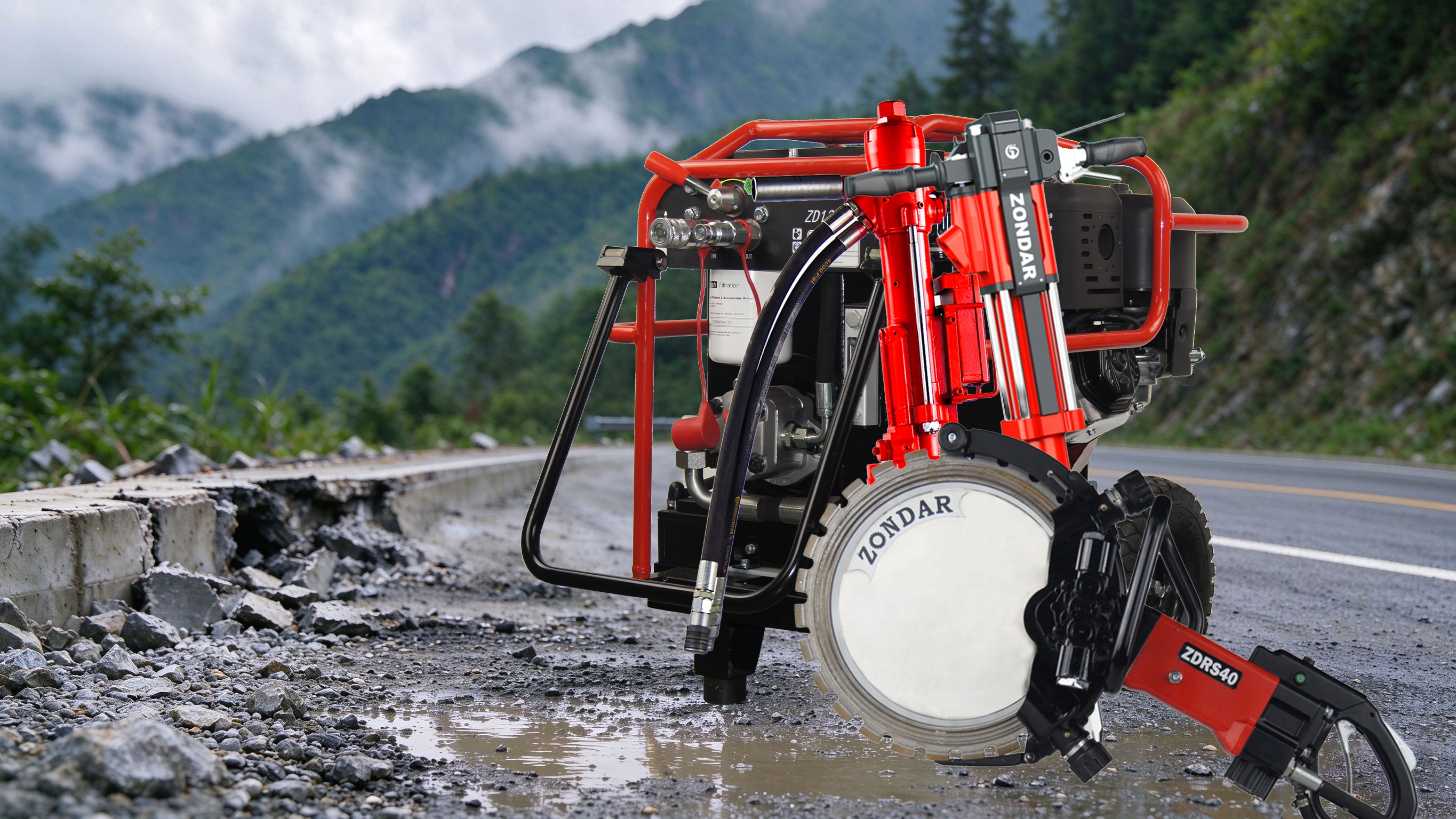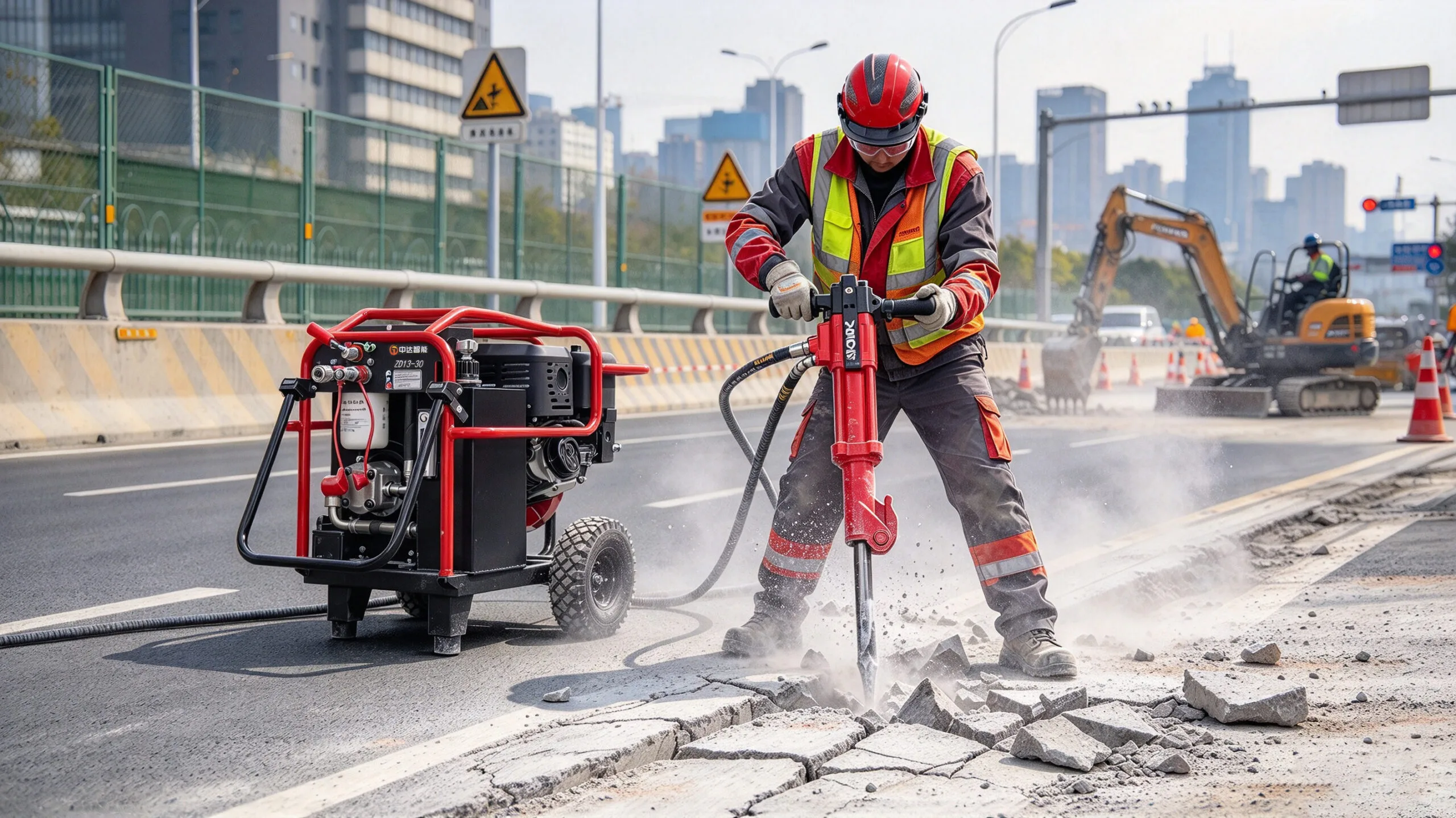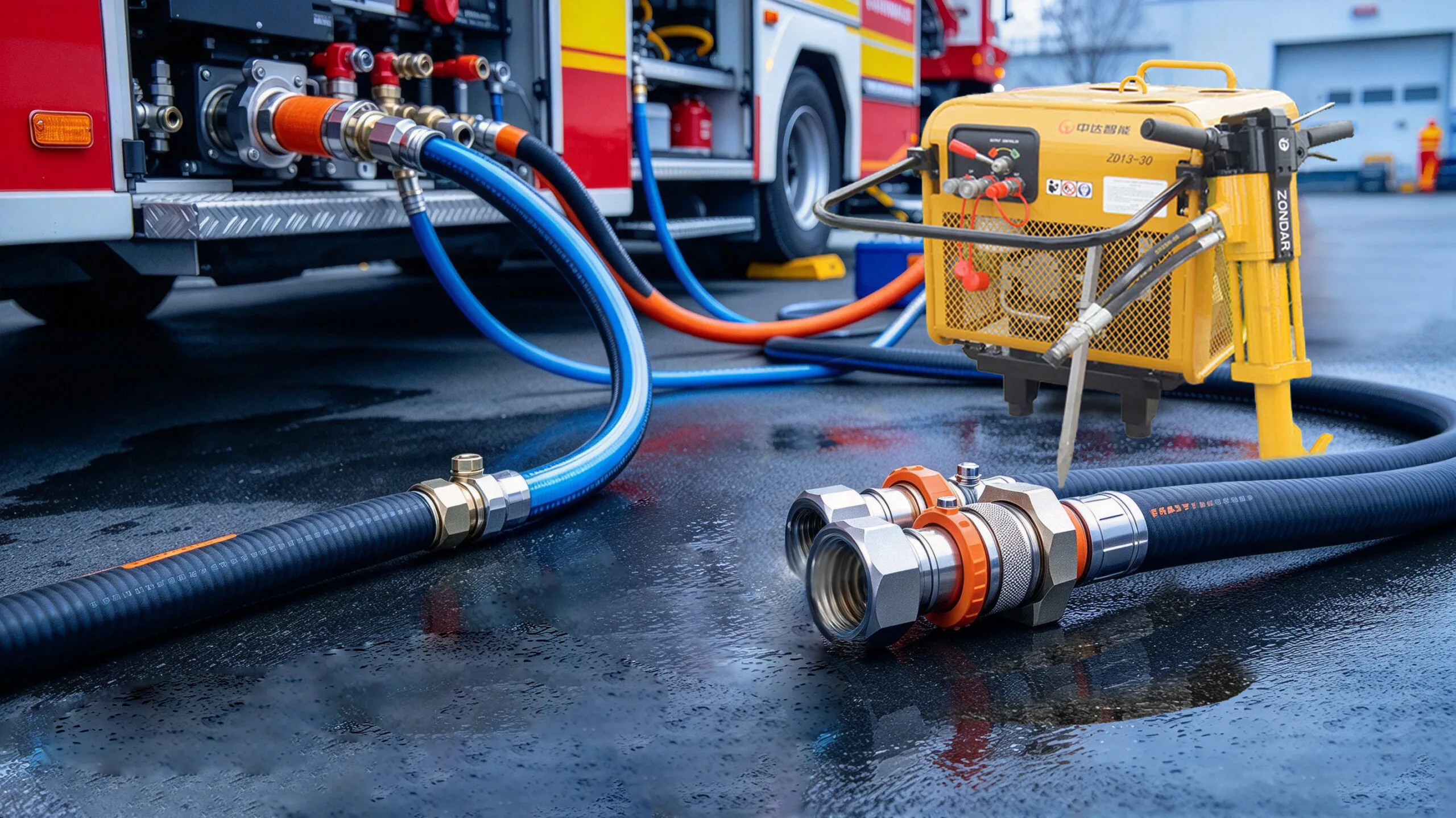
Hydraulic core drills and hydraulic rock drills are both used to drill into hard materials such as concrete, stone, and rock. Although they may look similar at first, they are designed for different drilling purposes.
A hydraulic core drill is mainly used to cut a cylindrical section from concrete or other solid materials, producing a clean, round hole and, in many cases, a recoverable core sample. A hydraulic rock drill is designed to penetrate hard rock or concrete efficiently, usually by combining rotation with percussive impact.
Choosing between these two tools depends on what the drilling operation needs to achieve. Do you need a clean opening through a concrete wall, a sample of the material, or a deeper hole for rock splitting, anchoring, or construction?
Understanding their working principles and applications will help you select the right hydraulic drilling equipment and power source.
1. What Is a Hydraulic Core Drill?
A hydraulic core drill is a drilling tool designed to produce accurate, circular holes in concrete, reinforced concrete, masonry, stone, and similar materials.
Unlike conventional drilling tools that break or remove material across the entire drill diameter, a core drill uses a hollow cylindrical core bit with diamond cutting segments. The bit cuts along the circumference of the hole, leaving a cylindrical core inside the barrel.
During operation, the hydraulic motor drives the core bit at a controlled rotational speed. As the bit advances into the material, its diamond segments grind through the concrete or stone. Water is commonly supplied to cool the cutting segments and flush drilling debris from the cutting area.
The result is a relatively clean, accurately sized hole with less unnecessary material removal than full-face impact drilling.

Typical Applications of Hydraulic Core Drills
Hydraulic core drills are widely used in construction, infrastructure maintenance, and installation work.
Common applications include:
- Pipe and utility installation: Drilling openings through concrete walls, floors, and foundations for water pipes, drainage lines, and utility conduits.
- Electrical and mechanical installation: Creating holes for cables, ventilation ducts, and equipment connections.
- Reinforced concrete drilling: Producing circular openings through reinforced concrete structures when the correct diamond core bit is selected.
- Concrete inspection and testing: Extracting cylindrical core samples for material inspection and strength testing.
- Infrastructure maintenance: Drilling accurate holes in existing buildings, bridges, tunnels, and other concrete structures.
A core drill is particularly useful when hole diameter, position, and edge quality matter more than drilling speed alone.
2. What Is a Hydraulic Rock Drill?
A hydraulic rock drill is designed to penetrate hard rock and other dense materials. Many hydraulic rock drills use a rotary-percussive mechanism, combining rotational movement with repeated impact energy to advance the drill bit.
The hydraulic motor supplies power to the drilling mechanism. The bit rotates while the percussion mechanism delivers repeated blows to the material. These combined actions help break rock at the bottom of the hole, while the drilling system advances into the material.
Depending on the model and application, drilling debris may be removed through air or water flushing.
Unlike a core drill, a rock drill generally does not aim to recover a cylindrical sample. Its main purpose is to create a hole with the required diameter and depth for a subsequent operation.
Typical Applications of Hydraulic Rock Drills
Hydraulic rock drills are commonly used in:
- Rock splitting preparation: Drilling holes for hydraulic rock splitters before controlled rock or concrete splitting.
- Rock anchoring: Creating holes for rock bolts and anchor installation.
- Quarrying and stone processing: Preparing holes for splitting or other rock extraction operations.
- Foundation and construction work: Drilling into hard rock for foundation preparation and related construction tasks.
- Underground and confined-area work: Providing drilling capability where compact hydraulic equipment is more practical than larger drilling machinery.
For example, when a contractor uses a hydraulic rock splitter to separate a large rock or concrete block, the drilling operation is an essential first step. The rock drill creates the holes required to position the splitter wedges.
The drilling pattern, hole spacing, diameter, and depth must be selected according to the splitter specifications and material conditions.

3. Hydraulic Core Drill vs. Hydraulic Rock Drill: Working Differences
The main difference between these tools is how they remove material and what kind of drilling result they produce.
| Comparison | Hydraulic Core Drill | Hydraulic Rock Drill |
|---|---|---|
| Main purpose | Produces accurate circular holes and core samples | Creates holes for construction, anchoring, or rock splitting |
| Working method | Rotary cutting and grinding | Usually rotary-percussive drilling |
| Drill bit | Hollow diamond core bit | Rock drill bit, such as a button or other compatible bit |
| Material removal | Cuts around the circumference of a cylindrical core | Breaks material at the bottom of the hole |
| Typical result | Circular opening and potentially a recoverable core | A drilled hole without a cylindrical core sample |
| Common materials | Concrete, reinforced concrete, masonry, stone | Rock, hard stone, and suitable concrete applications |
| Typical applications | Pipe openings, utility installation, concrete sampling | Rock splitting, anchoring, quarrying, foundation work |
| Main selection factors | Hole diameter, depth, cutting conditions, core quality | Rock hardness, hole diameter, depth, impact performance |
One important distinction is that a hydraulic core drill is primarily a cutting tool, while a hydraulic rock drill is generally a drilling and impact tool.
The two should not be treated as interchangeable simply because both use hydraulic power and rotating drill bits.
4. Which Tool Should You Choose for Different Drilling Applications?
Choosing between a hydraulic core drill and a hydraulic rock drill mainly depends on two factors: the material being drilled and the required hole diameter.
Application 1: Choose According to the Material
The material is an important consideration when selecting a drilling tool, especially when working with reinforced concrete.
Reinforced Concrete
For reinforced concrete, a hydraulic core drill is generally the preferred option when occasional sampling or extracting a cylindrical concrete core is required.
Its diamond core bit cuts around the circumference of the sample, allowing the operator to remove a relatively intact cylindrical section for inspection or testing.
A hydraulic rock drill is not normally selected for this purpose because its drilling mechanism is designed to break material rather than recover an intact core sample.
Plain Concrete
For plain concrete, both a hydraulic core drill and a hydraulic rock drill can be used, depending on the required drilling result.
If the job requires a clean circular opening or a concrete core sample, use a hydraulic core drill.
If the purpose is simply to create a hole for construction, installation, or other subsequent work, a hydraulic rock drill may also be suitable.
The choice should therefore depend on whether the project requires a clean, accurately cut opening or a conventional drilled hole.
Application 2: Choose According to Hole Diameter
The required hole diameter is another practical factor when selecting drilling equipment.
| Required Hole Diameter | Recommended Tool | Main Consideration |
|---|---|---|
| Below 25 mm | Hydraulic hammer drill | Suitable for smaller-diameter drilling tasks |
| 25–55 mm | Hydraulic core drill or hydraulic rock drill | Both tools can be considered, depending on material and drilling purpose |
| Above 55 mm and up to 200 mm | Hydraulic core drill | Suitable for larger-diameter circular holes and core extraction |
For holes between 25 mm and 55 mm, the choice depends on the desired drilling result. A core drill is appropriate when a clean circular cut or core sample is needed, while a rock drill can be used when the objective is to create a conventional hole.
When the required diameter exceeds 55 mm, up to 200 mm, a hydraulic core drill is generally the more suitable choice because its hollow diamond bit is designed for larger-diameter circular cutting.
For small holes below 25 mm, a hydraulic hammer drill is generally more practical than either of the two drilling tools discussed in this comparison.
Important: The diameter ranges above are practical selection guidelines, not universal limits for every machine. Always confirm the compatible bit diameter, drilling depth, and material requirements against the specifications of the selected tool.
Conclusion
Hydraulic core drills and hydraulic rock drills are designed for different drilling purposes, although both can be used on certain concrete and rock drilling applications.
A hydraulic core drill is the preferred choice when extracting concrete samples or producing larger, clean circular holes, particularly in reinforced concrete. A hydraulic rock drill is suitable for conventional drilling tasks where core extraction is not required.
For practical tool selection, consider both the material and the required hole diameter. For smaller holes below 25 mm, a hydraulic hammer drill may be more appropriate. For holes between 25 mm and 55 mm, either a core drill or a rock drill may be suitable depending on the application. For larger holes from above 55 mm up to 200 mm, a hydraulic core drill is generally the better option.
Selecting the right drilling tool according to the actual job requirements helps improve drilling efficiency and avoid unnecessary equipment changes.