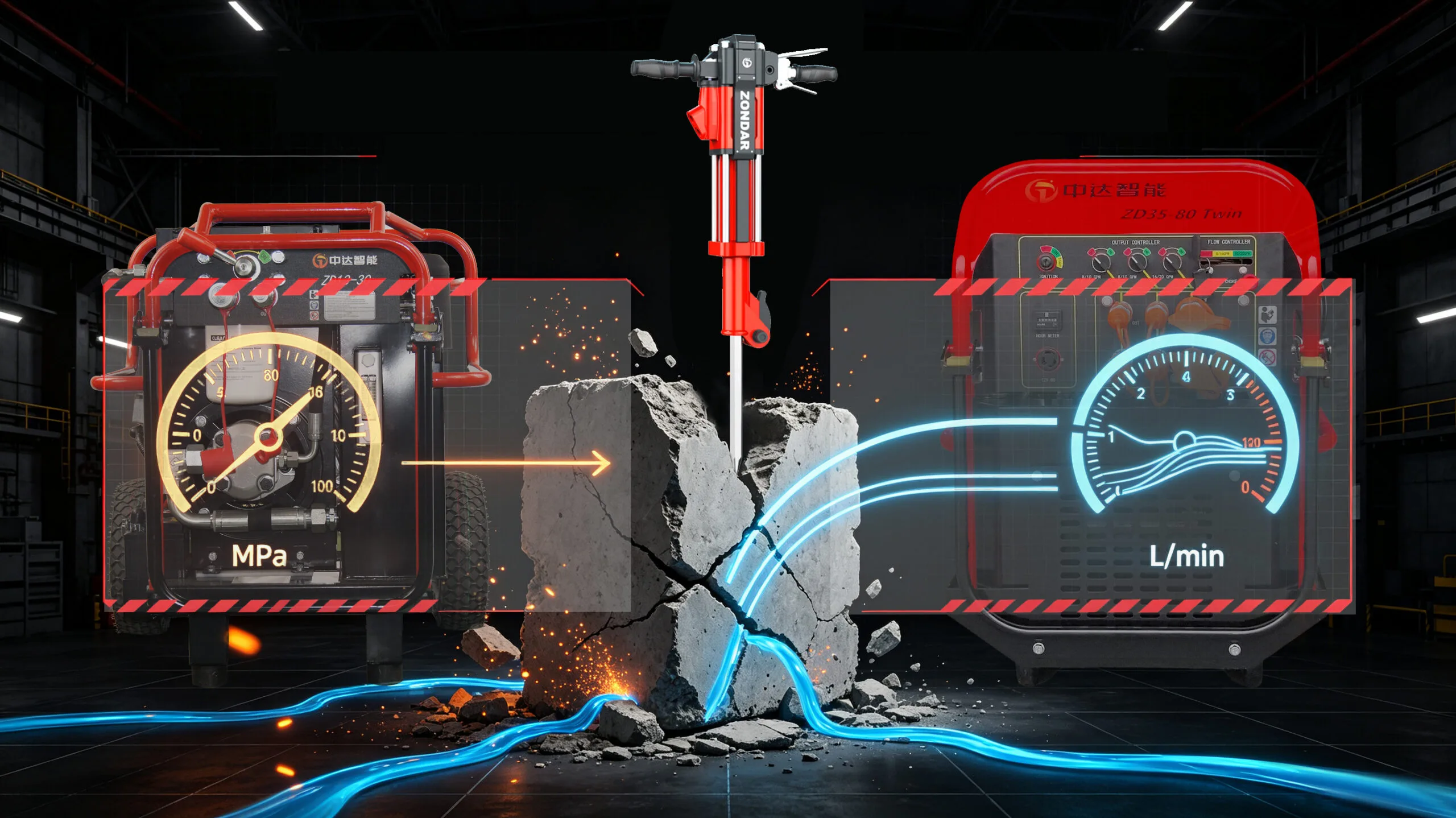
Extreme weather is changing the way cities prepare for emergencies. In many urban areas, underground parking garages, commercial basements, and electrical utility spaces were originally designed for normal drainage conditions—not for sudden extreme rainfall events that can overwhelm surface drainage networks within minutes.
Unlike open areas where floodwater can naturally disperse, underground spaces create a unique challenge. Water has nowhere to escape. A garage several levels below ground can quickly become a temporary reservoir, trapping vehicles, damaging electrical infrastructure, and preventing normal building operations.
For facility managers, municipal operators, and emergency response teams, the challenge is no longer simply removing water. The real challenge is restoring underground spaces quickly, safely, and with minimal secondary damage.
This requires a new generation of flood recovery solutions that combine mobility, high-volume pumping capability, and safe operation in environments where traditional equipment often fails.
Why Traditional Flood Pumping Methods Often Fail Underground
In many underground flooding events, the first response is usually conventional electric pumps or fixed drainage systems. These solutions work well under normal conditions but often become unreliable during severe flooding.
Power Failure Creates Immediate Safety Risks
The first problem is electricity.
When floodwater reaches underground electrical systems, power supplies are commonly shut down to prevent electrical hazards. However, many traditional pumps rely on grid power.
This creates a difficult situation:
The area requires pumping the most when the available pumping equipment may no longer operate.
Emergency teams must avoid sending personnel into deep water environments where hidden electrical risks may exist.
Independent hydraulic and engine-powered equipment provides an alternative by moving the power source outside the flooded area.
Mud, Sediment, and Debris Turn Water Removal Into a Solids Handling Problem
Another overlooked challenge is water quality.
Floodwater entering underground garages is rarely clean. It often carries
road dust, construction debris, sand and sediment, leaves and organic materials, and urban pollutants.
A standard clear-water pump may remove surface water but struggle when sediment concentration increases.
As water levels drop, the remaining mixture often becomes thicker, creating the most difficult stage of flood recovery.
Professional flood response requires equipment designed not only for water movement but also for handling contaminated, high-solid floodwater.
Large Underground Areas Require More Than One Pump Location
Modern underground parking facilities can extend across thousands of square meters and multiple basement levels.
Unlike a small basement, where a single pump can solve the problem, large garages often experience uneven flooding:
- water accumulates in low points
- different areas have different water depths
- ramps and structural columns restrict equipment movement
A successful recovery operation requires flexible deployment rather than relying on one fixed pumping point.
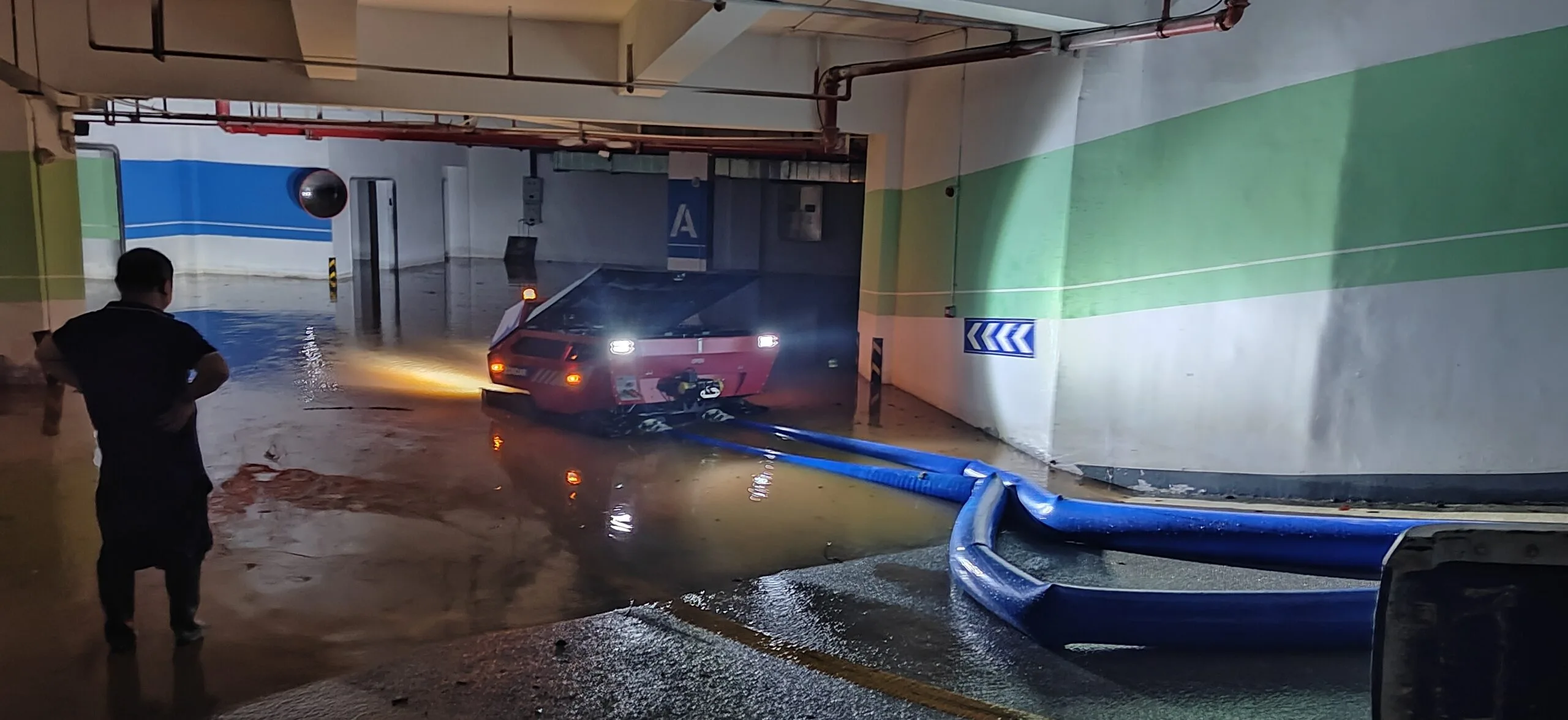
A Real Underground Flood Recovery Operation in Changsha
In June 2024, heavy rainfall caused severe urban flooding in Changsha, China. Several underground facilities experienced significant water accumulation, including underground parking areas and utility spaces.
One affected underground garage experienced approximately one meter of accumulated floodwater after stormwater entered the facility.
The challenge was not only the volume of water.
The floodwater contained large amounts of sediment and debris, while underground electrical areas created additional safety concerns.
A conventional single-pump solution was unable to meet the operational requirements. The recovery operation required a combination of mobile pumping capability, high-solid handling, and equipment that could operate independently from underground electrical systems.
Building an Integrated Flood Recovery System
Instead of depending on one type of equipment, ZONDAR developed a coordinated drainage approach combining several technologies.
Surface Hydraulic Power Units for Independent Operation
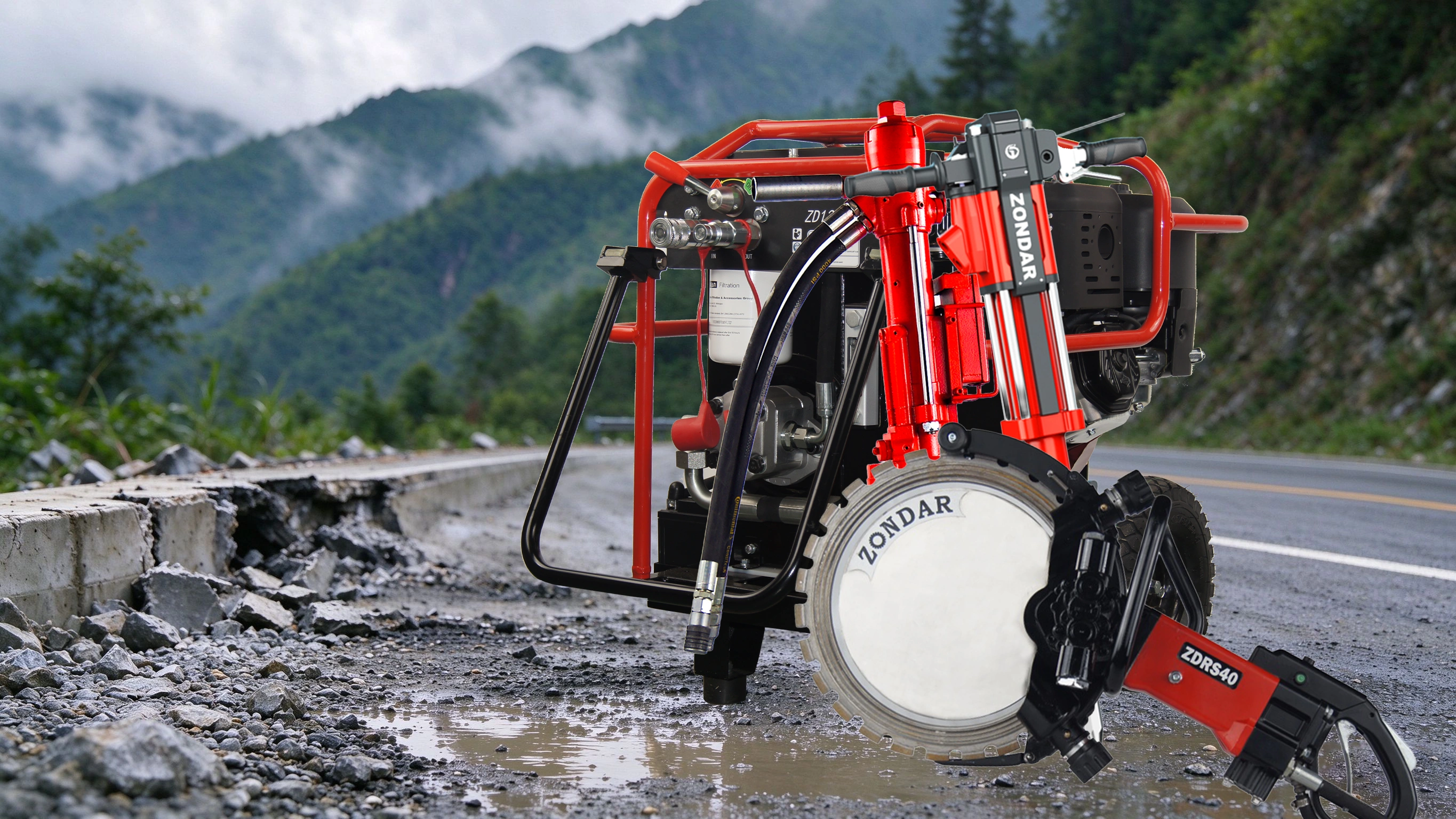
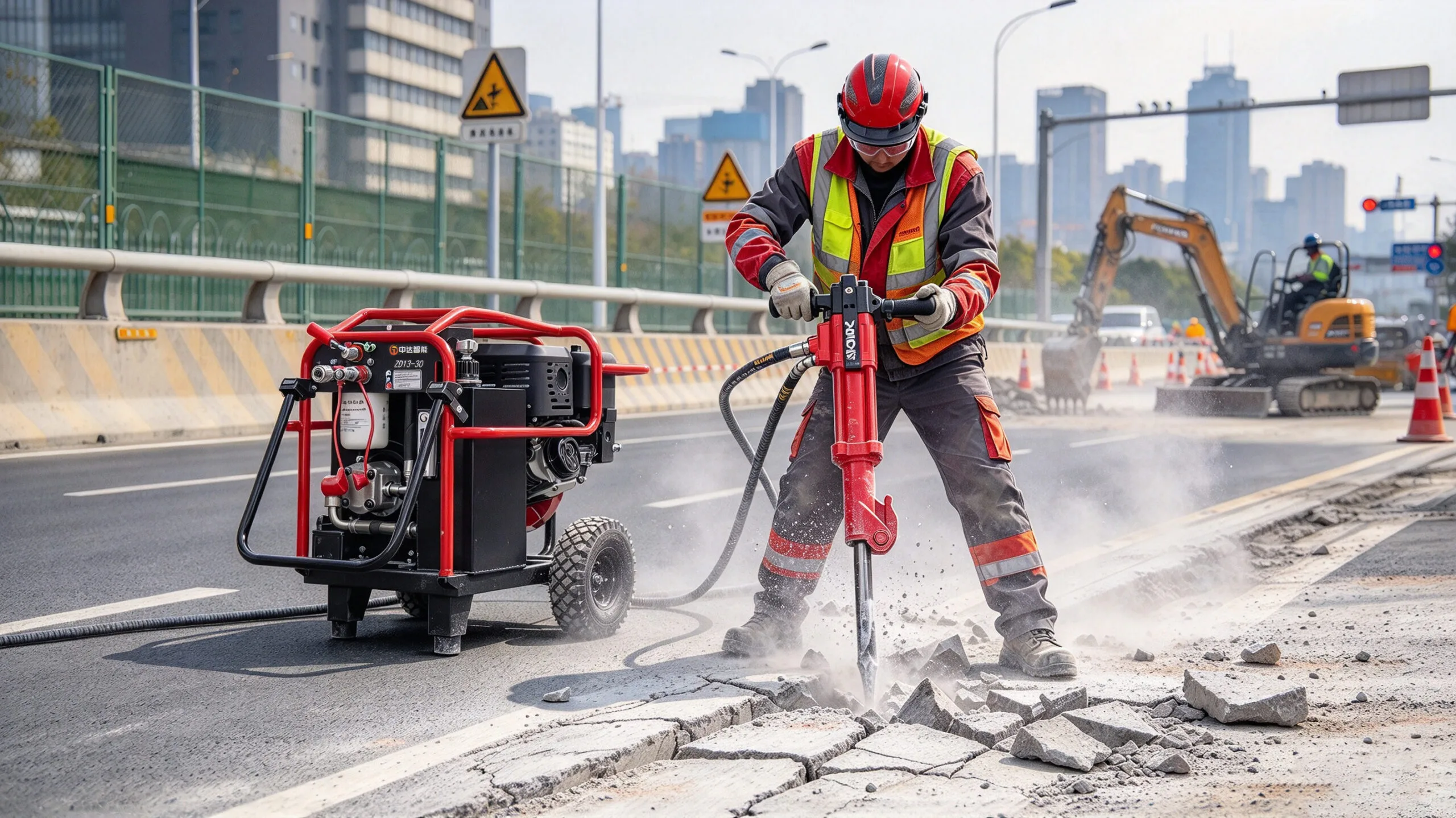
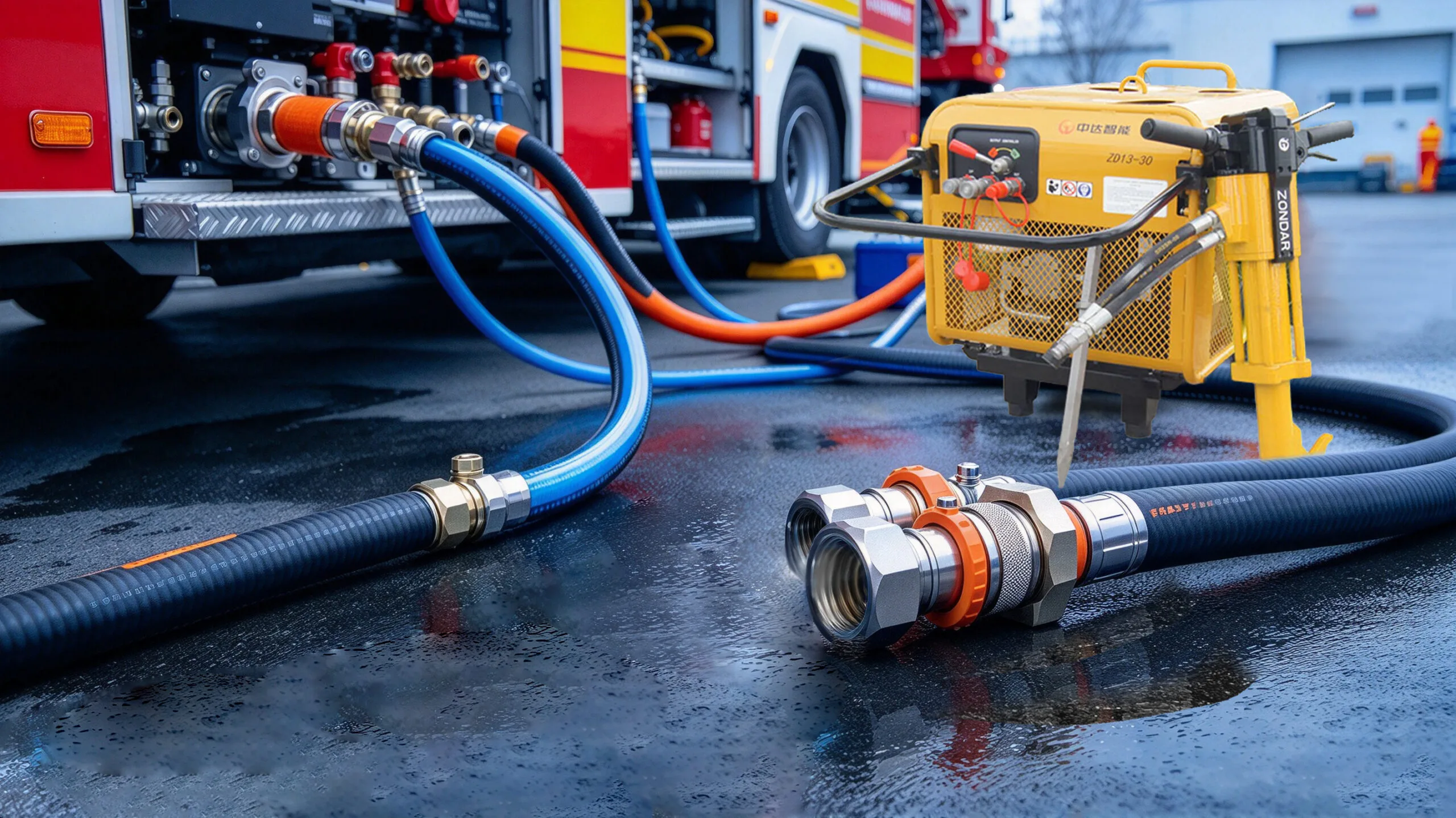
Hydraulic power units were positioned in safe areas above the flood zone.
This allowed pumping equipment underground to operate without depending on local electrical power.
The advantages include safer underground operation, flexible equipment deployment, continuous operation during power interruptions, compatibility with multiple hydraulic attachments.
Hydraulic Slurry Pumps for Sediment-Rich Floodwater
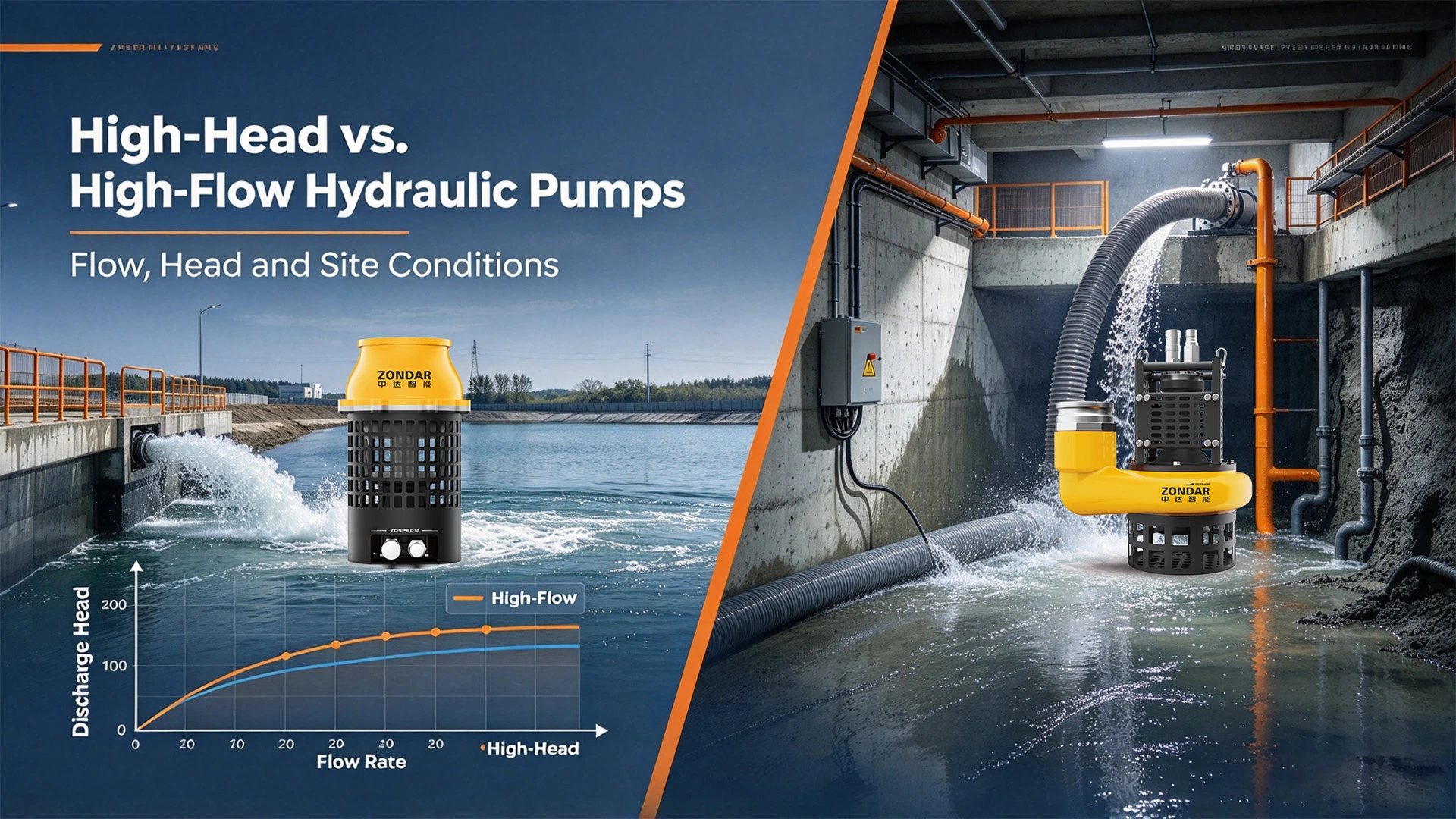
For areas containing heavy mud and sediment, hydraulic slurry pumps became the primary drainage tools.
Unlike conventional water pumps, slurry pumps are designed to handle difficult flood conditions where solids and debris are present.
This is especially important because removing only clean water does not complete the recovery process.
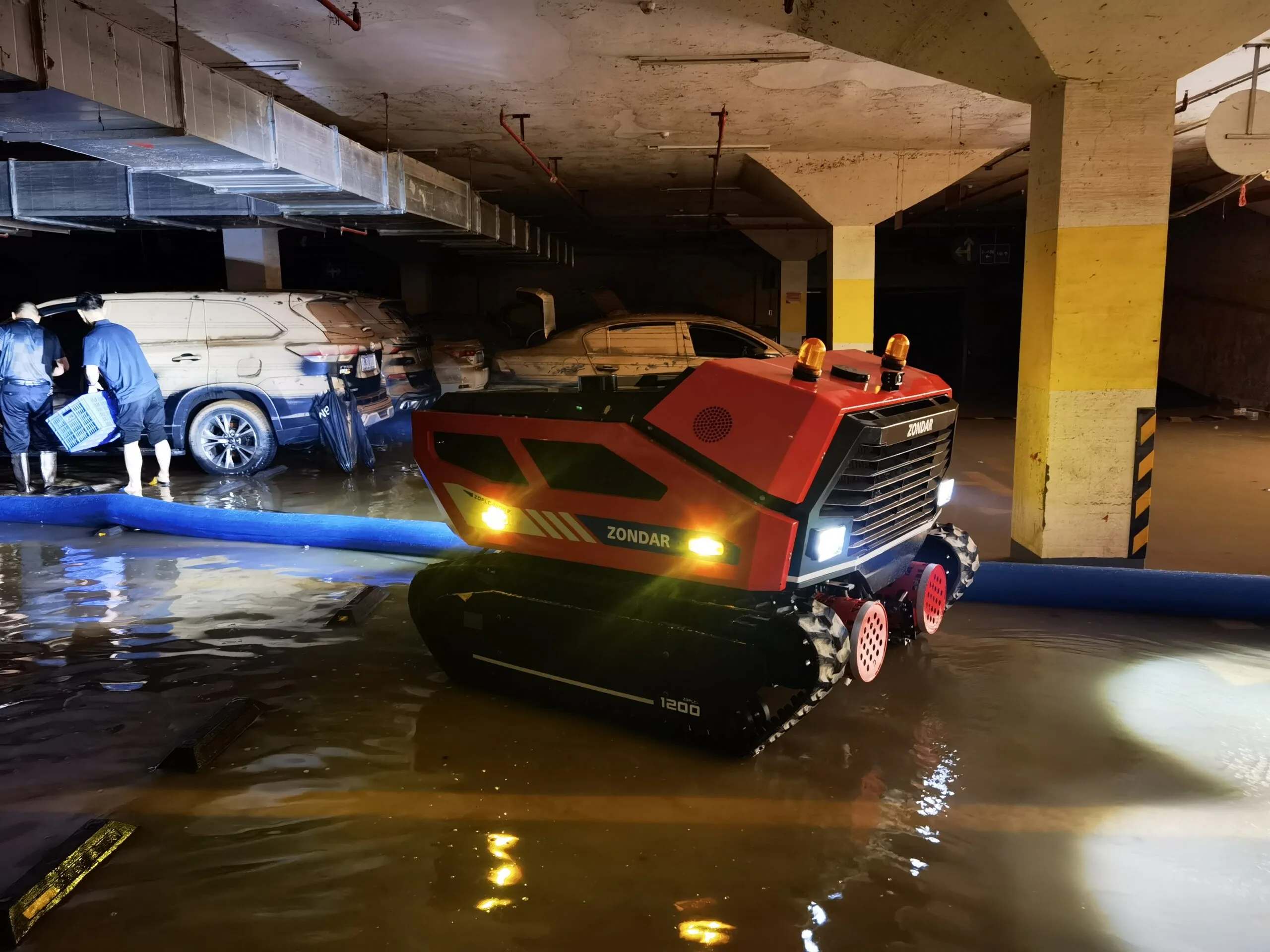
Remote Visual Drainage Robots for Difficult Access Areas
Large underground garages often have another limitation: accessibility.
Remote passages, ramps, and deep basement levels can make manual equipment movement difficult.
Remote drainage robots provide a mobile solution by allowing operators to position pumping equipment remotely in areas that may be unsafe or difficult to access.
Their mobility helps create multiple drainage points and improves overall recovery efficiency.
Four Key Stages of Underground Flood Recovery
A successful flood recovery operation is not simply a pumping process. It normally includes four stages.
1. Site Assessment and Safety Preparation
Before pumping begins, teams must evaluate:
- water depth
- electrical risks
- access routes
- sediment conditions
- drainage discharge points
Proper planning prevents equipment mismatch and improves response speed.
2. Rapid Water Extraction
High-capacity pumps are deployed at strategic locations to remove the majority of accumulated water.
The goal during this stage is to reduce flood pressure and restore safe access.
3. Sediment and Residual Water Removal
After the main water level drops, remaining sludge and debris become the primary challenge.
Slurry-capable equipment helps remove these difficult materials and prepares the site for cleaning.
4. Recovery and Infrastructure Inspection
The final stage includes sediment cleanup, electrical inspection
Ventilation, structural assessment, restoration of normal operation.
Fast drainage reduces long-term damage by shortening the time that vehicles, structures, and equipment remain exposed to water.
Beyond Emergency Response: Preparing Underground Facilities for Future Flood Events
Climate conditions are creating new challenges for urban infrastructure managers.
Flood recovery should not only focus on responding after damage occurs. Modern facilities are increasingly adopting proactive strategies, which include emergency equipment planning, flood risk assessment, backup drainage capability, equipment access planning, rapid response procedures.
For large underground facilities, preparedness can significantly reduce downtime and financial losses.
Conclusion: Smarter Drainage Solutions for Resilient Urban Infrastructure
Underground flooding is becoming a more complex engineering challenge. Large basement structures, deeper underground facilities, and increasingly unpredictable rainfall patterns require more flexible solutions than traditional drainage methods can provide.
Through integrated hydraulic drainage systems, mobile pumping platforms, and field-proven emergency response experience, ZONDAR helps municipalities, industrial facilities, and property operators improve their ability to respond to underground flooding challenges.
Flood recovery is not only about removing water—it is about restoring safety, protecting infrastructure, and helping cities recover faster.