With construction, mining, and infrastructure projects expanding into remote and complex environments, traditional fixed power sources are increasingly unable to meet real-world operational demands. Grid electricity is often unavailable, while stationary hydraulic systems lack mobility and flexibility.
Against this backdrop, portable hydraulic power units (Portable HPUs) have become a strategic power solution for modern industries. By combining independent power generation with stable hydraulic output, they enable efficient operation in off-grid, mobile, and emergency scenarios.
Today, portable hydraulic power units are no longer niche equipment. They are becoming a standard power source across infrastructure construction, energy, mining, and emergency response worldwide.
1. The Strategic Role of Portable Hydraulic Power Units
Portable hydraulic power units (Mobile HPUs) are compact systems that integrate power generation, hydraulic control, and energy distribution into a single, mobile solution. Powered primarily by diesel or gasoline engines, these units drive hydraulic pumps to convert mechanical energy into hydraulic power, supplying stable and high-output energy to a wide range of on-site hydraulic tools.
Compared with electric hydraulic power units, portable HPUs eliminate dependence on grid electricity. Compared with pneumatic systems, they deliver significantly higher power output, superior reliability, and stronger resistance to harsh environments. As a result, portable hydraulic power units have become the core power source for mobile construction, remote operations, and emergency response scenarios.
With global infrastructure development accelerating, mobile construction becoming the norm, and remote job sites increasing worldwide, the portable hydraulic power unit market has entered a rapid growth phase. From urban metro construction and pipeline maintenance to remote mining operations and disaster rescue sites, traditional fixed power sources are no longer sufficient. Portable hydraulic power units, with their “plug-and-work, no external energy required, and strong adaptability to complex working conditions,” are now the preferred power solution across multiple industries.
ZONDAR has been deeply engaged in this field for years, accurately identifying real-world operational pain points and developing high-performance portable hydraulic power units designed for diverse and demanding applications—delivering reliable power support to customers worldwide.
2. Global Market Size and Growth Trends
Market Overview and Forecast
According to industry research by Market Reports World updated in Jan. 2026, the global portable hydraulic power unit market reached approximately USD 1.48 billion in 2024, projected rise to over USD 2.5 billion by 2033, the market is expected to grow at a compound annual growth rate (CAGR) of around 6.2%.
This growth rate significantly outpaces the broader hydraulic equipment market, which averages around 6–6.5% CAGR. The primary reason lies in the unique scenario adaptability and irreplaceable role of portable hydraulic power units in mobile and off-grid operations.
3. Key Market Growth Drivers
3.1 Urgent Demand for Flexible On-Site Power
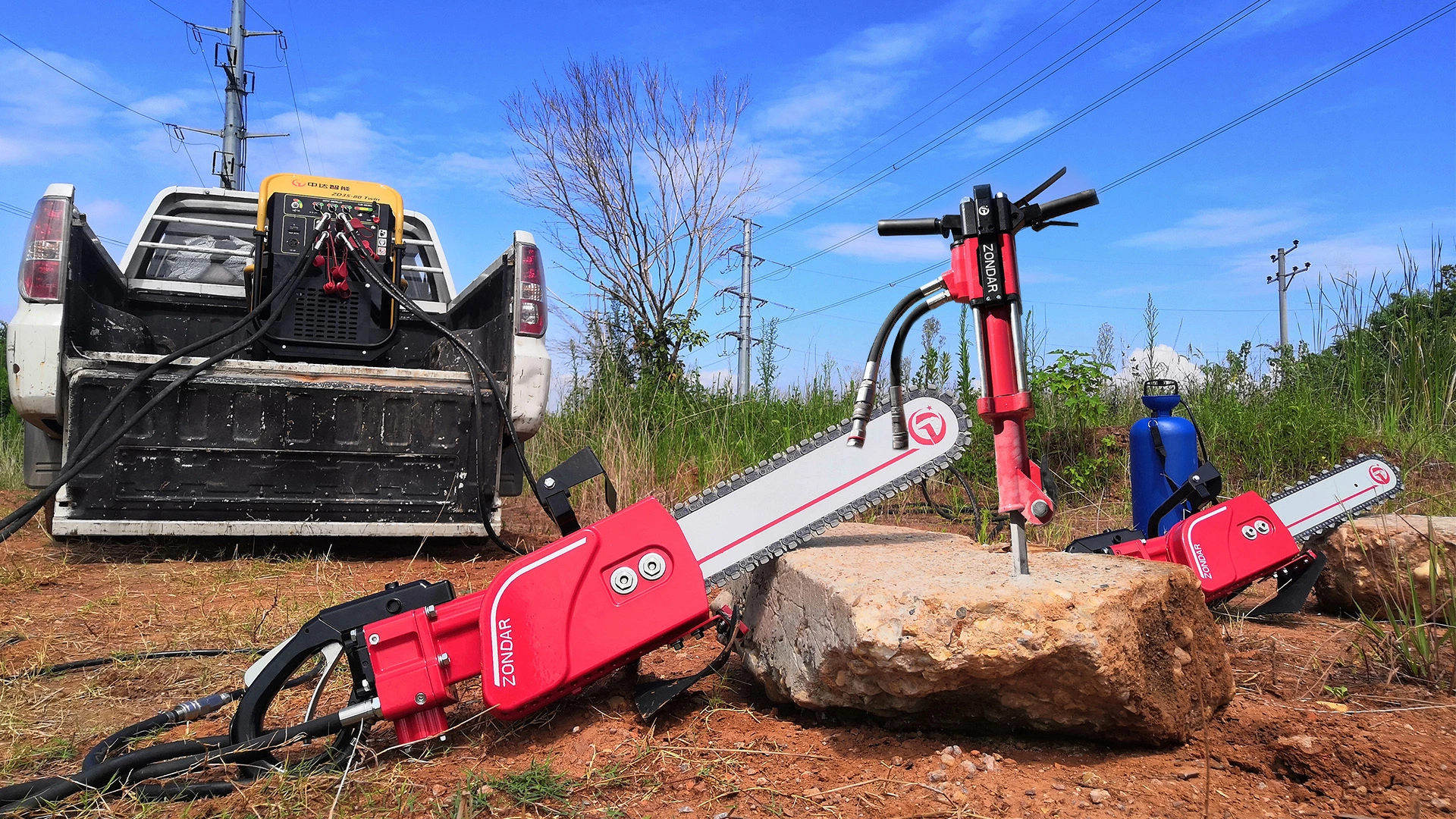
Remote job sites, underground tunnels, mountainous mining areas, and disaster zones often face limited or nonexistent access to electricity. In such conditions, electric hydraulic systems struggle to operate, while portable hydraulic power units can deliver immediate and stable power without any fixed energy infrastructure.
ZONDAR compact design also enables deployment in confined spaces, such as underground pipelines, utility corridors, and indoor renovation sites, where large equipment cannot operate efficiently.
3.2 Continuous Urbanization and Infrastructure Upgrades
Global urbanization has surpassed 56%, with emerging economies such as China and India investing heavily in metro systems, bridges, highways, and municipal infrastructure. These projects strongly drive demand for portable hydraulic power units.
In China alone, infrastructure-related procurement accounted for approximately 23% of global portable HPU demand in 2025, making it a major growth hub. Meanwhile, aging infrastructure in developed regions requires renovation solutions with low vibration, high efficiency, and minimal environmental impact—further supporting market expansion.
3.3 Automation and Lightweight Equipment Trends
As industrial automation advances, construction and maintenance equipment increasingly require precise control and stable power output. Modern portable hydraulic power units integrate PLC systems and sensors to enable intelligent regulation of pressure and flow, aligning seamlessly with automated workflows.
At the same time, the adoption of lightweight materials has reduced equipment weight by up to 30%, allowing single-operator transport and deployment—dramatically improving on-site efficiency.
4. Technology Trends and Product Innovation
4.1 Compact Design and Modular Architecture
The industry trend is moving toward “smaller size, higher versatility.” By optimizing hydraulic layouts and adopting high-strength lightweight materials, modern portable HPUs have reduced overall volume by up to 40%.
Modular designs allow power units, control modules, and oil tanks to be configured based on specific tool requirements. ZONDAR further enhances this approach with quick-release core components, enabling on-site replacement within 15 minutes, minimizing downtime.
4.2 Intelligent Monitoring and Remote Diagnostics
Smart transformation is accelerating across the industry. Integrated IoT modules and sensors continuously monitor pressure, flow rate, and temperature, providing real-time operational data via digital displays.
ZONDAR’s visual diagnostic functions enable fault prediction and troubleshooting, reducing downtime by up to 50%, receive maintenance alerts, and manage equipment more efficiently.
4.3 Energy Efficiency and Environmental Compliance
Under increasing global environmental regulations, low emissions and high efficiency are critical innovation priorities. Optimized engine combustion and hydraulic circuit designs reduce fuel consumption by up to 25%, with emissions meeting EU Stage V standards.
ZONDAR’s fuel-powered hydraulic units maintain strong output while keeping noise levels below 110 dB, making them suitable for urban and noise-sensitive construction environments.
5. Typical Application Industries
5.1 Infrastructure Construction
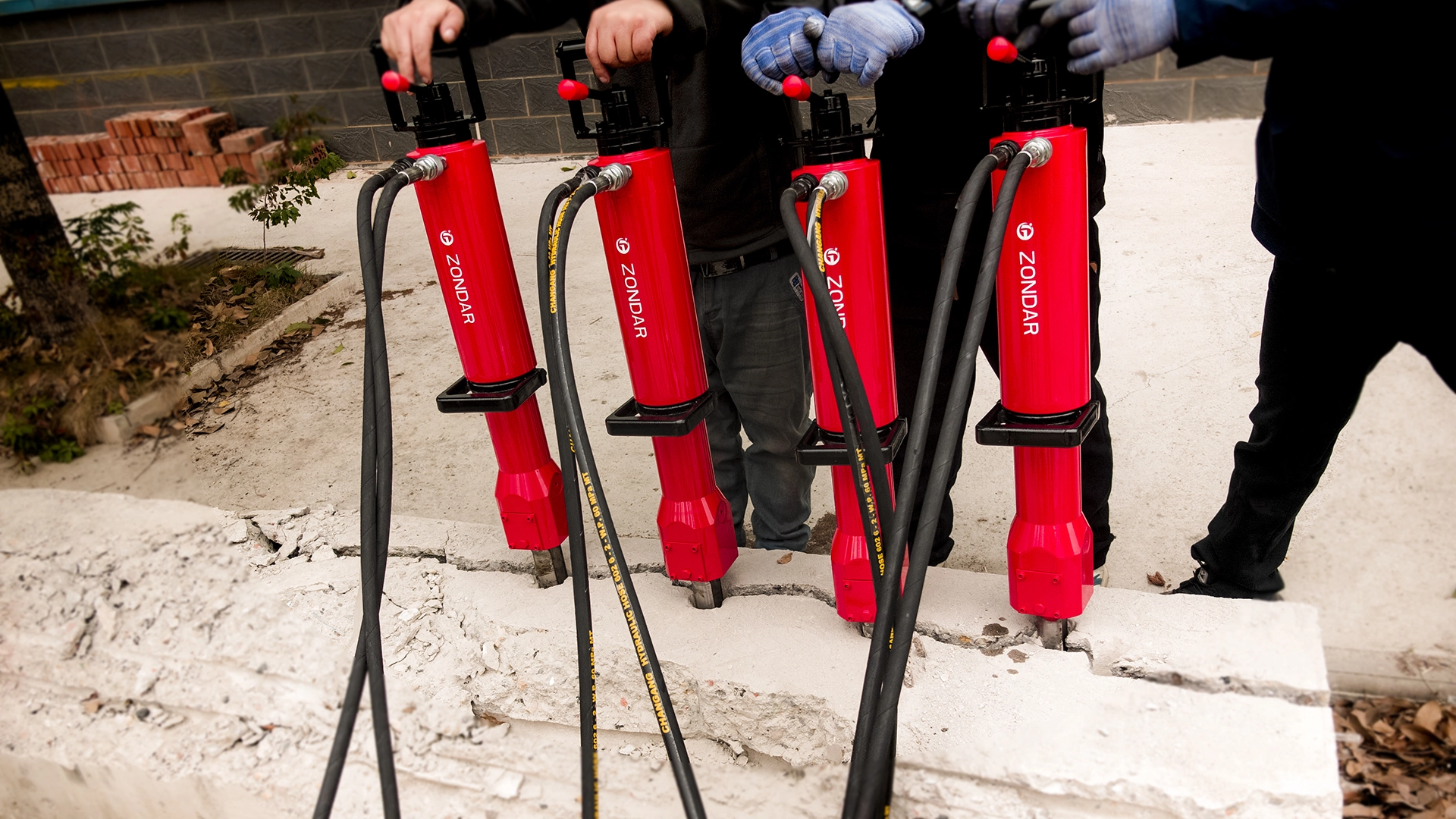
Portable hydraulic power units drive rock drills, splitters, and breakers in bridge and road construction. In tunnel excavation and underground utility projects, their compact size enables efficient operation without complex power installation.
5.2 Mining and Heavy Equipment Support
In open-pit mining, portable HPUs power rock breaking and slope stabilization tools, offering a safer alternative to blasting. They also serve as temporary power sources for hydraulic jacks and torque tools during heavy equipment maintenance.
5.3 Oil, Energy, and Pipeline Maintenance
In oil fields and pipeline projects, portable hydraulic power units support welding, valve maintenance, and inspection tools in off-grid environments. In wind power maintenance, they drive lifting platforms and service tools for high-altitude operations.
5.4 Emergency Rescue and Field Repair
During earthquakes, collapses, and road emergencies, portable HPUs provide reliable power for cutting and breaking tools, enabling rapid access and rescue. In emergency road repairs, they support fast pavement breaking and restoration.
6. ZONDAR Portable Hydraulic Power Unit Solutions
6.1 Product Overview
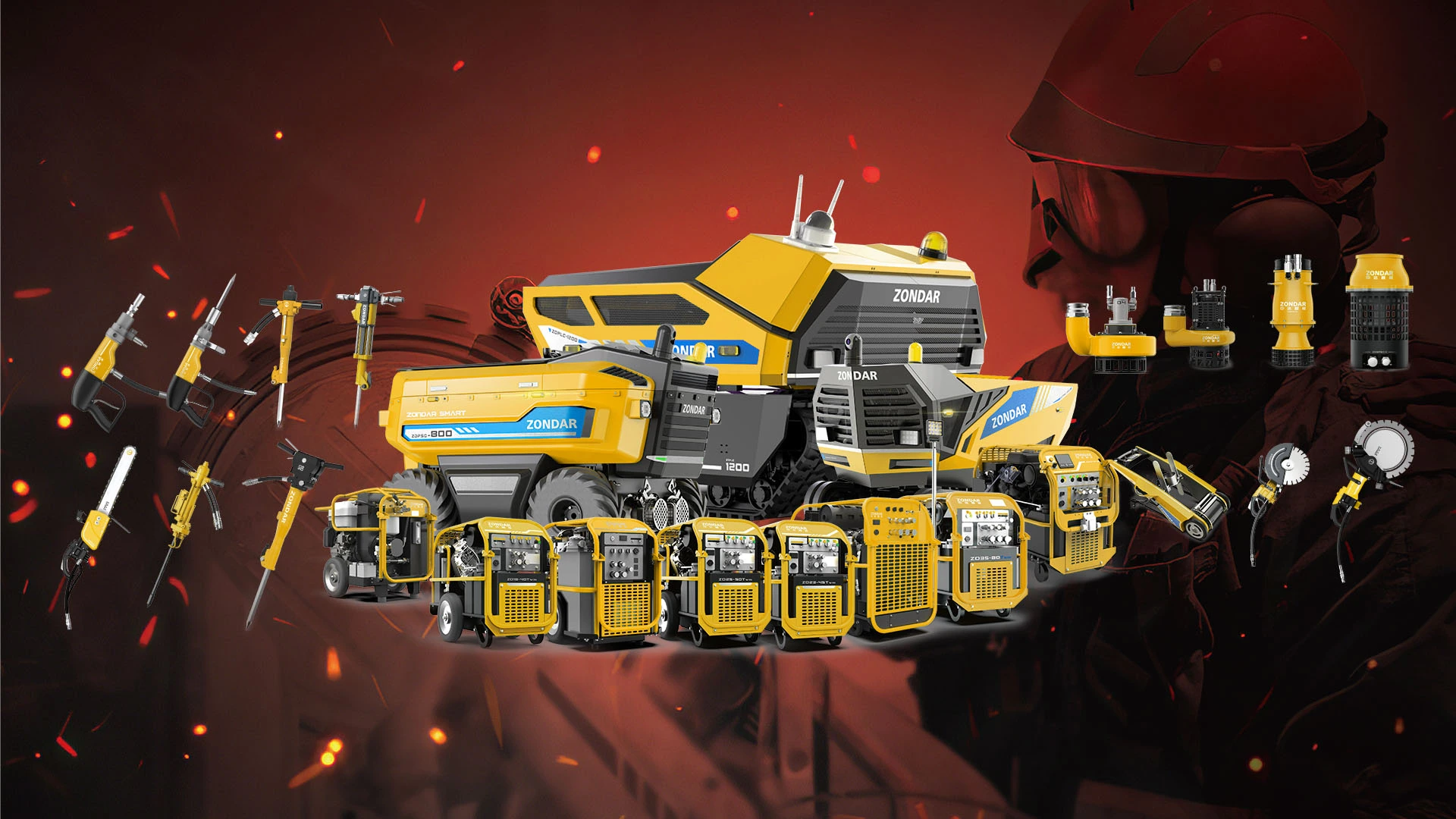
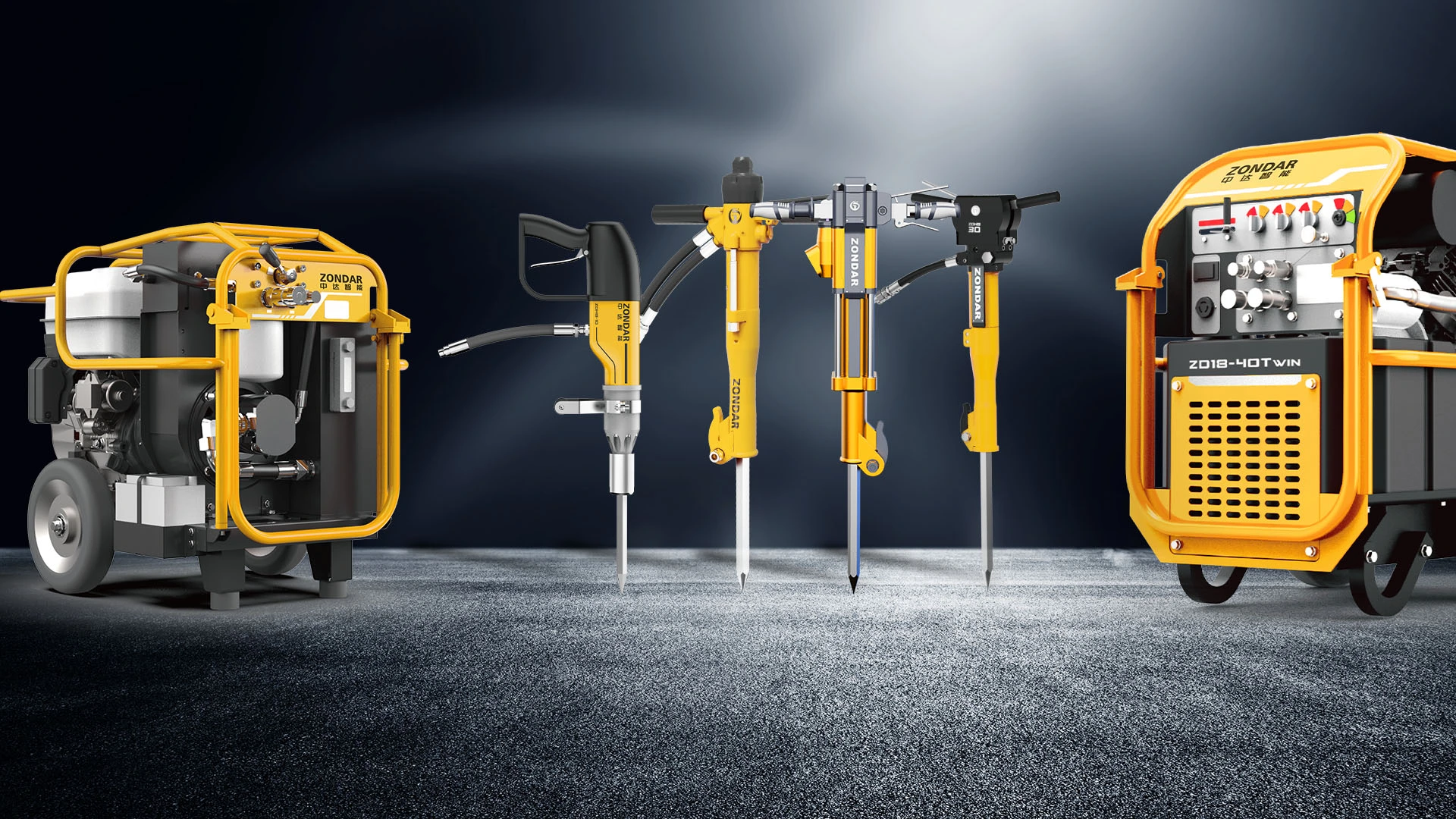
ZONDAR’s portable hydraulic power unit range covers 9HP to 40HP, including gasoline-powered and diesel-powered models. These units are compatible with hydraulic breakers, rock splitters, drills, and other tools, supporting applications from municipal maintenance to large-scale mining.
Core components are sourced from internationally recognized brands, and all units undergo 1,000-hour continuous operation testing, achieving a failure rate below 0.5%.
6.2 Core Technical Advantages
Exceptional Adaptability
Operates reliably without external power in environments from -20°C to 60°C, with humidity up to 90%.
Intelligent and User-Friendly Operation
Digital displays and quick control support and power adjustment. Operators can master basic operation with just one hour of training.
Low Maintenance Cost
Modular design simplifies servicing, reducing annual maintenance costs by approximately 40% compared with conventional systems.
Conclusion
ZONDAR portable hydraulic power units are designed around real job-site demands rather than theoretical specifications. By combining strong power output, intelligent control, and rugged reliability, they provide dependable hydraulic energy wherever it is needed.
As industries continue to move toward mobile, flexible, and off-grid operations, ZONDAR remains committed to delivering practical and high-performance hydraulic power solutions.
Looking for a reliable portable hydraulic power unit for your project? Contact ZONDAR to discuss your application and receive a tailored solution.